
Outside a flood zone? Damaged Irmo homes show homeowners are at risk
The wood sank as she walked, creating puddles around her feet and causing Laura Easley Hayes to wear wading boots to clean her flooded Stonegate home over two weeks ago. Her house was dry one minute, she said. The next, a “wave of water” blocked the entrance to her Irmo home, tore apart her fence and left her belongings soaked.
Her insurance won’t cover any of it. Stonegate isn’t in a designated flood zone.
Most Richland and Lexington County residential areas lie outside of FEMA-mapped flood zones, leaving thousands of homeowners vulnerable to repair costs.
FEMA confirmed that flood zones in some parts of the Irmo region were last updated in 2017.
Families faced displacement, felt “abandoned”
A severe thunderstorm warning was issued in Richland County May 23, according to the National Weather Service. But Stonegate had seen worse. The historic 2015 floods didn’t cause as much damage, residents said.
Multiple families, including Hayes and her neighbor Racheal Savage, were displaced, their homes unsafe to live in.
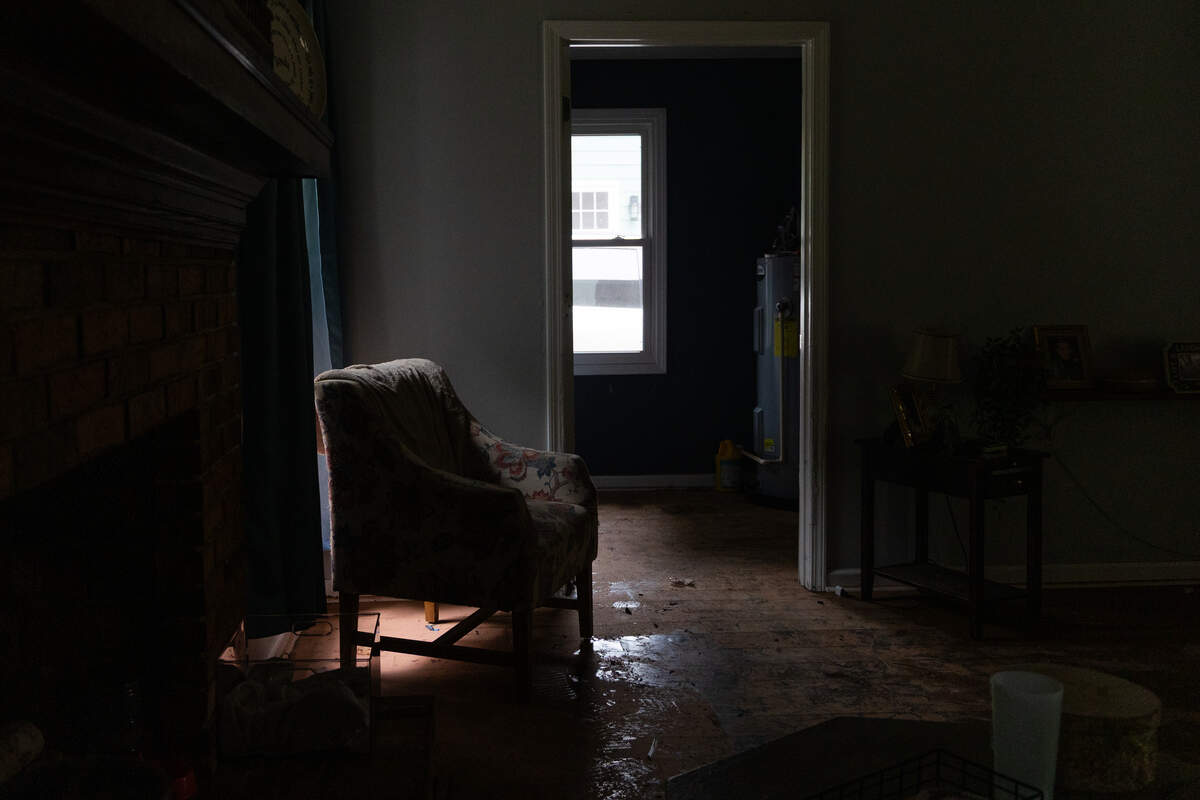
Savage and her three children, all younger than eight, were getting over the flu when the water came. By the time she noticed it leaking under her door, Savage’s crawlspace was flooded and a “river” was coming down the street, carrying wooden debris, rocks and outdoor furniture.
“There was a strong current. My kids couldn’t have walked through it,” Savage said. “I carried them out through the water.”
Savage submitted several claims through her insurance, but all were denied.
“Our neighborhood has limited resources,” Savage said. “I’m a single mom, and it’s hurting us financially. And there are no resources for us except the community that we’ve built ourselves.”
Like the rest of their street, Hayes and Savage live in modest two- to three-bedroom ranch homes, typically valued between $170-$200k. Built mostly in the 1980s, the homes are just over 1,000 square feet and sit along a shaded stretch off Koon Road.
Hayes called it her “used-to-be sanctuary.”
Stonegate residents weren’t the only homeowners outside of mapped flood zones affected that night, raising questions about who is at risk.
Rainfall rates that evening were between 1 and 2 inches per hour in North Central South Carolina and localized totals were up to 3 inches, making flash flooding possible, according to the National Weather Service.
But Stonegate residents are concerned that heavy rainfall wasn’t the only issue.
“Everybody is questioning it,” Hayes said of her neighbors’ confusion. “Something had to happen.”
Residents pointed to nearby developments and drainage problems, telling The State that they had never seen flooding like this.
The force and direction of the water was unusual for the quiet Irmo subdivision, Hayes said. With more concrete and less forestry, the water had nowhere else to go.
It is unclear whether nearby infrastructure growth contributed to the flooding, but urbanization is known to create runoff risks, according to the U.S. Geological Survey.
The force of flash flooding
Less than three miles away, Tracy Duckworth was living her childhood dream. As a teenager, she always had her eye set on one of Irmo’s “signature homes” near Lake Murray. In 2017, she was finally able to buy it. The home is one of three properties she has in the Midlands.
A ditch that runs between Duckworth and her neighbor’s property is normally dry, even when it rains heavily, Duckworth said.
Under S.C Highway 6, a culvert leads through the ditch and into Lake Murray. When she bought the house, large rocks were already placed in the ditch to keep the ground on either side from eroding.
At the same time as Hayes and Savage, a surge of water went through the culvert and pushed the rocks and sediment into Lake Murray. Since then, the land around the ditch has been eroding which is beginning to threaten her home, Duckworth said.
“Those rocks are heavy,” Duckworth said. “I can’t even lift them. That water must’ve been so strong to move them like that.”
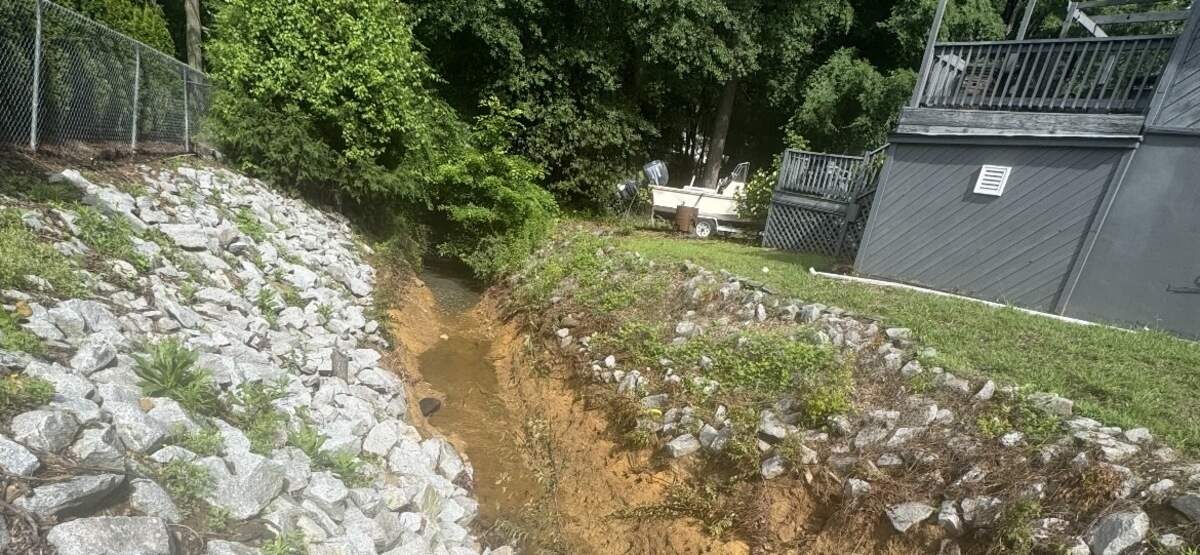
Like Stonegate residents, her home has never been affected by flooding even after heavy rain, and no one seems to know how to help.
“They told me it’s private property, so I gotta do it myself,” Duckworth said after she called the county, the Town of Irmo, and her district’s representative. “I don’t know what to do. I can’t get down in there and lift those rocks.”
South Carolina Department of Transportation and Rep. Nathan Ballentine, R-71, reached out to her Thursday and offered to come to the property. However, they told Duckworth they are “legally bound.” Since it is private property, they are unsure what can be done.
What worries Duckworth most is that it could happen again, she said.
Are all homeowners at risk?
Changes in land use and urbanization can cause more storm runoff and erosion because there is less vegetation to slow water as it runs down hills. Like Duckworth’s home, more sediment is washed into streams. Because water-drainage patterns are changed, flooding can occur, according to the U.S. Geological Survey.
Urban areas are especially prone to flash floods, based on information from the National Weather Service, due to the large amounts of concrete and asphalt surfaces that do not allow water to penetrate into the soil easily.
Regardless of whether property is considered to be in a flood zone or not, “it is a very good idea” to consider purchasing a flood insurance policy, according to the South Carolina Department of Insurance.