Columbia board again rejects mayor-backed law change tied to gas station plan
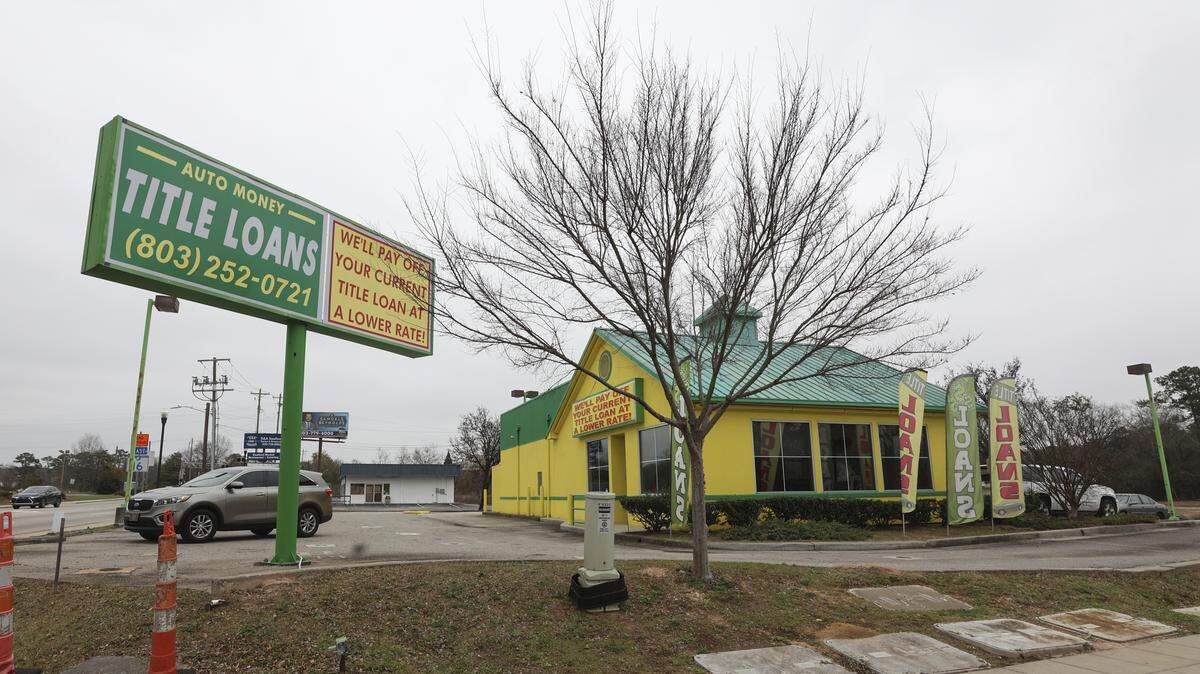
For the second time this year, Columbia planning officials have rejected a change to city law backed by Mayor Daniel Rickenmann tied to a controversial gas station development on North Main Street.
The law change would allow a title loan business currently at the corner of Sunset Drive and North Main Street to be relocated nearby. That step is needed to move forward plans to put a 16-pump Murphy USA gas station on the corner, a project widely opposed by neighborhood groups in the area.
The law change would be needed for the project because city law currently restricts where and how large payday and title loan lenders can be in the city.
The Columbia Planning Commission Thursday unanimously voted to recommend that the city not change the existing law.
Planning Commissioners Thursday before voting against the law change, questioned why it appeared narrowly tailored, with board co-chair Carlos Osorio saying, “I don’t know what problem we’re solving,” with the change.
The fate of a North Main Street corner where developers want to build the gas station has been debated for months. Numerous neighborhood associations near the project have repeatedly opposed the plan, and have also sued the city to overturn a zoning board decision that has paved the way for the project.
The issue has grown larger than the fate of one proposal, raising questions about how development happens in Columbia, and what say residents have in how their communities get shaped.
The planning board’s decision to oppose the law change now raises another question: will Columbia City Council members support a vote made by commissioners they appointed to guide development here, or will it disregard that board’s vote and choose to change city law anyway?
How did we get here?
Residents who live nearby the North Main Street corner in question have pushed back against the gas station development for months, as a high-profile local development firm led by a South Carolina power broker has worked to move the project forward.
Stern Development, recently rebranded as Stern Group, are representing Murphy USA in its bid to build a gas station at the prominent intersection, where an Auto Money Title Loans office currently sits.
Stern Development is led by prolific political donor and longtime Chairman of the South Carolina Ports Authority Board Bill Stern. Stern has donated thousands of dollars to Columbia City Council members, including at least $3,000 to Rickenmann’s most recent mayoral campaign.
Residents opposed to the gas station plans say they feel misled by Stern Development’s leadership, who knew the plan required relocating the title loan but did not share that detail when presenting the project.
“We’re only back here today because one developer … has created this discussion,” said Denise Wellman, a Cottontown neighborhood leader, during Thursday’s meeting. “We wouldn’t be back here again today if this developer had been honest and transparent … about what they were planning to do with this property.”
She added, “I’m not in favor of one wealthy developer changing city laws to accommodate their individual needs.”
In February, Jason Stern, Bill Stern’s son, successfully pitched the Murphy gas station plan to the city’s Board of Zoning Appeals, which voted 3-2 to allow the project. Stern at that meeting positioned the project as a tradeoff: keep the “unsightly” title loan business that currently occupies the corner, or get rid of it in favor of the new, polished gas station.
At no point during that meeting did he explain that the title loan wasn’t actually going away. The plans had always called for relocating the title loan nearby.
That was part of the plan as early as October 2025, according to emails obtained by The State newspaper between Stern Development leadership and city planning officials – months before the Board of Zoning Appeals meeting. Still, Stern didn’t tell the zoning board that detail.
That omission has left residents already opposed to the gas station plans feeling misdirected.
The State has attempted to reach Bill and Jason Stern numerous times, but neither developer has responded to those repeated requests for comment.
The change to city law is narrowly tailored, and only applies to title loan or payday lenders that are already within an overlay district – that’s planning jargon for areas that have an extra layer of rules meant to guide a specific vision for an area.
The title loan, and the proposed gas station, are within such a district for the North Main corridor. There is only one other title loan office in Columbia that would fall under the new Mayor-backed rule, planning staff said Thursday.
Beyond raising issue with the rule being narrow, planning board members also questioned whether changing the law for title loan businesses would create a liability issue if other types of businesses limited by city laws if they later asked for their own exceptions.
“We’re setting a precedent here, if we do approve it or the city council approves it, it’s just pigeonholed,” to title loans, said board member Lauren Rogers.
The Planning Commission in April rejected a nearly identical proposal. The issue returned to the commission because the city changed the wording. The first version only let the title loan office move within the same parcel, but the gas station plan would split the property. The revised language would let the business relocate to a nearby parcel instead.
More than a gas station?
The corner of Sunset Drive and North Main Street is important, residents and city leaders agree. While not one of Columbia’s busiest intersections, it is among the busiest in the North Main corridor.
It sits just above Earlewood Park to the south, it’s about a half mile to Prisma’s Richland Hospital to the east. The intersection is a gateway to the rest of North Columbia, and to the west is U.S. Highway 176, connecting neighborhoods across the river toward St. Andrews.
For decades, the corner has been seen as having potential for more. Millions in public dollars have gone toward making the corridor look and feel more appealing to residents and small businesses.

Rickenmann previously told reporters that the law change tied to the title loan is bigger than just the gas station project.
“To me, it’s a broader conversation. It’s about how do we help try to move some of these [title loan offices] and redevelop some of those into something that’s nicer.”
Currently, the owners of the title loan business in question own a roughly 3-acre parcel that includes the title loan office, a vacant former restaurant space and a stretch of undeveloped land. The gas station plans would subdivide the property, with the new Murphy station and convenience store on the intersection corner. Rickenmann said that opens up more possibilities for the corridor because it would free up currently unused space.
Even if the gas station proposal fell through, Rickenmann said the city would still need a mechanism to incentivize the title loan owners to move.
“People are forgetting the owner of that property … that’s three acres. It’s one parcel,” Rickenmann said. “So, if we don’t figure out a way to do something [there,] then we’re never going to see anything happen, because [the owner] has no incentive to change.”
Still, the law change is inarguably tied specifically to the gas station plans. A planning official in an October email laid out the steps Stern Development would need to follow in order to move the gas station project forward, and those steps included the law change now being discussed.
“It is my understand[ing] that you will be proposing to relocate the existing title loan business to a new location on the site and construct a convenience store and gas station,” wrote planning official Johnathan Chambers to Bill Stern in October 2025, before providing a detailed outline of the process, which included the need for a council-backed change to city zoning laws.
With the Planning Commission having now unanimously rejected that law change, it will be up to Columbia City Council to decide whether to honor the planning board’s recommendation, or to vote against that recommendation and approve the rule change anyway.
City Council isn’t obligated to honor the Planning Commission’s recommendations. Like this past fall, when the city council passed a slate of new restrictions on short-term rentals like Airbnbs, despite the planning board recommending otherwise.
Residents maintain opposition
Meanwhile, residents who have sued over the February zoning board’s vote to allow the gas station will get their day in court this summer.
Richland County circuit court judge Milton G. Kimpson is set to hear arguments July 24 in a lawsuit challenging the Columbia Board of Zoning Appeals decision to grant a special exception for the project.
That lawsuit alleges the zoning board didn’t follow its own rules when it voted to allow the gas station.
A pain point for many residents who have spoken against the gas station has been a long-standing city plan passed in 2005 that envisions something walkable and vibrant for the corner. Residents have also said there are already too many gas stations and convenience stores in the area.