
Who should pay for cleanup of 6 million pounds of e-waste stranded in Blythewood?
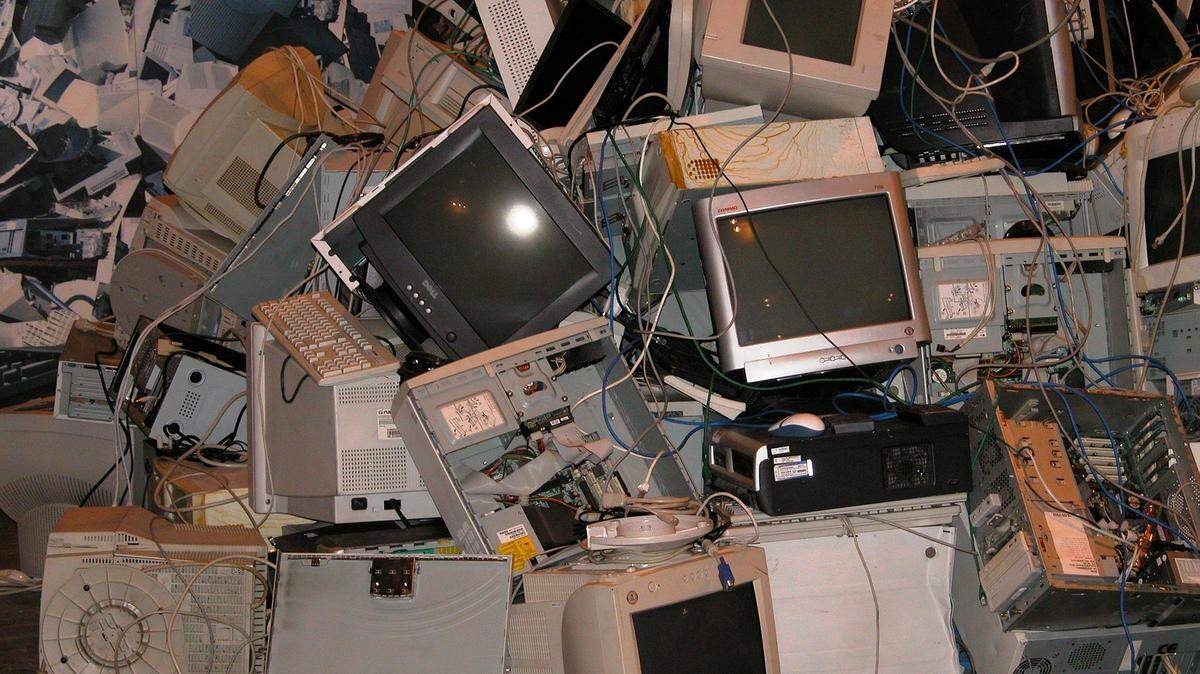
Who should pay for the cleanup of roughly 6 million pounds of electronic waste abandoned in a Blythewood warehouse is the subject of an ongoing federal court battle.
The waste — old televisions, classroom equipment, computers and other discarded electronic items — was abandoned at a Blythewood area warehouse, next to Interstate 77, about 2014, according to court papers.
The warehouse, owned by Carolina Pines LLC, was used in part as storage facility for electronic waste — also called e-waste, or e-scrap — that was brought to the facility from nine S.C. counties, including Lexington, Charleston and Horry.
On Friday, U.S. District Court Judge Terry Wooten set Aug. 28 as the opening day for a nonjury trial at Columbia’s federal courthouse in Columbia over who should pay the cost of cleaning up the mess. The waste is gone now — cleaned up and removed at a cost estimated at $1 million to $1.5 million.
But the court battle over that bill continues.
In dispute: Carolina Pines says the counties of Lexington, Charleston and Horry should repay it for the cost of the cleanup. Six other six counties are settling with Carolina Pines and have agreed to repay the company.
According to a complaint in the case, the nine counties were paying a company called Creative Recycling, an electronics recycling and processing company, to handle their electronic waste. Creative Recycling transported and stored the waste at Carolina Pines’ warehouse in Blythewood.
Creative Recycling was supposed to “process, recycle and/or dispose” of the waste, according to the complaint. But the company declared bankruptcy about 2014 and abandoned the 6 million pounds of electronic waste at the Blythewood warehouse, according to the complaint.
Carolina Pines sued the counties, alleging the waste belonged to them, and it was their responsibility to remove it. The counties argued they no longed owned the electronic waste once Creative Recycling had picked it up and transported it to the Blythewood facility.
How to dispose of e-waste increasingly is an important issue.
“Unwanted electronics are one of the nation’s fastest-growing waste streams,” the S.C. Department of Health and Environmental Control says on its internet site. “Often called e-scrap, electronics contain potentially hazardous material such as lead and mercury that can pose a risk to human health and the environment if not properly managed.”
Electronic waste also contains precious metals that can be recovered and sold or recycled.
In 2010, the S.C. Legislature passed legislation banning the disposal of specific electronics — including computers, monitors, printers and televisions — in regular solid-waste landfills, which normally receive house trash and garbage.
In the hearing before Wooten on Friday, lawyers said six of the nine counties had agreed to settle with Carolina Pines, repaying it almost $240,000.
Abbeville, Laurens and Sumter counties will pay a total of $92,000, and Aiken will pay $66,500. Beaufort County will pay $43,040, and Orangeburg County will pay $36,626.
What should you do with your e-waste?
Richland County residents can take their e-waste to a drop-off site at Columbia Place mall, 7201 Two Notch Road, from 7 to 11 a.m. on Aug. 4.
Lexington County residents can bring their e-waste to a drop-off site at Forts Pond Elementary School, 7350 Fish Hatchery Road in Pelion, from 9 a.m. to 1 p.m. on Aug. 18.
This story was originally published July 20, 2018 at 3:46 PM.