
Clemson student suicide case to go to trial next month
A lawsuit accusing Clemson University of ”gross negligence” in the suicide death of a 20-year-old sophomore from Lexington County is set to go to trial in December.
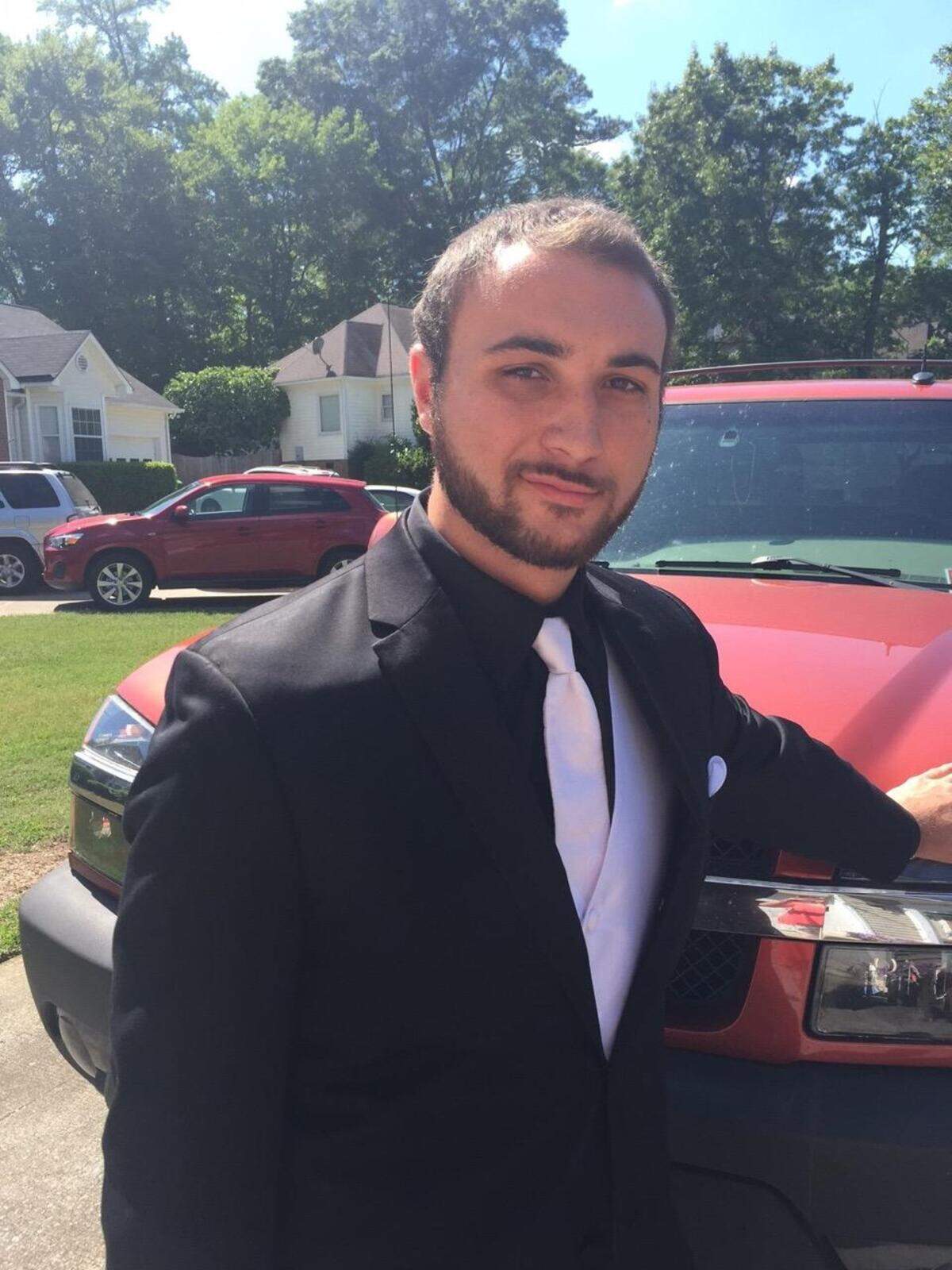
The lawsuit, filed by Pamela Eyring, mother of the late Clemson student Jacob “Jake” Eyring, of Chapin, alleges that a Clemson doctor not only missed warning signs that Jacob Eyring intended to fatally harm himself but also failed to take steps that could have saved the young man, the lawsuit says.
The lawsuit also alleges that the Clemson doctor prescribed Eyring — a “tech whiz, a regular Mr. Fixit” in graphic communications, according to his obituary — two medications that may have made his suicide more likely. Those medications were Prozac and Zoloft, both anti-depressants, the lawsuit said.
“There is ... a legitimate expectation on the part of parents that, when their children go off to college at a place like Clemson, that they will have access to reasonable, decent medical care,” the lawsuit says.
In an answer to the lawsuit, Clemson has denied the allegations. In a statement to The State, Clemson said, “While we do not comment directly on ongoing litigation, the loss of a student is tragic and affects the entire campus community deeply.“
Clemson’s statement added, “the safety, security and health of our students is of the highest priority. Professionals within Counseling and Psychological Services, Redfern Health Center, Clemson University Police Department, the Division of Student Affairs and throughout the University are available and dedicated to providing resources to students in need.
“Clemson’s emphasis on mental health and suicide prevention is robust, and the ’Tigers Together’ suicide prevention initiative began a number of years ago with a focus on creating awareness of the resources available. More information can be found at www.Clemson.edu/suicideprevention.”
Despite Clemson’s statements about having a strong suicide prevention initiative, Eyring should have been examined more closely and referred to a mental health specialist, the lawsuit said.
”On Oct. 13, 2015, approximately three weeks after being prescribed the psychotropic drug Zoloft, with no follow up contact, monitoring or referral to a particular psychiatrist, Jake shot himself in the head in Anderson County” behind a Bi-Lo in Pendleton, the lawsuit said. “He died shortly thereafter.”
One issue that could surface in the trial is how much of a duty colleges have to notify parents when their child self-reports a mental health issue to a college health center. Generally, unless a student over the age of 18 has signed a form allowing the doctor or counselor to share health information with the parent, the college will keep that information from parents.
However, there is an exception that allows medical personnel to use their own judgment about sharing a student’s health information with parents if the student might pose a danger to himself or others, said Lexington attorney Rick Hall, who represents the Eyring family in the lawsuit.
“We are going to claim in this trial that the parents should have been notified,” Hall said.
Suicide and mental health issues among college students and young people — and the role of universities, health care providers and others can play in preventing such deaths — is getting a higher profile these days:
▪ In Columbia, a lawsuit is pending against the University of South Carolina in the 2016 death by suicide of Samantha Strawn, 22, a graduate student at the Darla Moore School of Business. The lawsuit alleges that Strawn was turned away from a university health care facility after exhibiting numerous signs that she was going to kill herself, according to the lawsuit. USC denies the allegations.
▪ A foundation, Hilinski’s Hope, set up by Mark and Kym Hilinski, the parents of University of South Carolina quarterback Ryan Hilinski, is receiving nationwide publicity for its efforts to raise awareness about mental health issues among college athletes, and to connect students with mental health resources and assist universities in setting up best practices. It is located at https://hilinskishope.org.
▪ Not every student at Clemson who needs counseling with mental health issues such as anxiety and depression can get immediate help, and health care workers “struggle” to keep up with student demand, according to an article in this week’s Greenville News.
▪ Iowa State University is paying the parents of a university student there $315,000 after a jury in August found the university partially liable for the death of student Dane Schussler. Evidence in the case alleged the university’s counseling center was underfunded and short-staffed and counselors didn’t give Schussler the right kind of treatment.
▪ In Los Angeles, three students at the University of Southern California have died of suicide so far this school year, according to news reports.
▪ About 8% of students who visit campus counseling centers have recently considered death by suicide, according to the Center for Collegiate Mental Health at Penn State. Treatment by counseling centers is effective in reducing students’ mental health distress, according to the Center.
In the Eyring lawsuit, the late student’s mother alleges that her son had struggled with a serious bipolar disorder since he was a child and that “before going to college his treatment had always been substantially effective.”
In August 2015, shortly after Jacob Eyring began his sophomore year at Clemson, he went to the university’s Redfern Health Center and complained of anxiety, poor sleep, lack of concentration and depression.
Those complaints should have prompted the doctor to think to examine Eyring more thoroughly and consider sending him to a mental health specialist before prescribing medications, the lawsuit alleges.
Instead, the doctor began to treat Eyring with several powerful antidepressant drugs, including Prozac and Zoloft, despite studies showing that such drugs increase the risk of suicide in young adults with bipolar conditions, the lawsuit said.
“In light of Jake’s history of bipolar disorder, it was negligence” to prescribe Prosac and Zoloft at all, the lawsuit said. Zoloft especially carries a risk of “causing or exacerbating pre-existing suicidality” and even carries a warning about suicide risks on the medicine’s packaging, the lawsuit said. Patients taking the medicine should be monitored closely, the lawsuit said.
“Though Jake had battled bipolar disease, he had done so successfully and had made significant strides in hope to graduate from Clemson,” the lawsuit said.
“The loss of his companionship also includes the loss of his beautiful smile, his love of camping, fishing and playing on the lake and his hanging out and tinkering with his father, all of which his mother and father will never experience again,” the lawsuit said.
The lawsuit is set for trial Dec. 9 in Anderson before Circuit Judge Scott Sprouse. Besides Hall, lawyers for Eyring are Arnold Vickery of Houston and Kyle White of Anderson. Clemson’s lawyer is William Davidson II of Columbia.
People needing help for themselves or someone else can call the National Suicide Prevention Lifeline at 1-800-273-8255 or contact www.suicidepreventionlifeline.org.
This story was originally published November 21, 2019 at 1:12 PM.