
Richland’s most violent week frustrates the year’s police efforts to reduce shootings
Twenty bullets flew near the busy intersection of Millwood Avenue and Gervais Street on Nov. 30.
The hail of gunfire started near the parking lot of a Chinese restaurant after 23-year-old Je’Nell Burton pulled a gun and tried to rob a man and woman who showed up to sell Burton sneakers, according to the Columbia Police Department. The man with the shoes drew his own pistol and the shooting started, and Burton was hit in his hand and leg.
It was the most visible shooting during the week of Nov. 30 to Dec. 1 and the one that sent the most bullets toward random targets. Fortunately, nobody else was injured.
The same can’t be said for others that week, which is the worst so far in Richland County in 2019.
From Nov. 24 to Dec. 1 in Columbia and surrounding areas of Richland County, police responded to nine shootings that killed five people and injured five others.
It was the kind of week that brings up painful memories for Perry Bradley, a Columbia community organizer who in 2010 started Building Better Communities, a group that works to prevent gun violence through education, helping people reduce their chances of being involved in shootings and connecting police with neighborhoods’ concerns.
“I’ve seen too much death from gun violence,” he said.
In February, a 21-year-old that Bradley mentored was gunned down only feet from the Nov. 30 shooting scene.
The rash of shootings in late November and early December included a murder-suicide, a shooting following a fight, and a man shot multiple times. Also shot was a man who refused to tell police anything about what happened and refused to press charges.
The week came amid efforts initiated this year by the Columbia Police Department, Richland County Sheriff’s Department, and the U.S. Attorney’s Office to curb gun violence.
The week reminded Bradley why policing needs to be reinforced with efforts “to bridge the gap between local law enforcement and communities.”
Twenty hours. Five deaths
The week of violence began on Nov. 24, when four people were killed in three incidents.
Just as dawn broke on Nov. 24, a fight between two men inside a home led to the week’s first shooting victim.
At about 4:30 a.m., after the power went out in the home on the 5000 block of Percival Road in an unincorporated area of Richland County, two men argued inside, according to an incident report. One man pulled out his gun and the other grabbed the barrel of the pistol during the altercation. The man who pulled the gun was shot in the head, witnesses told the Richland County sheriff’s deputy who wrote the report. No arrests have been made in the shooting.
Less than 12 hours later, deputies were called about a couple who had been fatally shot inside their home on the 2500 block of Banner Hill Road in Lower Richland, the department reported. Deputies determined the husband shot his wife and turned the gun on himself.
That night, deputies showed up to the scene of the day’s last shooting. They found a 34-year-old man on a bed shot multiple times over his entire body, including in the head, at a home in north Columbia, according to a report. The victim died in the hospital. One person was charged.
The night had barely crossed over into the next day when another shooting claimed one more life. About 12:30 a.m. Nov. 25, a 911 call sent Columbia Police Department officers to a home on the 300 block of Clark Street in North Columbia. A man was found on the floor with bullet wounds. No arrests have been made.
In the 20 hours, the four homicides accounted for nearly 10% of the total shooting deaths, 45, from January through Saturday night in Richland County, which includes the City of Columbia.
Nearly half of those killings were investigated as murders by the sheriff’s department.
About two weeks after the last shooting, Sheriff Leon Lott gave a speech at an elementary school to a crowd of about 100 students.
Through a drug and violence prevention program, the students “learned about how to make good decisions,” Lott told the children. “I need your generation to be the generation that goes and says no to guns and that we’re not going to have violence.”
Connecting with children and reinforcing that violence is wrong is crucial to reducing violence.
“The enforcement part is a Band-Aid for the problem,” Lott said. “The education part is what’s going to solve the problem. ... You aren’t going to arrest your way out of the problem.”
His deputies can lock up a violent person and that will reduce shootings temporarily, but enforcement and education are needed, Lott said.
On the enforcement front a joint effort started in April 2018 by the sheriff’s department and Columbia Police Department known as the Gun and Violent Crime Reduction Initiative has attempted to reduce shootings by focusing on confiscating illegally owned guns, arresting repeat offenders and raising awareness in communities about gun safety and reporting crime. The program educates gun owners about not leaving firearms in their vehicles where the weapons are often stolen.
By April this year the initiative took more than 1,400 guns off the streets, Lott said at a news conference that month. More illegal firearms have been confiscated since then, according to a department spokesperson. The initiative also led to 74 people being charged with gun offenses from April 2018 to April 2019.
The sheriff’s department also organized events throughout the county that provide firearm safety classes and gun locks.
“I think it’s working but we need a lot more of it,” Bradley said of programs that put police departments in touch with citizens in non-emergency, non-criminal situations.
Indicators show the efforts are paying off even if progress is tempered by ebbs and flows. After a decade high last year, homicides, the majority of which involved shootings, are down from 35 to 22 this year in unincorporated Richland County.
But in the city limits, the numbers tell a different story, especially in north Columbia.
‘Shooting cycle’
Shooting homicides are up slightly this year in Columbia, Police Chief Skip Holbrook said. So far this year, 20 homicide victims have died in shootings, compared to 16 in 2018, according to the department. Overall, the city has had 25 homicides so far this year.
But all other violent crime is down, including non-fatal shootings, Holbrook said. Where the city and county struggle the hardest with shootings is the area to the north of the city, within its bounds and in the unincorporated county.
North Columbia has a history of being among the city’s most violent. The last week of November was no exception.
On Nov. 26, near the Belmont community off North Main, a 21-year-old man shot a 51-year-old victim on the 800 block of Rosedale Arch Avenue, wounding the man in the lower body, police said.
The shooting was the culmination of a three-day streak of gun violence in north Columbia. The area experienced four of the nine shootings from Nov. 24 to Dec. 1.
As to why north Columbia experiences a disproportionate amount of shootings, Holbrook said that’s where gun violence has historically been high. That history is why Columbia invested in its most significant and advanced law enforcement technology this year and placed it mainly in the northern part of the city.
ShotSpotter, which went active in April, acoustically senses when a gun is fired and can relay the location of the shots to police in 45 seconds. Police can now do an “unprecedented” amount of shooting investigations, Holbrook said.
The technology allows Columbia police officers to get to a shooting quicker, allowing them to recover better quality evidence, the police chief said. More timely investigations of shootings means arrests can happen faster. And faster arrests can lead to getting “prolific trigger pullers” off the street, according to Holbrook.
Another partnership between the U.S. Attorney’s Office, Columbia Police Department and the sheriff’s department focuses on repeat offenders in north Columbia.
Quicker investigations also allow the Columbia Police Department “to break the shooting cycle” of retaliatory gun violence and reduce such crimes, Holbrook said.
Also helping the Columbia Police Department investigate shootings is a federal grant received in September that allows Holbrook to dedicate more officers to reducing gun violence. Columbia was one of seven cities to receive the more than half-million dollar grant.
In north Columbia non-fatal shootings are down, according to Holbrook. In the entire city, police are seeing less gunfire and aggravated assaults from shootings.
“Our strategy is paying off,” the chief said.
All the efforts to reduce gun violence and their gains make a week like the Columbia area experienced all the more frustrating, a dissatisfaction that can be heard in Holbrook’s voice when he calls the string of shootings “unacceptable.”
Trust and hope
A quartet of shootings from Nov. 27 to Dec. 1 brought the bloody week to an end. And two of those shootings highlighted the frustrations police face in fighting gun violence.
Just before 9 p.m. on Nov. 30, a 28-year-old man was shot in the leg outside a convenience store on Broad River Road. When Richland County deputies arrived, the victim “was very uncooperative” and refused to even tell them his name, according to a deputy’s report. While the victim was in the hospital, he told an investigator he didn’t want to press charges and wouldn’t give police any information about the shooting.
Police frequently deal with “uncooperative” victims and witnesses, particularly men in their teens and twenties. That distrust of law enforcement chokes efforts to arrest people who are willing to let bullets resolve disputes, Lott and Holbrook have said previously.
In news conferences this year, both police leaders have asked for communities to become more open to communicating with officers about shootings and known gunmen.
Bradley hears that distrust of police at events he organizes. Instead of focusing on the distrust, Building Better Communities focuses on communities and police figuring out “how to work together better,” he said.
“What we want to do is discuss how law enforcement can help us,” Bradley said. “We try to have police be part of the neighborhoods. I want them to see the police on a different level than when we call them (for crimes).”
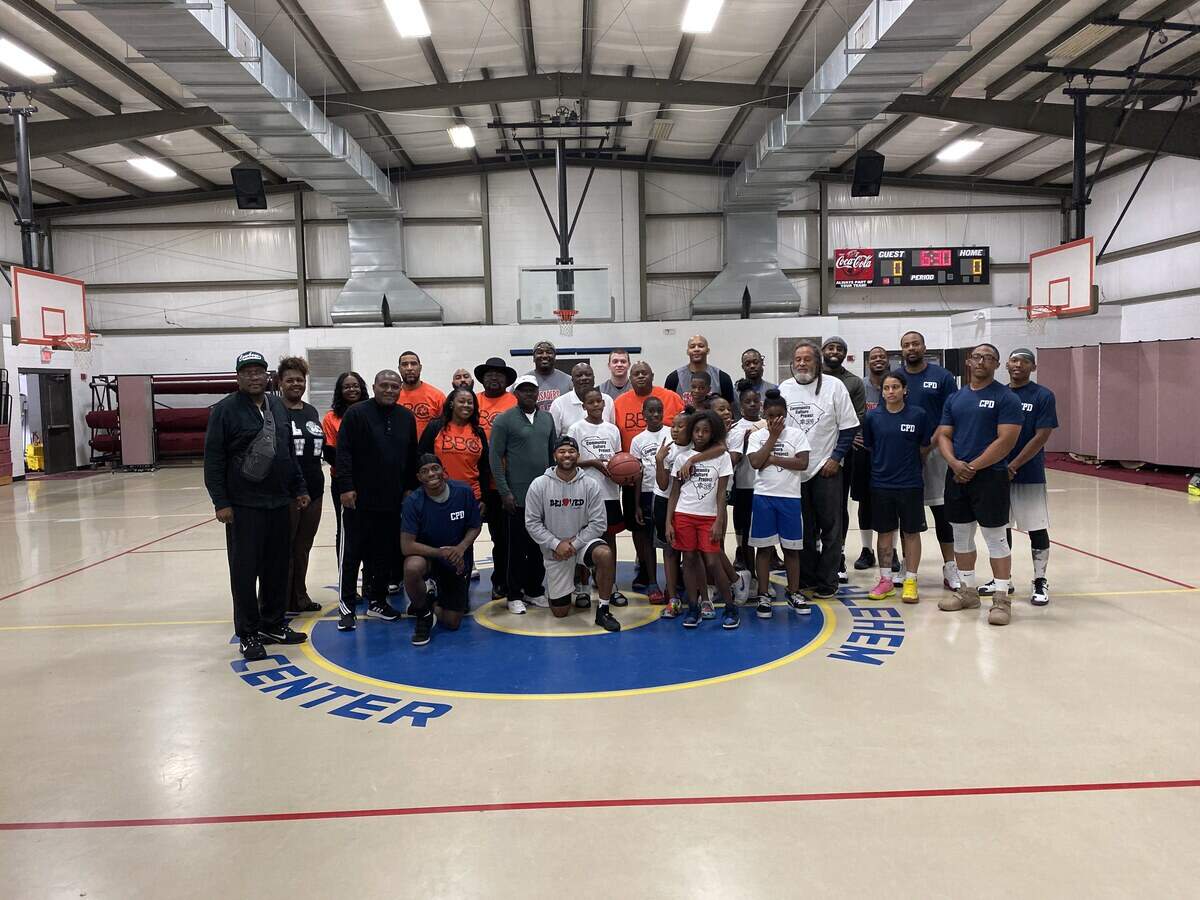
Lott has touted his department’s Community Action Team, or C.A.T., deputies for opening lines of communication in communities affected by gun violence. The team attends community meetings to learn the law enforcement needs of those areas. Each deputy works directly with neighborhood leaders, civic and religious groups and others to become a “trusted, dependable advocate for their community” and create “unity with the community that we serve,” the sheriff’s department says.
ShotSpotter helps build trust in police with communities, Holbrook said, by showing residents that police will be there every time a gun is fired. That dependability allows them to get better leads on shooters from community members as well.
The federal grant received in September also allowed the Columbia Police Department to dedicate an officer as a liaison between community leaders and people at risk of being offenders or victims.
But one of the most challenging aspects of lowering gun violence is appealing to people’s conscience to keep their finger off the trigger. The decision to use a gun to resolve a dispute often leads to tragic consequence — bystanders being shot.
On Nov. 27, a bystander could have died if a bullet a went a foot to the side of where it hit. Just after midnight, a woman was walking to her car after leaving a bar on Bluff Road when a fight started in the parking lot, a deputy’s report said. As she passed the altercation, the woman felt a pain in her arm. She was shot.
“The availability of guns here is unprecedented,” Holbrook said. And people, particularly younger people, “make emotional decisions that have serious consequences.”
Through community meetings and stressing the punishments for gun crimes through billboards and other methods, Holbrook said the police department tries “every opportunity that we get” to stop people from using bullets to end disputes.
This year, Holbrook and Lott, who have emphasized that legal, safe gun ownership is not a problem, supported a legislative proposal to increase penalties for illegal gun possession in hopes of warning people against gun crime and keeping repeat offenders in prison longer.
Holbrook pointed to efforts such as supporting new laws, investing in new technologies, focusing on repeat offenders and engaging in communities affected by shootings. “There needs to be a combination of all that to change a culture” of violence and to see less deadly and painful weeks like the one that recently passed, Holbrook said.
For Bradley, helping young people find jobs and involving them in the safety of their communities are equally important strategies for ensuring guns don’t continue to ruin lives. He calls this “empowering people ... to succeed without gun violence.”
“Gangs and guns give people a sense of power,” Bradley said. “Giving people esteem can turn them away from that.”
That provides the crucial element to stopping the shootings to Bradley.
“The biggest part of reducing gun violence is giving people hope,” he said.
This story was originally published December 23, 2019 at 12:00 AM.