
SC GOP seeks voice in coronavirus lawsuit aimed at expanding absentee ballot rights
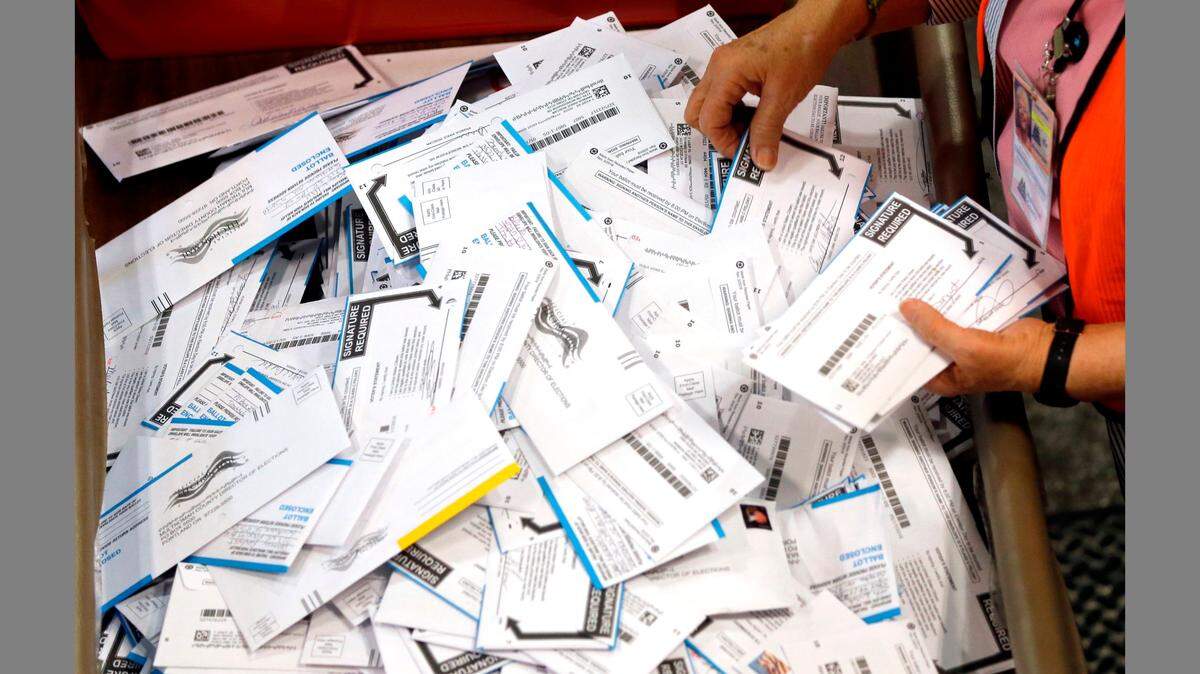
The South Carolina Republican Party is trying to intervene in a potentially historic legal action in the S.C. Supreme Court where Democrats are seeking a high court ruling to expand absentee voting this year due to the coronavirus pandemic.
“The SC GOP simply wants a seat at the table to ensure all stakeholders have a voice in this matter of public interest and importance,” the Republican Party lawyers said in their motion.
The Supreme Court has not yet said whether it will hear the case — a move called original jurisdiction —without sending it to a lower court first.
Last week, the South Carolina Democratic Party joined the Democratic Congressional Campaign Committee and two S.C. Democratic candidates in filing a legal action against the State Election Commission in the Supreme Court asking for a ruling that would — because of the “unprecedented” threat posed by the highly communicable and sometimes deadly coronavirus — in effect greatly expand the number of people able to vote by absentee ballot.
“To ensure that voters are not disenfranchised, the Court should interpret existing law in a manner that allows all voters to vote safely,” said the Democratic Party’s filing. If successful, the lawsuit would allow more voting by mail.
Democrats are eager for a response quickly to make necessary preparations in response to the fast-approaching June 9 primary.
Statistics by the S.C. Department of Health and Environmental Control and the Centers for Disease Control and Prevention show numerous South Carolinians — those over 60 and African Americans — are especially susceptible to illness and death from coronavirus and need to practice social distancing. This would be impossible for those waiting in line to vote, the filing said, with those voting in person doing so “at great risk to their health.”
Most South Carolinians are required to physically go to polls on election days, and are only allowed to vote by absentee ballot if they meet certain limited exceptions — none of which mention potentially fatal pandemics. Some exceptions are serving in the military, being ill or disabled or are traveling abroad.
Republicans did not comment Wednesday on what their position might be if the matter were argued before the state Supreme Court.
“State and national Democrats have filed a lawsuit challenging our state’s election laws that tracks lawsuits they have filed all across the country, and it’s only prudent to make sure Republicans have a seat at the table anytime such matters are discussed,” said state GOP Chairman Drew McKissick in a statement.
But Republicans are likely suspicious that Democrats have partisan motivations in their suit, which is just one of many national party legal actions across battleground states being waged by the national party.
As a national Democratic strategist involved with the lawsuit, but not authorized to comment on the record about the case, told The State last week, “when folks have access to the ballot and are able to vote free of impediment, it’s good for Democrats. It’s also good for democracy.”
One of the most competitive candidates up for reelection this fall, U.S. Rep. Joe Cunningham, D-Charleston, has called for moving the June 9 primary to later in the year, a proposal also strongly opposed by Republicans.
Supreme Court clerk of court Daniel Shearouse said the parties in the state case have until Friday to file a response.
“Once any returns are filed, the Court will then determine if it will agree to accept this case in its original jurisdiction. If it agrees to do so, it will then specify how the matter will proceed, which could include the filing of briefs and/or oral arguments,” Shearouse said.
The usual way to expand the categories of who is eligible to vote absentee would be for the General Assembly to pass a law. But since the Legislature is out of session due to the coronavirus, that has not been possible.
Meanwhile, a lawsuit that seeks the same ends — allowing more voters to vote absentee due to the coronavirus pandemic — is proceeding in federal court before U.S. Judge Michelle Childs. This suit was brought by the South Carolina chapter of the American Civil Liberties Union, the national ACLU and the National Association for the Advancement of Colored People’s Legal Defense and Educational Fund.
Current S.C. law concerning absentee ballots forces voters “to make the unconscionable choice between protecting their health and lives (and those of their families and communities) and exercising their right to vote,” that lawsuit says.
The ACLU and NAACP suit also seeks to have Judge Childs issue an injunction against the state Election Commission that would prevent the commission from denying the use of an absentee ballot to vulnerable and other voters.
Childs has not yet scheduled a hearing in that action. Neither has the Election Commission filed a formal response to the complaint, which was filed April 22. The Commission has until about May 21 to file an answer.
Election Commission spokesman Chris Whitmire told The State on Wednesday that his agency had requested an opinion on the matter from the S. C. Attorney General’s Office.
Because of the two pending legal actions, “We don’t expect an answer on the opinion,” Whitmire said. “Obviously the court may provide everyone with guidance on the matter.”
The two Democratic candidates who are plaintiffs in the legal action are Rhodes Bailey, a Columbia lawyer in the Richland County public defender’s office, and Rob Wehrman of Charleston County. Bailey is seeking the party’s nomination for a state House seat in the June 9 primary. Wehrman is campaigning for the Charleston County Council.
“If things are still dangerous enough during the crisis for us to extend the stay-at-home order that (Gov. Henry McMaster) put in place a few weeks ago, then clearly it is still dangerous enough out there that we need to take measures to ensure the safety of voters during the COVID-19 crisis,” Bailey told The State.
This story was originally published April 30, 2020 at 5:00 AM.