
Can Lexington lynching victim be exonerated? SC lawyers see uphill fight
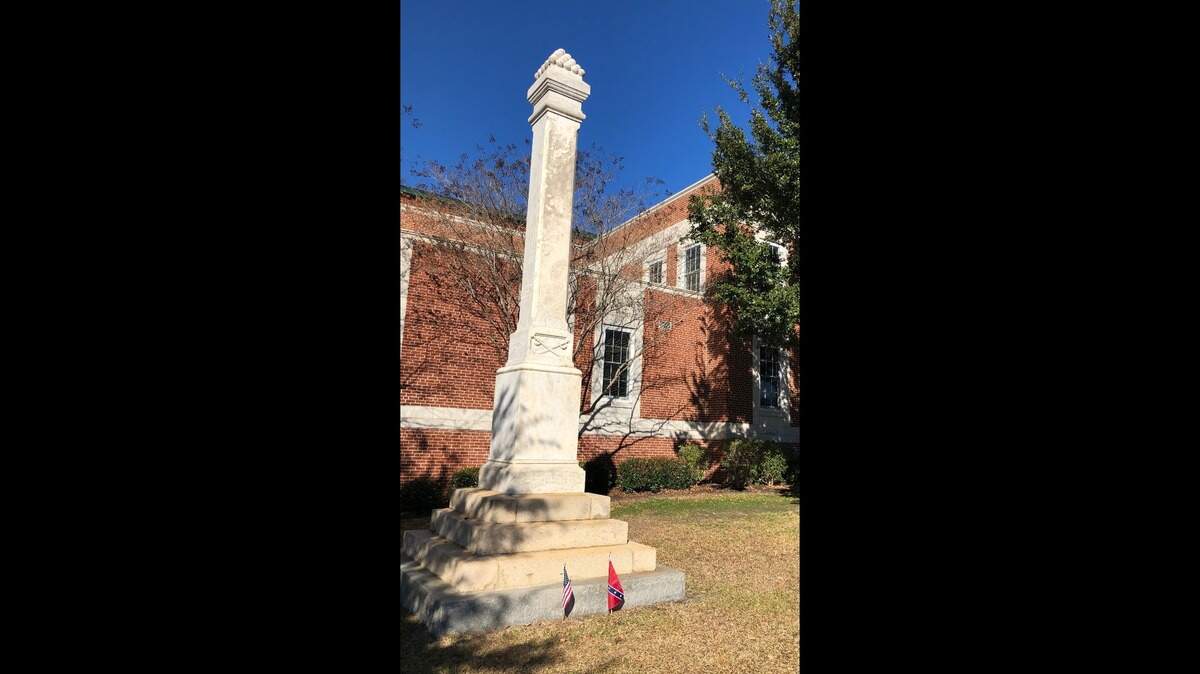
The 1890 lynching of Willie Leaphart was, by any measure, an injustice. But it remains to be seen if it’s one a 21st-century court can rectify.
As detailed by local historian Michael Burgess, Leaphart was a Black teenager in Lexington accused of assaulting a white woman. He was tried and convicted without being able to call any witnesses in his defense. Then, when it looked like Leaphart might receive clemency from the governor, he was killed by a mob that broke into the Lexington jail.
Burgess hopes his research can form the basis of a legal appeal that could get Leaphart’s original rape conviction overturned, based on alibi witnesses who placed Leaphart at church during the attack and evidence from an appeal that brings into question whether Leaphart was guilty of the crime.
But legal experts say a successful legal appeal will need more concrete proof and a deep exploration of the legal atmosphere of late 19th-century South Carolina.
Attorney and Richland County Councilman Overture Walker has taken on the task of crafting an appeal, but he acknowledged how difficult it will be to craft an appeal a South Carolina court today will accept. That’s because despite the large amount of reporting about the Leaphart case and lynching at the time, the actual legal record is sparse.
Burgess has not yet been able to find a record of Leaphart’s 1890 trial for allegedly attacking 18-year-old Rosa Cannon in the home of one of Lexington’s most prominent residents. Nor has Burgess tracked down the affidavits in which Cannon reportedly recanted her accusations against Leaphart that formed the basis of his attorney’s appeal for clemency.
“One of the things as lawyers is you tend to go where the facts take you,” Walker said. “I have a hunch or an assumption about what may have happened in that era. Everything we’ve read about extrajudicial killing of African American men from that era, white womanhood being defiled was often bandied about as a justification. We want to get to the bottom of it first.”
Walker said he’s putting together a legal team to review the case. There seems to be some discrepancy between the charge for which Leaphart was booked into the Lexington jail, for “assault with intent to commit rape,” and his conviction of “rape” just a month later. Leaphart’s attorney George Graham was also unable to call several potential witnesses in Leaphart’s favor, likely because of intimidation, Burgess believes.
Standards of the time
Attorneys will also need to do some historical research on where the law stood in 1890. While today a death sentence would go through rounds of appeals, Graham seems to have moved directly to an appeal for clemency from Gov. John Richardson. Richardson did grant what’s known as reprieve, delaying Leaphart’s execution while his appeal was reviewed. But it’s unclear what the full impact of Richardson’s reprieve may have been prior to Leaphart’s lynching.
“Being granted a reprieve is not the same thing as the conviction being overturned or reversed. It’s not even a commutation,” Walker said. “I’m not sure what impact a reprieve from 130 years ago has on what we’ll be able to obtain.”
Miller Shealy, a law professor at the Charleston School of Law, helped craft the legal theory that allowed a judge in 2014 to overturn the conviction and death sentence of George Stinney, a 14-year-old wrongly convicted of killing two Clarendon County white girls in 1944. But Shealy says the Stinney case had some advantages Leaphart’s may not.
One is that any appeal has to prove a trial was unfair by the prevailing standards of its own time.
“The Jim Crow South was around for a long time, but by ‘43 there was already a shift in court cases like this when Black suspects were mistreated,” Shealy said. “The U.S. Supreme Court had cases about this, where suspects were grossly mistreated. The state Supreme Court also had some rulings. Not a lot of convictions were reversed, but they included some flowery language, liberal for the time, on what you can do when someone is sentenced to death.”
A court in 1890 would not have had that precedent to draw from.
“You can’t apply standards of today retroactively,” Shealy said. “You can’t use Miranda (warnings), because that just didn’t exist. ... It certainly wasn’t better in 1890 than in the 1940s.”
Stinney’s case also benefited from the testimony of Stinney’s still-living brother and sister, the latter of whom was with her brother when he encountered the girls he was accused of murdering. That provided Stinney with an alibi he wasn’t able to present at his trial 70 years earlier. Attorneys today won’t have the chance to interview witnesses from Leaphart’s time who could refute the allegations against him.
‘Virtually nil’
Columbia attorney Joe McCulloch is director of the Palmetto Innocence Project, a nonprofit that works to prove the innocence of prisoners who have been wrongfully convicted. He highlights the precedent challenge by citing a S.C. Supreme Court case where Black protesters claimed their civil rights were violated during a lunch counter sit-in.
“Our enlightened Supreme Court in 1960 said no such rights existed,” McCulloch said. “You go back another 60 years, and the odds of receiving due process were virtually nil.”
He cites procedural issues with Leaphart’s case that could raise questions, such as the short time frame between Leaphart’s arrest and his trial, which lasted less than a day. His attorney reluctantly accepted a court appointment to defend Leaphart that same day.
“The legal reality of a trial of a Black person in that year, not so long after the Civil War, expecting to receive adequate due process, even the kind that was acknowledged that long ago, was not likely to have occurred,” McCulloch said.
But he agreed more documentation of the trial needs to be found before its fairness can really be assessed.
“The disappearance of records needed to attack a case like that, their non-existence creates real problems, perhaps insurmountable problems, to an effort to overcome the conviction,” he said. “Sometimes history doesn’t allow you to reveal itself, and this may be one of those cases.”
For his part, Walker said more research and legal strategizing are needed before the best way to move forward reveals itself.
“All options that are legal and ethical are on the table, that would right a wrong that has gone uncorrected for 130 years,” Walker said. He said he will reach out to attorneys involved in the Stinney case, but “You learn as a lawyer that every case is different. Just because it worked in the Stinney case, doesn’t necessarily mean it’s applicable here. But I’m buoyed there is some precedent.”
This story was originally published December 22, 2021 at 10:33 AM.
.jpg)