
‘My heart dropped.’ Here’s how it looked in court at ‘unusual’ end of Cayce doctor’s trial
The jury had deliberated for about four hours in the Lexington County courthouse on Thursday.
They had told the judge they couldn’t come to a unanimous decision about the guilt or innocence of Adam Lazzarini, a former Lexington Medical Center surgeon charged in the October 2017 shooting of William Player Holland, a 30-year-old medical equipment salesman who had the surgeon as a client.
After four years of waiting, Lazzarini’s fate rested on a nine-day trial in the Lexington County Courthouse. His future depended on the second it would take a court official to read one or two words.
Circuit Court Judge Debra McCaslin told the jurors about the importance of their duty to render a verdict and sent them back to deliberate.
The jury returned to the courtroom at about 7 p.m. and handed off a sheet of paper to a court official.
“Not guilty,” the court official read aloud.
The judge confirmed the verdict with the lead juror.
Attorney Jack Swerling put his arm around Lazzarini and congratulated him.
From her bench, Judge Debra McCaslin told Lazzarini, “You’re a free man.”
But minutes later, as people readied to leave the courtroom, a drama rarely — if ever — seen on popular legal television shows unfolded. Lazzarini’s fate was again uncertain. Jurors were sent back to their sequestered room, once again deliberating Lazzarini’s fate.
The trial’s conclusion prompted attorneys involved in the case and those simply following it to tell The State that they’d never seen such an ending.
Swerling said it was a first for him during his nearly 50 years of legal practice.
Prosecutors Shawn Graham and Luke Pincelli of the 11th Circuit Solicitors Office tried the case. Along with Swerling, Greg Harris and Alissa Wilson defended Lazzarini.
12 honest men and women
Just before the initial verdict was read, McCaslin instructed everyone in the courtroom to not display emotion when it was announced. Despite her instructions, disappointed sighs sounded from the side of the gallery where Holland’s family and friends sat. Most looked dejected and prepared to leave the courtroom.
The judge, lawyers, gallery members and court workers rose as the jurors made what everyone thought was their last walk from the courtroom.
With the jury nearly out the door, Graham, the prosecutor, called for what would typically be a formality after a verdict was read. He hastily threw together his words to ask the judge for the jurors to be polled.
The courtroom, including the jurors, collectively sat to await each juror raising their hand to affirm the not guilty verdict. As each was identified by number, they responded as expected.
After the poll, the prosecution, defense and judge spoke among themselves at the judge’s bench. What they were saying, the gallery couldn’t hear. As they left the bench, the court official called one more juror to affirm her verdict.
The lawyers and judge had concluded that the juror hadn’t been called in the poll.
The courtroom gasped after her answer.
‘Dynamite charge’
When asked to affirm that her verdict was not guilty, the juror said one word.
“No.”
Confusion set in. The judge asked again if the juror’s verdict was not guilty.
“No,” the juror said.
Lazzarini’s freedom was undone. The hope of a different verdict that Holland’s friends and family had held onto returned. A defense attorney with half a century of experience said he “was stunned.”
“My heart dropped to my stomach,” Swerling said. “I looked over at (Lazzarini) and I didn’t know what to say.”
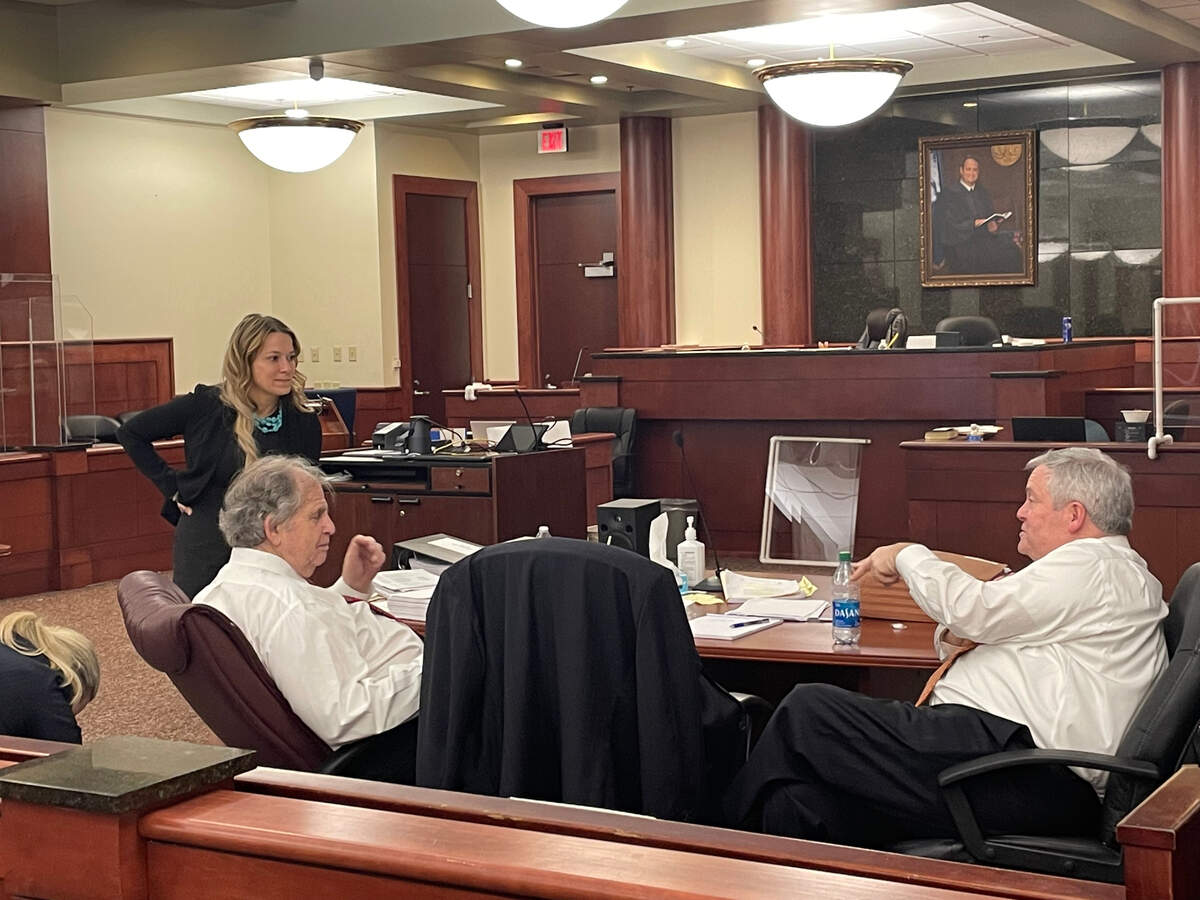
It wasn’t simply the one juror changing her verdict that made the moment “really unusual,” but the series of events, Swerling said. In all his years in the courtroom, he had once had a juror change their decision when polled. But the circumstances leading up to that one case were more typical.
After a verdict is read, it’s not uncommon for the jurors to be polled. The reason jurors are polled is to confirm no mistakes happened during the reading of the verdict, but polling also serves as a last ditch effort by the losing side to get a different outcome.
Typically it’s the defense after a guilty verdict that requests a poll.
The next unusual move happened during the polling. In an apparent mistake, the court official asked only 11 of the jurors to affirm their verdict. The mistake was noticed, and correcting the mistake was discussed among the lawyers and judge at the bench. The final juror was asked to affirm her verdict.
Her “no” came after the jury had declared a verdict three times. The first verdict happened when the jury came to a decision in their deliberation room. The second verdict was declared when the jury came back into the room. McCaslin, the judge, asked the lead juror if they had come to a unanimous decision. He answered that they had, which constitutes the second time a verdict was given.
Next, the court official read the not guilty verdict aloud, a third time a verdict was declared.
After the juror changed her verdict, McCaslin gave the jury a second “Allen charge,” which is fittingly also known as a “dynamite charge.” Having to give two Allen charges added to the irregularity of the conclusion.
An Allen charge is simple. The judge explains to the jury the importance of coming to a verdict, that the trial will end in a mistrial if they don’t, and they’ll have to do it all again with a new jury. The judge then sends the jurors to their room with a stern message to reach a unanimous decision.
“Do not be afraid to change your opinion,” McCaslin had told the jury. “But do not change an honest belief” about evidence. She said a juror should not change their verdict based on others’ verdicts.
The jury deliberated for about 10 minutes before coming back into the courtroom and going through the verdict rendering process again — declaring they had a unanimous verdict and having the court official read the verdict.
The jury was polled again without surprises.
The juror who had given the Holland family hope raised her right hand and softly said “yes,” her verdict was not guilty.
In total, with deliberations ending twice, two declarations of a verdict, two verdict readings and two polls, the jurors gave their verdicts eight times; only once was the verdict not a unanimous not guilty.
The jurors had heard from 27 witnesses over eight days and spent nearly 3 hours listening to closing arguments on the ninth day. They had nearly 80 pieces of evidence, including the gun that killed Holland and photos of the crime scene, to consider.
McCaslin repeated what she said about twenty minutes before.
“You’re a free man,” she told Lazzarini, who later walked out of the court trailed by his team of lawyers and some family members.
Friends and family of Holland had cried. A lawyer representing Holland’s parents passed by reporters and said “Y’all have a good night.”
What’s next?
The not guilty verdict ends the case all but certainly.
“The state did a great job of presenting this case to the jury and the jury did an outstanding job of weighing all of that evidence,” Harris, one of Lazzarini’s attorneys, said the day after the trial concluded. “And although it was difficult during the verdict stage of this trial, they reached the right decision.”
Barring the discovery of something beyond extraordinary, the prosecution cannot appeal the not guilty decision.
Lazzarini still faces a civil wrongful death lawsuit by Holland’s parents.
This story was originally published March 4, 2022 at 5:30 PM.