
SC judge upholds Attorney General Wilson’s right to give $75 million to private law firms
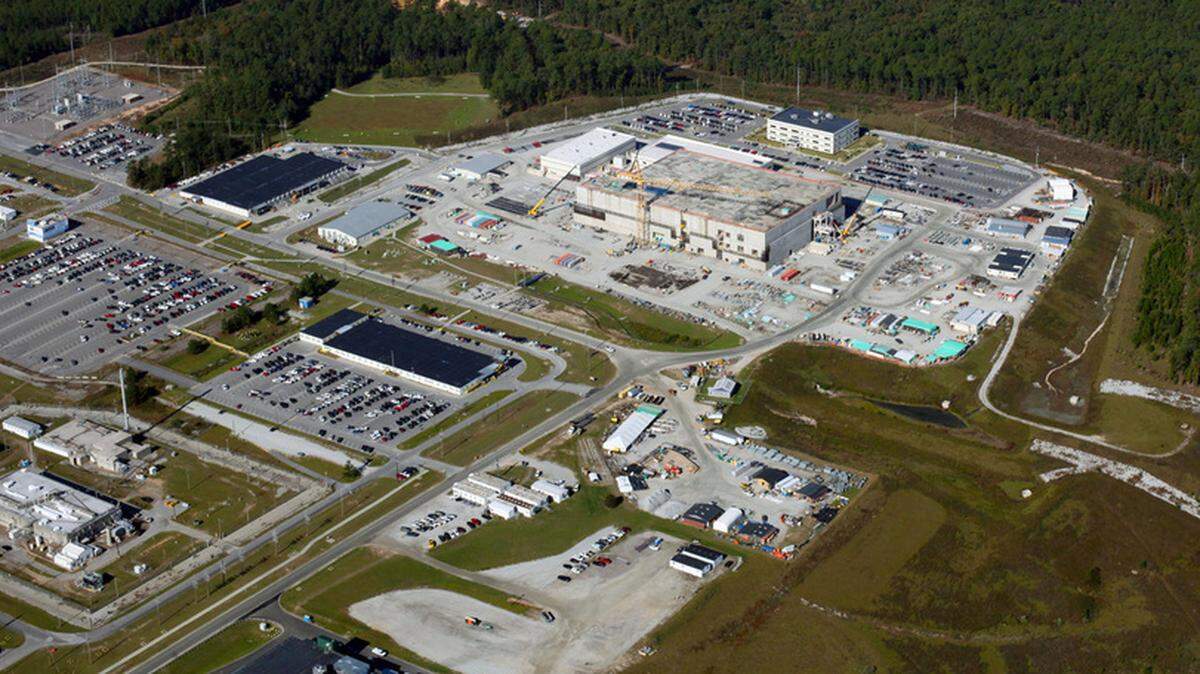
A South Carolina state judge has tossed out a lawsuit challenging Attorney General Alan Wilson’s award of a $75 million legal fee to two law firms involved in settling a dispute over tons of poisonous plutonium at the Savannah River Site.
Wilson, as the state’s chief legal officer, has “broad authority to direct and control the State’s legal affairs,” wrote state Judge Daniel Coble, who cited state laws and numerous precedents.
And under that authority, Wilson specifically had the power to award a contingency fee contract that wound up bestowing $75 million out of a $600 million settlement to two small Columbia law firms for their work on a long-running dispute with the U.S. Department of Energy, Coble wrote in the 19-page opinion.
The dispute focused on what to do with nearly 10 metric tons of abandoned toxic plutonium the federal government had left at the Savannah River Site.
Because Wilson, as a member of the state’s executive branch of government, has clear authority to hire private lawyers and award contingency fees, the courts — the judicial branch — do not have the power to overrule him, Coble wrote.
“The power to overrule another branch of government that has been duly elected by the people should be a rare and restrained move,” Coble wrote.
The issue landed before Coble after the state Supreme Court last year reversed an earlier lower court decision that had killed the lawsuit. The Supreme Court sent the matter back to circuit court “to consider the merits” of the challenge, and Coble wound up with it.
Jim Griffin, a lawyer for plaintiffs, said he expects to appeal Coble’s ruling, beginning with the mandatory motion asking the judge to reconsider his ruling.
“We’re reviewing the decision,” said Griffin, who represents two watchdog plaintiffs, the S.C. Public Interest Foundation and John Crangle, a Columbia attorney who writes on public corruption and ethics matters.
An attorney general’s spokeswoman said, “Our office is pleased the Court recognized the Attorney General’s authority to enter contracts to serve the public interest.”
Decision “wrong”
Crangle said Coble’s decision is wrong. “The Supreme Court remanded the case to Coble for a hearing on all our claims, and he held no hearing on any of our claims.”
“We have asked for discovery, we’ve asked how much time the lawyers put into the case, and they won’t give us that information,” Crangle said. “At a minimum, the court should have granted us motions to compel discovery.”
Coble’s decision so grossly conflicts with the Supreme Court’s clear September 2022 order that a trial court judge should consider the “merits” of the case that Crangle said he wanted to testify against Coble on Nov. 7, when Coble is slated to appear before the Judicial Merit Selection Commission to get approval for his next six-year term.
But, said Crangle, Coble’s decision came out the afternoon of Oct. 20, a Friday. The deadline for submitting a request to appear before the Commission was noon on Monday, Oct. 23.
“It was such a short time frame. I didn’t have a chance to talk with my three attorneys,” Crangle said.
Ironically, if he had filed a complaint, Crangle would have been required to keep the matter secret while the Commission investigated, under its rules. But since Crangle missed the deadline, he is free to talk to the media and air his complaint in public.
Crangle also said he would ask Rep. Todd Rutherford, D-Richland, who sits on the 10-member Judicial Merit Selection Commission, to recuse himself from voting on whether Coble should be recommended to the General Assembly for re-election to a six-year term. Coble is running unopposed for the Richland and Kershaw county judgeship, which pays approximately $200,000 a year.
Rutherford was hired by one of the two private law firms — Willoughby & Hoefer, — to represent the firm, and he argued the case in front of Coble earlier this month. The other law firm, Davidson, Wren & DeMasters, was represented by two of that firm’s lawyers, Will Davidson and Ken Woodington. The two firms split the $75 million fee but no one has made public the individual amounts the firms got.
Asked about Crangle’s suggestion that he recuse himself, Rutherford refused. “Just because someone loses a case, they want to allege it could only have happened because I voted for him for his judgeship.” Rutherford said he and other commission members judge candidates on their merits. Politics and favoritism don’t enter the equation, he said.
Coble’s decision
In his ruling, Coble granted the defendants — the attorney general and the two law firms — what is called summary judgment, which means he only concerned himself with the laws related to the case, not any facts.
And under South Carolina laws, Crangle and the watchdog group had no case, Coble concluded.
“In the matter before this Court, there are no genuine issues of material fact. The only disputed issue is a question of law,” Coble wrote.
It is beyond dispute that state law and court precedents give the attorney general, the state’s chief legal officer, the authority to hire private law firms and enter into contingency fee agreements with them, Coble wrote. The agreement in question required the federal government to pay the state $600 million from which $75 million (12.5 percent) was to be paid for “attorney fees, and expenses,” Coble wrote.
“All that is needed to be known in this case, is known. This Court believes further discovery is not needed to decide the legal issue in this case,” Coble wrote.
Moreover, there is no state law that constrains or limits the attorney general’s litigation strategies or contingency fee agreements, Coble wrote.
Coble also wrote that when the law is so clear-cut, it is a delicate situation “fraught with political, economic, and legal issues” for any court to start weighing in on such issues.
“Is the answer to run to the courts to solve problems that Plaintiffs allege were created by the executive branch when it created a contract that is not reasonable? This Court refuses to become a ‘super-court’ and place itself in the untenable situation of saving the executive branch from itself,” Coble wrote.
Coble also made it clear he was not like the majority of S.C. Supreme Court justices who in 2014 angered a conservative legislature when they decided a landmark public school education case, Abbeville School District vs. State of South Carolina. In that case, the 2014 high court ruled that the Legislature had failed — as required by the state constitution — to provide a “minimally adequate” education to poor and rural school districts.
Instead, wrote Coble, he sided with those justices who in 2017 overruled the Abbeville decision and called the 2014 decision an example of judicial overreach that encroached on the Legislature’s ability to set the state budget, including how much money to spend on the state’s public schools, as bad as some might be.
Remedies exist to address any irregularities in the attorney general’s authority to award contingency fees, Coble wrote. The General Assembly has the power to pass laws regulating contingency fees, and the public too has a say, Coble wrote.
“The attorney general, as an elected official, is still accountable for any actions seen as reasonable or unreasonable,” Coble wrote. “This court will not place itself in the stead of the Legislature or the people.”
Coble also noted that although Gov. Henry McMaster had objected to the settlement agreement, McMaster’s objection was political in nature because he had not joined the plaintiffs in their lawsuit.
In an Aug. 30, 2020, letter to Wilson objecting to the settlement, McMaster said his main concern was that Wilson’s attorneys had not gotten “sufficient assurances” that the deadly plutonium would be removed from South Carolina “in a timely manner.”
Moreover, the governor wrote, then-President Trump, his top officials and the state’s Congressional delegation played a major role in arriving at the settlement, no matter what Wilson and his private attorneys claim they did.
“I simply cannot endorse the payment of $75 million in attorneys’ fees under the circumstances,” McMaster wrote in 2020.
In an interview, Rutherford said Coble “clearly” got the ruling right. He noted that Coble had written if a court could adjust the size of a legal fee downward, it could also adjust the fee upward, and that would not be right.
Crangle said Coble “basically accepted Todd Rutherford’s argument that the attorney general can do whatever he wants. That is the North Korean view of the law, that the big guys can do whatever they want. It’s not the American view of the law where public officials are limited by laws and reason.”
The lawsuit by Crangle and the Public Interest Foundation was filed just weeks after an August 2020 announcement that state and federal officials, as well as Wilson’s private lawyers, had resolved what to do with the tons of plutonium the federal government had seemingly abandoned at the Savannah River Site. The plaintiffs tried to stop Wilson’s transfer of $75 million to the law firms but were unsuccessful.
The federal government had planned to convert the plutonium, originally meant for nuclear weapons, into nuclear power plant fuel by 2022. But in the early 2000s, those plans failed.
The settlement gave the federal government until 2037 to remove the fuel. And under the settlement, federal authorities paid South Carolina $600 million, from which Wilson deducted $75 million for the law firms and forwarded the money to them.