
Hidden camera case in Aiken rental unit is ‘ultimate invasion of privacy,’ lawyer tells jury
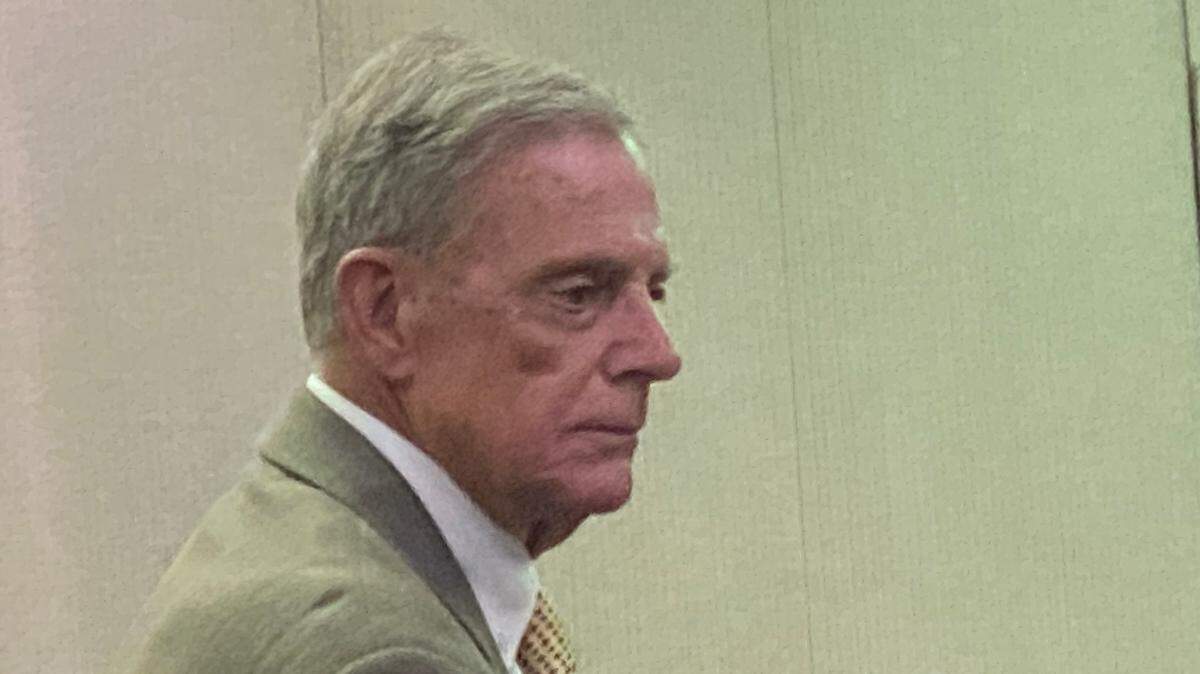
Clashing narratives about secret cameras that videoed intimate scenes of unsuspecting nude and partially dressed renters in an Aiken rental cottage dominated the opening day of a voyeurism and invasion of privacy civil trial on Tuesday.
“This case is the ultimate invasion of privacy,” attorney Deborah Barbier told a jury of seven women and five men in a courtroom on the second floor of the Aiken County courthouse.
In an opening statement, Barbier — who represents plaintiffs Gabriel and Heather Crespo — told the jury that in 2001 her clients were a newly-married young couple who came to Aiken for the area’s popular polo season.
While there, they rented a small cottage from defendant Rhett Riviere, now 70, longtime Aiken resident, and his then-wife, Josee, Barbier told jurors.
“From everything they (the Crespos) could see, these (the Revieres) are fine folks. But ladies and gentlemen, it’s what they didn’t see, what they couldn’t see, and what they weren’t meant to see, that is at the very heart of this case,” said Barbier.
Many things in life are beyond our control, Barbier told the jury, but “perhaps mostly importantly, we control who sees us in our most vulnerable and intimate moments, who sees our bodies... This is the one area we expect and demand complete control.”
While in the cottage, the Crespos were videoed on multiple occasions without clothes “and in the privacy of their bed... (and) while they were in the bathroom,” Barbier said.
In July 2022 when the Crespos learned for the first time of the videos’ existence, they were devastated, Barbier said. “They couldn’t even begin to comprehend the extent of the harm, the violation and the invasion,” she told the jury.
The Crespos “mental anguish” included wondering who had seen the videos, she said.
Defense lawyers sow doubts
In his opening statement, defense attorney Jim Griffin — representing Rhett Riviere — did not deny that videoing had taken place and that it was illegal. “No one is going to try to justify voyeurism in any form or fashion.”
In a civil case, lawyers are after a “money jackpot,” Griffin told the jury, and since the Crespos are alleging they were harmed, jurors should “want to know how much was spent on medical bills, how much was spent on therapy bills?... You have to prove that you suffered severe or emotional injury.”
Moreover, the events the Crespos sued over happened 23 years ago — “a generation ago” — and people generally have three years to sue someone for invasion of their privacy, Griffin told jurors.
But the lawsuit clock also can begin ticking from the time when people actually learn or “should have known” about a wrong that was done to them, Griffin said.
And in the Crespos’ case, the defense will put up a witness who says that in 2001 she talked with Heather Crespo about a camera in a hole in the wall in the cottage bathroom, Griffin told jurors. “What we do know is there was an opportunity in 2001 for Mr. and Mrs. Crespo to speak up.”
Moreover, there is no evidence that the videos of the Crespos were circulated on the internet or social media, Griffin said.
The key point to keep in mind is that the Crespos missed their legal opportunity to bring a lawsuit by waiting until 2022, Griffin told the jurors.
Josee Riviere’s attorney, John Harte, told the jury that in 2001, his client had been only recently married to Rhett Riviere and knew nothing of any videoing in his rental properties. Her inclusion in the lawsuit is “guilt by association,” Harte said.
“Josee is not the first person who trusted their new husband and then later discovered that trust was misplaced,” Harte said.
Rhett Riviere is being sued for negligence, invasion of privacy, fraud, violation of the state’s unfair trade practices act, and intentional infliction of emotional distress. Josee Riviere, who is no longer married to Riviere and goes by a different name, is being sued for negligence, fraud and violating the state’s unfair trade practices act, according to a complaint in the case. The Crespos seek actual and punitive damages.
Delays mark trial’s start
The trial’s start was delayed two hours Tuesday because of problems with the court reporter’s transcription equipment.
In the end, the trial did not begin until after noon, when opposing lawyers made opening statements summing up key points in each side’s case.
Trial Judge Martha Rivers explained the late start to the jury, saying that trials were unlike the movies, where the action moves rapidly. “Never on television would there have been an all-morning delay.”
More delays came in the afternoon.
When the first witness, retired South Carolina Law Enforcement Division special agent Clint Busbee, took the stand to explain about how the videos at the heart of the plaintiffs’ case had come to SLED’s attention, Riviere defense attorney Joe McCulloch objected numerous times.
And numerous times, Rivers sent the jury from the courtroom. With the jury out, Rivers patiently heard arguments from McCulloch, Harte and Barbier, then made decisions and brought the jury back in.
Busbee testified that SLED learned about the videos because the Aiken Department of Public Safety had a “conflict” with investigating the case and contacted SLED. One of that agency’s missions is assisting smaller law enforcement agencies around the state.
Although the judge allowed Barbier to introduce how SLED had sought and gotten search warrants to find electronic evidence in the case, Rivers kept from the jury information from the affidavits — sworn statements used to convince a magistrate to issue a search warrant.
“We have to be able to tell the story, Your Honor,” Barbier told Rivers. “The jury has to understand this was legally gathered evidence.”
McCulloch said his goal was to prevent hearsay — unsubstantiated statements that may be true or false — from reaching the jury and to avoid confusing jurors by improperly suggesting that the case was a criminal case rather than a civil case.
“This is not a criminal case,” McCulloch told the judge.
In a civil case, plaintiffs seek monetary damages against another party. In a criminal case, prosecutors bring charges and seek to have a guilty defendant put in jail or pay a fine. Riviere also faces criminal charges of voyeurism but they are still pending.
Also on the plaintiffs’ witness list was SLED special agent Britt Dove, a specialist in computer forensics, who gave key testimony in the 2023 Alex Murdaugh murder trial about a video that placed Murdaugh at the scene of the murders of his wife Maggie and son Paul.
Dove was on the witness list to authenticate the videos that the defense team is expected to show to the jury later in the trial.
In a statement to the judge with the jury out of the courtroom, Barbier said that the number of videos found on memory cards linked to Riviere total 24,000. She plans to introduce 10 videos.
Riviere is a former rental operator for Airbnb, but the incident in this case took place well before he was associated with Airbnb. That company stopped working with him in 2019.
Besides Barbier, lawyers Ryan Beasley and Wesley Few represent the Crespos.
Attorneys Margaret Fox and Kathy Schillaci also represent defendants in addition to McCulloch and Griffin.
This story was originally published September 18, 2024 at 2:12 PM.