
Benjamin should get 1 year in prison for his role in SCANA’s nuclear reactor fiasco, feds say
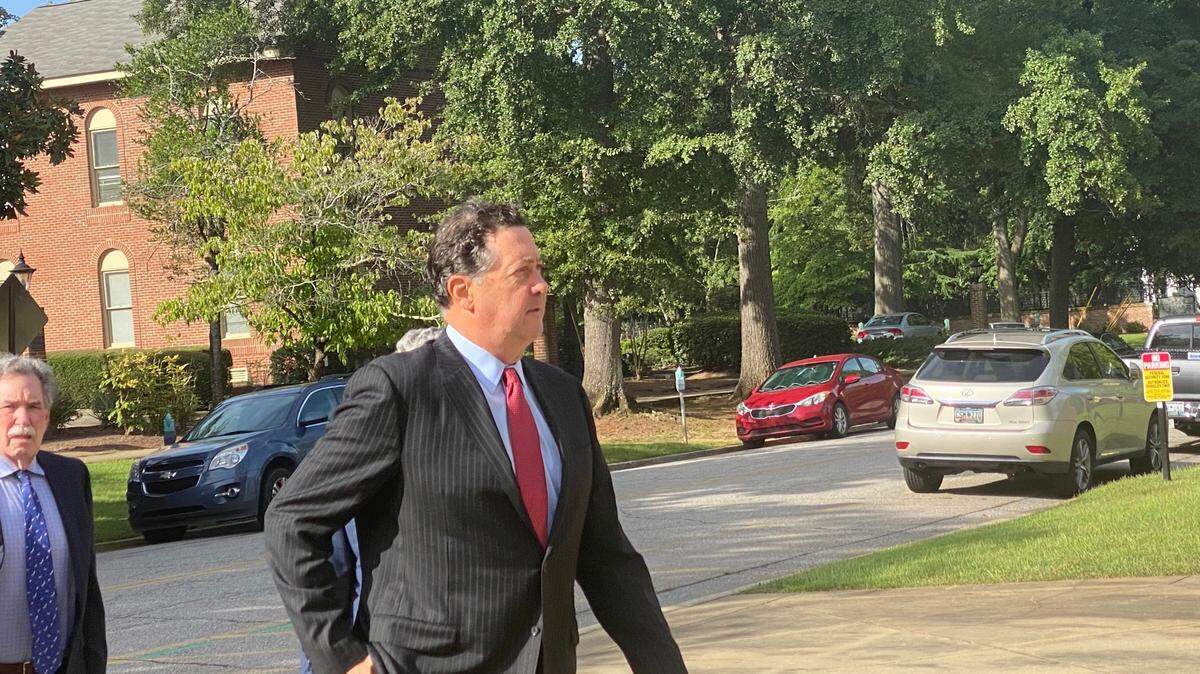
A former Westinghouse executive who played a major role in the downfall of the once-proud SCANA electric utility and its multi-billion dollar failure to build nuclear reactors should go to prison, federal prosecutors say.
The prosecutors’ recommendation that Jeffrey Benjamin should go to prison for one year was made in a memo filed Thursday in U.S. District Court in South Carolina in advance of Benjamin’s sentencing hearing in Columbia on Oct. 15 before federal Judge Mary Lewis.
Last December Benjamin pled guilty to one felony count of “aiding and abetting the failure to keep accurate corporate records” in connection with SCANA’s doomed effort to build two nuclear reactors to produce electricity at the V.C. Summer facility near Jenkinsville north of Columbia. Other charges of conspiracy, wire fraud and securities fraud were dropped.
Benjamin, an official at Westinghouse Electric overseeing nuclear construction for SCANA, is the fourth and final defendant to plead guilty in the years-long investigation into the abandonment of the doomed project by SCANA and its junior partner, Santee Cooper, because of massive cost overruns and missed production schedules.
Previously two former SCANA top executives — CEO Kevin Marsh and Chief Operating Officer Stephen Byrne — pled guilty to fraud in the case and were given prison terms. Each also had a $5 million fine.
Marsh received two years in federal prison and Byrne, 15 months. Both have been released.
A former Westinghouse executive who worked under Benjamin, Carl Churchman, pled guilty to lying to an FBI agent in the case. He received six months home detention.
The unexpected halt of the nuclear project in July 2017 threw more than 4,000 employees out of work, dashed South Carolina’s hopes for more clean energy and led to the eventual absorption of SCANA — once one of the state’s premiere blue chip companies — into energy giant Dominion. Up to its out-of-the-blue admission of failure, SCANA had made rosy public statements about the project’s progress.
The FBI and the U.S. Attorney’s office brought criminal charges against the Westinghouse and SCANA officials, not because the bungled project was such a failure, but because officials made knowingly false optimistic public statements about the project’s progress to investors, regulators and consumers, prosecutors said. Public companies such as SCANA, whose shares are traded on the New York Stock Exchange, have a legal duty to make truthful public disclosures in matters that might affect stock prices.
It is now the seventh year of the FBI’s investigation and prosecution of the SCANA debacle.
The coverup of problems at the site enabled top officials at the companies to continue to collect fat salaries and bonuses for two years, from about 2015 to 2017, according to government evidence in the case.
Benjamin played a key role in hiding the truth about the lack of progress on the project, the government’s sentencing memo said.
“No one else occupied a position comparable to Benjamin’s in terms of project visibility and messaging. Had Benjamin encouraged accuracy and transparency while conveying the truth at every opportunity, the catastrophic conclusion to the Project would have been avoided, perhaps not in terms of completion, but certainly in terms of fallout.
“Instead, he (Benjamin) chose expediency, secrecy, deflection, and misdirection — with his subordinates, with his peers, with his chain of command, and with the (SCANA)... His was the most egregious conduct of any of the actors, and his sentence should be the maximum allowed under the plea agreement,” the government’s memo said. .
Benjamin’s attorney, William Sullivan, said Friday he expects to file his pre-hearing memo the week of Sept. 30 and indicated he plans to vigorously contest what prosecutors say.
“We fundamentally disagree with the government’s recent submission in terms of its numerous inaccuracies and unfounded assumptions about purported activity that has absolutely nothing to do with the offense at issue in this sentencing.
“We look forward to promptly filing our response to correct the record and to educate the Court prior to the upcoming proceeding,” Sullivan said in an email.
In their memo — 18 pages followed by 68 pages of emails, letters and other evidence — government prosecutors Winston Holliday, Brook Andrews and William Schurmann gave a brief history of the nuclear project, how it came to fail, the consequences and the role Benjamin played.
Benjamin was a “toxic manager” who hid true deadlines and abused those under him who sought to bring the truth about the nuclear project, the memo said. He “squelched feedback, fostered a culture of intimidation, dismissed suggestions from the team, and controlled the flow of information,” the memo said.
Deadlines for bringing two nuclear reactors online by Jan. 1, 2021, were crucial to the project because SCANA stood to gain a $1.4-billion dollar tax credit from the federal government if the reactors were finished by then. Moreover, SCANA was adding a monthly surcharge to its ratepayers’ bills to pay for ongoing reactor construction costs.
In all, utility ratepayers paid more than $9 billion in ongoing costs for reactors that were never finished.
Westinghouse also wanted to finish the reactors on time to show the market that its reactors — built based on a new design — were viable. In the end, the sudden collapse of the Jenkinsville site helped cause Westinghouse to declare bankruptcy. Benjamin was fired by Westinghouse in March 2017, several months before SCANA walked away from the project.
Another loser, in terms of making a bad bet to embrace what became a fiasco, was the S.C. General Assembly. In 2007, lawmakers had passed a law that allowed SCANA with little oversight to add billions of dollars to ratepayers’ bills to pay for ongoing construction at the site.
At its height, SCANA had 750,000 electric customers and 350,000 natural gas customers.
The SCANA scandal dominated crime news in South Carolina until the horrific murders of Paul and Maggie Murder by Alex Murdaugh in June 2021 sparked state and national attention and drew the media spotlight elsewhere.
This story was originally published September 30, 2024 at 5:30 AM.