
Richland County jail has pervasive, commonplace ‘culture of violence,’ U.S. attorney says
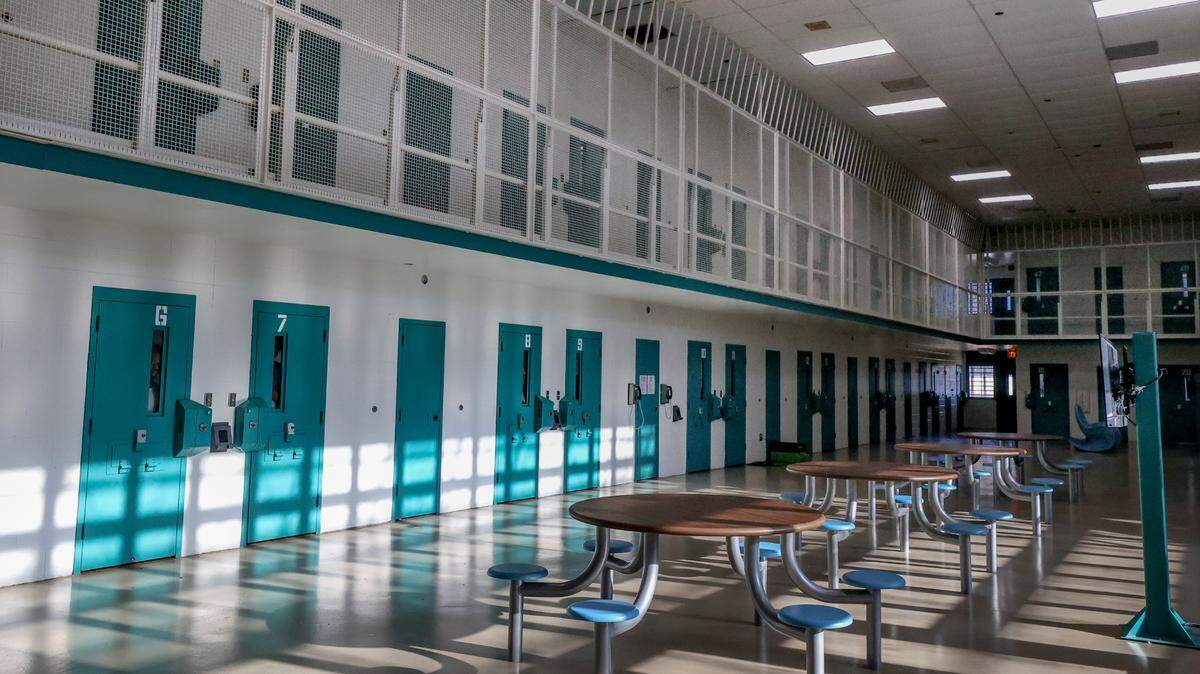
The U.S. Department of Justice has released its findings on the Alvin S. Glenn Detention Center in Richland County, describing a “culture of violence” that became “pervasive, systematic and commonplace,” according to U.S. Attorney for South Carolina Adair Ford Boroughs.
The report found “reasonable cause” that the jail violates the Eighth and Fourteenth Amendments to the U.S. Constitution by exposing detainees to an “unreasonable risk of violence and harm” from other detainees, resulting in hospitalizations and deaths, according to the report.
This failure to provide a reasonable level of safety means that people incarcerated in the county jail face a very real threat of being stabbed, assaulted and sexually assaulted before they ever see the inside of a courtroom, Boroughs said at a press conference Wednesday.
While violence at jails is a nationwide problem, Alvin S. Glenn stands apart, she said. The jail has four times the number of stabbings compared to the jail for Miami/Dade County in Florida, despite having a quarter of the Florida jail’s detainee population .
Many incidents were only learned about in media reports, and not from the jail’s flawed internal tracking system, Boroughs said.
While Boroughs recognized recent efforts by the jail to improve conditions, she said that chronic understaffing, a lack of supervision of detainees and poor internal controls were at the root of the jail’s issues.
The U.S. Department of Justice and the U.S. Attorney’s Office for South Carolina began their investigation into the Richland County jail in November 2023. It came following several deaths and other violence at the jail.
Lawyers representing Lason Butler, who died of severe dehydration in the jail in February 2022, wrote a letter to the U.S. Justice Department urging an investigation.
The focus of the investigation was whether the degraded physical conditions and pervasive violence at the jail violated detainees’ civil rights. At the same time, the Justice Department launched an investigation into the Sheriff Al Cannon Detention Center in Charleston, which is ongoing.
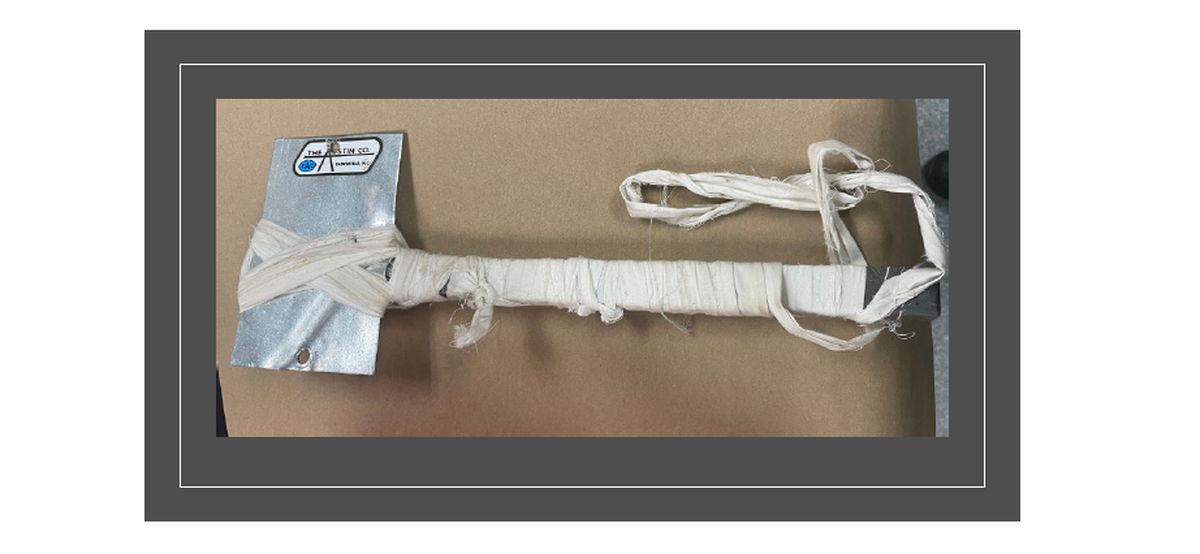
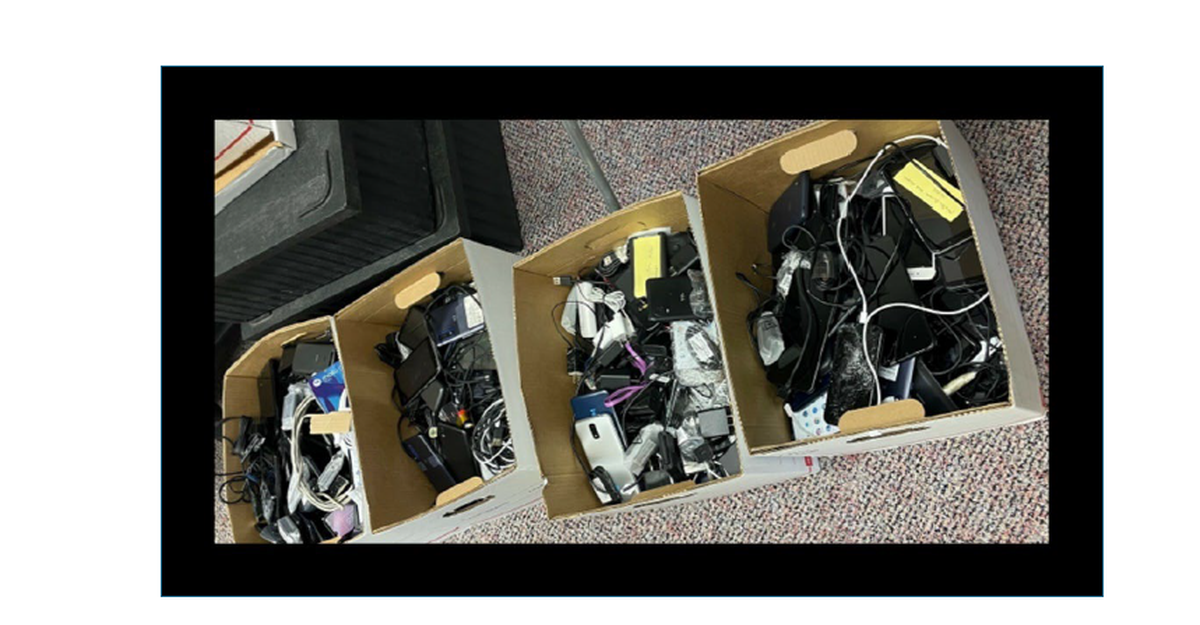
As part of the Alvin S. Glenn report, the U.S. Attorney’s Office laid out a number of remedial measures described as the minimum standard for correcting constitutional violations at the jail. Among them were requirements that the jail update and implement a 2023 staffing plan, increase direct supervision of detainees, provide remedial training for officers, develop a plan to ensure preventative maintenance of the facility as well as a plan to reduce the amount of contraband in the facility.
If the county fails to take adequate steps to implement these minimum standards, the Justice Department has the option to file a lawsuit under the Civil Rights of Institutionalized Persons Act.
Richland County Administrator Leonardo Brown issued a statement Wednesday afternoon saying county officials disagree with the Justice Department’s report. Officials “strongly believe we provide constitutional protections for individuals housed in Alvin S. Glenn.”
Brown said that many of the facts in the report were “outdated” and did not reflect the extent of the improvements that had been made. As part of that effort, Richland County has now spent roughly $33 million renovating the facility.
While Brown has largely blamed detainees for the violence and damage to the facility in previous statements, he acknowledged in an interview with The State last week that improvements were needed.
Since renovations began at the jail and high security units were reopened, stabbings declined 82% from June to December 2023 compared to the same period in 2024, Brown said.
Six housing units have been fully renovated and equipped with top-of-the-line locks costing $5,500 each. The facility’s kitchen, roof and HVAC system have also been completely overhauled. By July, the county anticipates that no detainees will reside in unrenovated housing units.
“These improvements are making the facility safer every day,” Brown said, describing the jail as a “top priority.”
In his statement Wednesday, Brown said that the county and its lawyers were planning to work with the Department of Justice to “correct their misguided conclusions.”
Richland County will continue to face a battery of lawsuits, including one in Butler’s death as well as at least a dozen suits concerning injuries, attacks and poor medical care in the facility. The county is also fighting a federal class action lawsuit from Disability Rights South Carolina, a nonprofit that represents South Carolinians with physical disabilities and mental illnesses. The lawsuit argues that the jail has failed to meet its constitutional standard of care for inmates with diagnosed mental illnesses.
“There is nothing misguided in these finding,” said attorney Stuart Andrews, who represents Disability Rights South Carolina in their suit against the jail. “It’s unfortunate that the leadership in the jail does not have a means of communicating effectively and gaining the trust of individuals who are incarcerated so they can hear directly from them bout the seriousness of what people live with everyday.”
Andrews called on the Richland County Council to heed the findings of the Justice Department’s investigation, saying “this is not the time to run and hide and fight.”
While Boroughs declined to get into specifics about Richland County’s level of cooperation throughout the investigation, she stated that her office was “not adversarial” in its findings on the jail.
While the investigation initially set out to examine both practices and policies as well as the physical conditions at the jail, Boroughs noted that the county had taken significant steps to improve the facilities.
“We do applaud the steps the county has already taken with regard to the physical plant,” Boroughs said. “We believe that we have a shared goal with the county to make conditions at the jail safe, to make them meet minimal constitutional standards, and we look forward to working with the county to make that happen here in our community.”
‘An ongoing failure’
In August 2023, one detainee twice resorted to self mutilation in order to be placed on suicide watch and get away from his housing unit where he had been repeatedly raped and extorted, according to the report.
In September, nine individuals reportedly placed a sheet over another detainee and beat him unconscious while there was no staff on the unit. It took five hours for the detainee to receive help, and the Richland County Sheriff’s Department only learned about the attack after it was reported in several news outlets.
That November, a detainee was stabbed when no officer was present in the detainee’s unit, and when investigators arrived they found inmates mopping up the blood.
These were just three of the incidents highlighted by the Justice Department report to demonstrate an “ongoing failure to adequately protect incarcerated people from violence.”
The severe violence was driven by what investigators characterized as “a lack of sufficient staff, a deteriorating facility, and systemic lapses in security operations, such as deficient prisoner supervision, inadequate internal investigations, and lax contraband prevention.”
In preparing the report, the Justice Department conducted interviews with staff and detainees, held community meetings and reviewed thousands of documents from the jail along with records from hospitals and other state and county agencies.
Investigators also conducted three inspections of the jail, the most recent in December 2024.
But Justice Department investigators say they struggled to determine the full scope of violence because the jail does not keep “complete or accurate records of violence in the facility,” according to the report.
Incidents of violence are not reported in a consistent manner, with individual officers maintaining different spreadsheets and log books with differing counts for the same incident.
Attacks would be routinely categorized under various headings, including “assault on offender/staff,” “gang related,” “disturbance,” “information,” or even simply “other.”
Often reports were missing crucial information. In 20 reports identified in 2023, inmates were reported to have injuries consistent with assaults, like black eyes, bruises and broken jaws and eye sockets, but no information was provided about how the injuries occurred.
Understaffing and a lack of direct supervision of detainees is central to the jail’s ongoing issues, according to the Justice Department. While the county has said that its plan is to ensure one staffer is in guard post and two on the floor of a housing unit at all times, the jail has fallen far short of those goals, according to investigators.
In 2022, the jail’s staff fell to an all-time low of 77 officers out of a total of 205 allocated positions, according to the report. Since then, the county has raised the starting salary from $32,219 to $44,424 and offered sign-on and retention bonuses. But the justice department estimates that once renovations are completed, the jail will need 362 detention officers to fully staff the jail.
The report also raises concerns about staff practices. A review of the jail’s watch records from January 2024 found that officers conducted fewer than 17% of the required patrols. Of the patrols that were conducted, fewer than half were performed within the required 30-minute window. Logbooks were often void of entries for hours at a time, according to the report.
While chronic understaffing is a common problem at jails and prisons throughout South Carolina, the report noted that Alvin S. Glenn had struggled with understaffing since 2018. As a result, the jail was increasingly forced to abandon direct supervision of detainees and monitored them by camera from a central command hub.
In order to compensate for a lack of detention center officers, the jail has increasingly relied on private security company Allied Universal to staff essential jail functions, including the facility’s central control. While Allied Universal employees are not meant to interact with detainees, the report noted that they lacked training and were not subject to the same background checks and some even have felony convictions.
Allied Universal staff members had been arrested for furnishing contraband to inmates, and in one incident were recorded in a logbook as abandoning their posts to “roam aimlessly around the facility for various hours of the night,” according to the report.
But over a 10-month period from June 2022 to April 2023, Richland County spent over $1 million in overtime pay for Allied Universal staff.
What’s next?
To address the problems facing the jail and meet minimum standards for a constitutional level of care, the Justice Department has laid out five areas where the jail must make improvements. These are staffing and supervision, the classification of detainees, contraband control, the physical facility and investigations.
In total, 40 points outline steps that the county must take within 49 days of the report’s release or the U.S. attorney general has the option to file a lawsuit to “correct deficiencies,” according to the report.
These include requirements to update and implement the county’s staffing plan; conduct a study evaluating the jail’s inmate classification system; develop and implement a contraband interdiction plan; provide remedial training on correctional procedures, incident response, and incident reporting to all staff; and ensure that all detainees with limited English proficiency have access to interpretation and translation services.
Meanwhile, lawsuits against the jail are likely to continue, with a significant boost from the findings of the report.
Bakari Sellers, an attorney for Butler’s family, said he was grateful to see the results of the Justice Department’s investigation.
“It ensures that Lason didn’t die in vain. Hopefully the county is ready to move the beyond the petty and towards solutions,” Sellers said.
This story was originally published January 15, 2025 at 11:28 AM.