
Trump’s Jan. 6 pardons include SC men convicted of violent attacks on police officers
Seven people from South Carolina who were convicted or accused of attacking police during the Jan. 6, 2021, riots at the U.S. Capitol were among the more than 1,500 people President Donald Trump pardoned Monday.
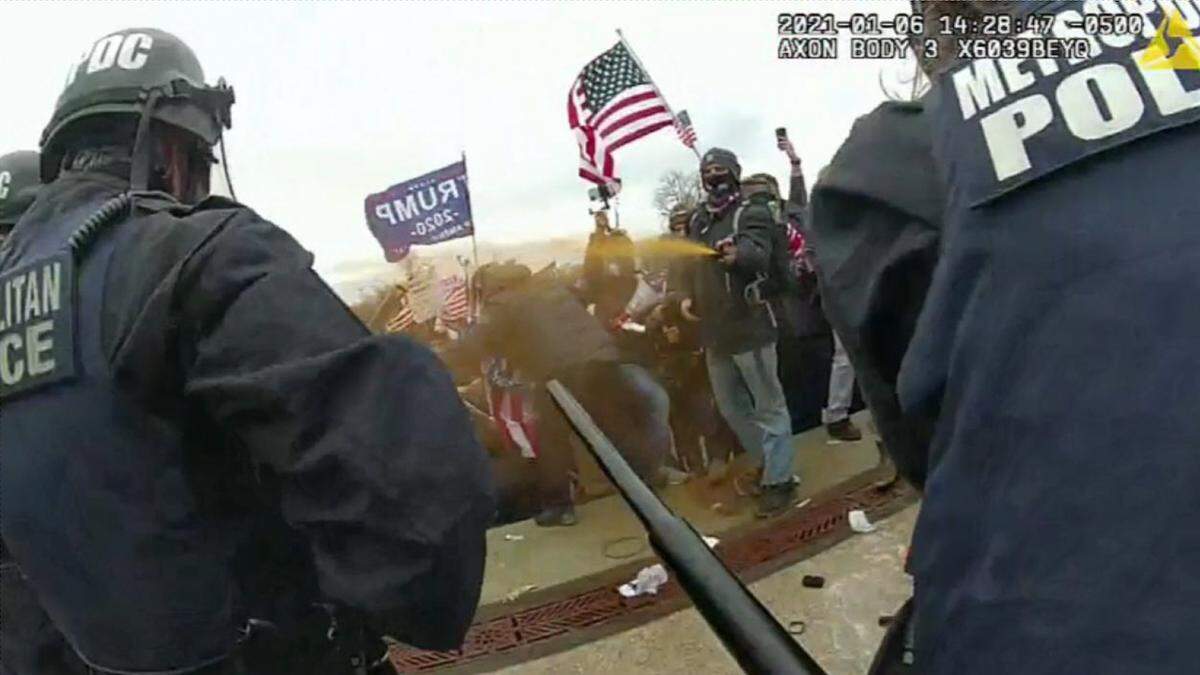
One of them, Thomas Casselman, 31, of Oconee County, a beekeeper and mechanic who pled guilty in 2024 to assaulting police with chemical spray, was released from his low-security prison in Arkansas on late Monday, his lawyer, Renae Alt-Summers, said. He was supposed to be released in June 2027.
“Mr. Casselman is home safe and sound,” said Renae Alt-Summers, his Columbia court-appointed attorney.
In all, 34 people from South Carolina received a “full, complete and unconditional” pardon on convictions or charges related to the Jan. 6 riot. They fall into three categories: those who attacked police, those who were disruptive and aggressive without attacking police and those who were non-violent.
The pardons dismiss pending charges for defendants who had not gone to trial and release convicted people who were serving time in prison. Trump’s actions also restore any rights that might have been taken away. However, federal court documents including judgments and original charges will still be public record, according to lawyers connected with the case. Nearly all cases were handled by federal courts in Washington.
In addition to the seven people from South Carolina who were convicted or accused of committing violence against police, Trump pardoned another 11 who were convicted or accused of aggressive conduct that stopped short of attacking an officer but in some cases included damaging property.
The third and final category of South Carolina defendants whom Trump pardoned included 16 people who were charged with trespassing related offenses — basically being inside the Capitol during the riot without attacking police or vandalizing property.
These non-violent offenders include former Citadel cadet Elias Irizarry, who was 18 and one of the youngest arrested in the aftermath of the Jan. 6, 2021, storming of the Capitol. Irizarry, who carried a metal pole during the hours he was in the Capitol, pled guilty to entering and remaining in a restricted building was sentenced in March 2023 to 14 days in prison.
At his sentencing hearing, Irizarry apologized and told U.S. Judge Tanya Chutkan, “January 6th represented something truly horrible; it was the largest attack on our democracy since the Civil War. The idea of Americans being willing to fight other Americans and tear down the very institutions that millions of other Americans sacrificed and built and protect is horrible. It is something I have to live with being a part of.”
Trump’s blanket pardons appear to have brought an end to one of the largest federal criminal investigations in the Department of Justice history.
But they have also sparked an outburst of criticism from the Fraternal Order of Police, the nation’s largest police union that backed Trump in the election and even some federal judges who oversaw numerous trials and guilty pleas of those arrested in the Jan. 6 riot.
The riot was also one of the most unusual events in American history — thousands of Americans motivated by the unsupported belief pushed by Trump that Democrats had committed fraud in the 2020 presidential election and stolen the election from him. In fact, no evidence was ever produced of massive fraud, despite some 60 court cases in swing states, vote audits and recounts.
It was also unusually violent. More than 140 police were assaulted. More than 600 people were charged with assaulting a police officer. Weapons recovered included firearms, chemical spray, tasers and knives.
The investigation was unusually well-documented. Evidence against defendants was virtually ironclad, including videos and photographs from police and surveillance cameras, selfies, confessions, rioters’ postings in social media and GPS cellphone location data.
Of the 1,583 cases against all defendants, 1,009 pled guilty, according to the Justice Department. Another 221 were found guilty at contested trials.
Violent cases
In addition to Casselman, here are the South Carolina defendants charged with violent crimes:
▪ Nicholas Languerand, of Horry County, pled guilty and in January 2022 was sentenced to 44 months in prison for using a dangerous weapon to assault officers. He was involved in hand-to-hand fighting with officers and was videoed throwing heaving objects at them. He is no longer in federal prison.
▪ George Tenney III, of Anderson, a former Trump supporter, pled guilty in June 2022 and was sentenced to three years in prison for civil disorder. He was videoed grappling with officers and opening a door that let 48 rioters into the Capitol where they “fanned out throughout the Capitol, destroying property and assaulting police and threatening Members of Congress,” according to evidence in his case. He has served his sentence.
▪ Tyler Dykes, of Beaufort County, pled guilty in August 2024 to attacking police. He had “violently wrenched” a police shield from an officer and used it to force his way at the head of a mob into police lines, according to evidence. He is no longer in federal prison in New Jersey serving his 57-month sentence.
▪ Christopher George Rockey, of Berkeley County, pled guilty to assaulting an officer and was sentenced in November to 18 months in prison. Rockey had physically grappled with officers during police-mob clashes, according to evidence. Rockey was scheduled to report to federal prison in Florida on Thursday, Jan. 23, but this week received word that he doesn’t have to go to prison, said his attorney, Brady Vannoy of Moncks Corner.
▪ Justin Perrou, of Charleston, fought with police and sprayed them with “a large canister of chemical irritant,” according to evidence in his case. He also used a bullhorn to yell obscenities at police, according to evidence. He was charged last May with assaulting and interfering with police. His charges are pending, but the government has filed a motion this week to dismiss the case.
▪ Jason Barrett, of Myrtle Beach, fought with police and at one point grabbed a police officer from behind and put his arm around the officer’s neck, prompting the officer to yell, “Get off me!” according to evidence in his case. He was charged last August. No trial date had been set but the government filed a motion this week to dismiss.
Aggressive behavior cases
Here are the 11 South Carolina cases of people accused or convicted of aggressive behavior at the Capitol:
▪ William Norwood of Greer pleaded guilty in October to obstructing law officers in the Capitol and was awaiting sentencing. His case was dismissed Tuesday. He led rioters through the Capitol, according to evidence in his case.
▪ Derek Gunby of Anderson County was convicted by a federal jury in November after a trial and found guilty of obstruction of an official proceeding, disorderly conduct in a restricted building, disorderly conduct in a Capitol building, parading or picketing in a Capitol building and entering or remaining in a restricted building, according to court records. He served a 60 day prison sentence and fined $1,500.
▪ Stephen Roy Sexton of the Columbia area pled guilty to destruction of government property and disorderly conduct at the Capitol. He was sentenced in December to eight months in prison and $2,000 restitution. He helped damage a door and a table, according to evidence in his case. He is not in prison, according to federal prison records.
▪ Edward Picquet of Charleston County was fighting charges of interfering with a law officer, disorderly conduct and disruptive conduct. He was charged in December 2023. He was scheduled to go to trial on March 31. A motion to dismiss his case was filed Tuesday by the government.
▪ John Barry Chisholm of the Greenville area was charged last April with disorderly and disruptive conduct, knowingly entering a restricted area and demonstrating in a Capitol building. Charges against him are pending, but a motion by the government to dismiss his case was filed Tuesday.
▪ Michael Anderson of the Greenville area was charged last April with disorderly and disruptive conduct, knowingly entering a restricted area and demonstrating in a Capitol building. A motion to dismiss his case was filed by the government on Tuesday.
▪ Christina Praser-Fair of Fairfield County was charged last September with knowingly entering a restricted building, disorderly and disruptive conduct and demonstrating in a Capitol building. A hearing in her case was scheduled for Jan. 30, but charges will likely be dismissed.
▪ Thomas Edward Blackwood, a North Charleston police officer, pled guilty to disorderly and disruptive conduct in the Capitol and demonstrating in the Capitol and sentenced last November to four years of probation.
▪ Thomas Riddle of Travelers Rest pled guilty in December 2023 to disorderly conduct and was sentenced to 60 days in prison. He aided other rioters in breaking down a door, according to evidence in the case.
▪ Kevin Clardy pled guilty in January 2024 to disorderly and disruptive conduct and was sentenced to 60 days in prison. He aided other rioters in breaking down a door, according to evidence in the case.
▪ Randolph Milliner pled guilty in November of last year to disorderly and disruptive conduct and demonstrating in a Capitol building. He was sentenced to 24 months probation.
Non-violent cases
In addition to Irizarry, 15 other South Carolinians were accused of non-violent offenses:
Andrew Hatley pled guilty in December 2021 and was sentenced to three years probation for demonstrating inside the Capitol.
▪ John Getsinger of Berkeley County pled guilty in December 2021 and was sentenced to 60 days in prison for demonstrating inside the Capitol.
▪ Stacie Anne Hargis-Getsinger of Berkeley County pled guilty in December 2021 and served was sentenced to 60 days in prison for demonstrating inside Capitol.
▪ James Lollis of Greer pled guilty in November 2021 and was sentenced to three months in home detention for demonstrating inside Capitol.
▪ Paul Colbath of Fort Mill pled guilty in January 2022 and was sentenced to one month home detention and 60 hours of community service for demonstrating inside Capitol.
Elliot Bishai of York County pled guilty in August 2022 to entering and remaining in a restricted area. He was sentenced to 14 days in prison.
▪ David Charles Johnston, a Charleston lawyer, pled guilty in December 2022 to demonstrating in the Capitol . He was sentenced to 21 days in prison and 90 days house arrest.
▪ Chadwick Clifton of Charleston County pled guilty in October 2022 to demonstrating inside the Capitol and was sentenced to 21 days in prison and 90 days probation.
▪ Linwood Robinson Sr.. of Lancaster County pled guilty in April 2023 to demonstrating inside the Capitol. He was sentenced to 60 days in prison.
▪ Linwood Robinson II of Lancaster County pled guilty in April 2023 to demonstrating inside the Capitol. He was sentenced to 60 days in prison.
▪ Benjamin Robinson of Lancaster County pled guilty in April 2023 to demonstrating inside the Capitol. He was sentenced to 120 days in prison.
▪ Brittany Robinson of Lancaster County pled guilty in April 2023 to demonstrating inside the Capitol. She was sentenced to 30 days in prison.
▪ William John Wyatt Gallman of Fountain Inn pled guilty in August 2023 to demonstrating inside the Capitol. In August 2023, he was sentenced to 18 months probation, a $1,000 fine and 50 hours of community service.
▪ Joei “Josie” Gallman of Fountain Inn pled guilty in August 2023 to demonstrating inside the Capitol. She was sentenced to 18 months probation, a $1,00 fine and 50 hours of community service.
▪ Alan Scott Culbertson of Laurens pled guilty to demonstrating inside the Capitol and in November 2023 was sentenced to 18 months probation.
This story was originally published January 22, 2025 at 3:07 PM.