
South Carolina executes Marion Bowman Jr., first death penalty carried out in US this year
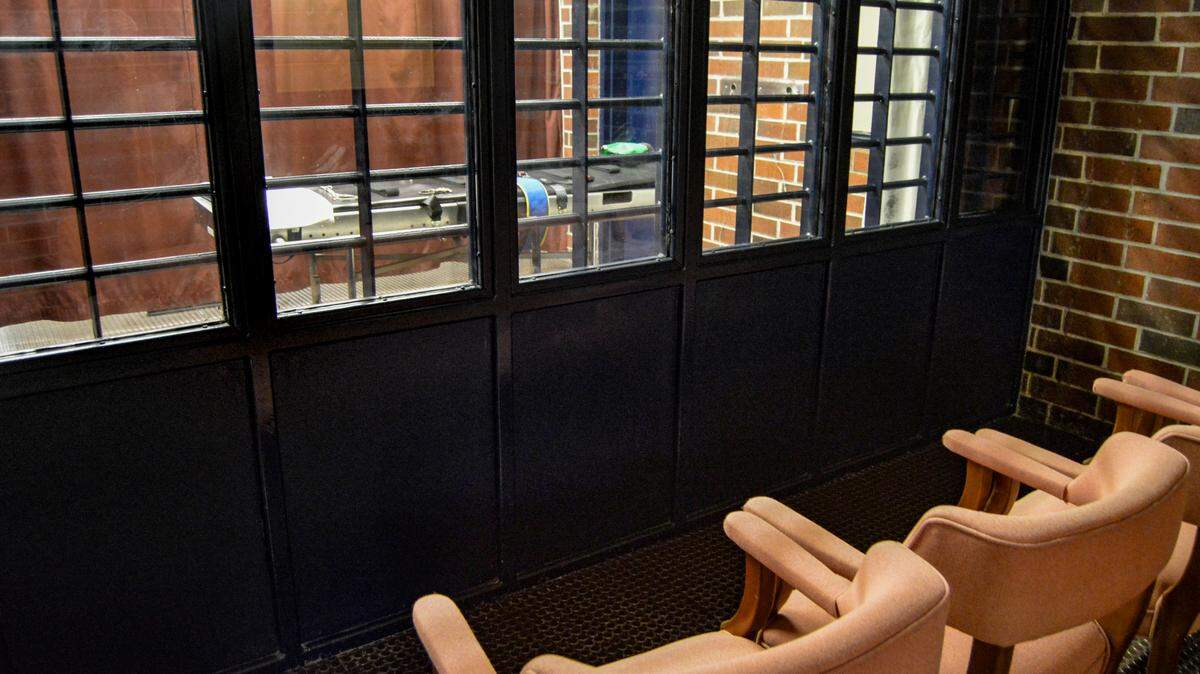
Marion Bowman Jr. was executed Friday night for the murder of a young Dorchester County mother. He is the first person to be executed in the United States this year.
Bowman was pronounced dead by a doctor at 6:27 p.m. at the Broad River Correctional Institution, the site of South Carolina’s death chamber.
Bowman was executed by lethal injection. On Thursday, he made the decision not to petition South Carolina Gov. Henry McMaster for clemency after his final appeals to the U.S. Supreme Court and the Fourth Circuit Court of Appeals failed.
He was the third person to be executed in South Carolina since executions resumed in 2024 following a 13-year pause.
In his final statement, read by attorney and friend Boyd Young, Bowman said, “I did not kill Kandee Martin. I’m innocent of the crimes I’m here to die for.”
Bowman was sentenced to death for shooting and killing Martin on the night of Feb. 16, 2001, according to testimony at his trial.
He returned the next night, dragging her body from the woods and stuffing it in the trunk of her blue Ford Escort, which he then set on fire, according to testimony.
Martin was shot in the back and head. She was murdered five days before her son Tyler’s second birthday.
Bowman and Martin had gone to high school together and their families socialized in the close knit community of Branchville in Dorchester County.
“I know that Kandee’s family is in pain, they are justifiably angry. If my death brings them some relief and ability to focus on the good times and funny stories, then I guess it will have served a purpose. I hope they find peace,” Bowman said in the statement, which was reported by media witnesses to have taken three minutes to read.
Bowman’s reported motive for the murder has changed over the years, with witnesses at his original trial saying Bowman killed Martin because she owed him money. Court documents filed during his appeal alleged that Bowman was planning to rob a house and killed Martin when he grew paranoid she was wearing a wire.
At trial, Bowman was linked to the crime by witnesses, including one who said he saw Bowman shoot Martin in the back of the head. A second witness testified that the next day he saw Bowman drag Martin’s body from the woods, place it in her car and set it on fire. Other witnesses who testified against Bowman included members of his own family, who helped dispose of the .38 caliber semiautomatic pistol used in the killing and had briefly hidden in his wife’s sofa bed.
The jury took just two and a half hours to find Bowman guilty.
But Bowman has maintained his innocence, and recent appeals raised questions about the strength of the evidence used to convict him.
His attorneys alleged in filings that prosecutors at his original trial failed to hand over evidence about an eyewitness, including a supposed confession the eyewitness made to a jailhouse informant that he was actually Martin’s killer. The eyewitness also had psychological and memory problems, which was not disclosed to the defense.
Prosecutors also concealed evidence that another key witness was testifying in exchange for having unindicted charges dropped, according to court records.
Bowman’s attorneys also alleged that one of his original trial attorneys had “infected” the trial with his own racist beliefs about Bowman.
But courts rejected these appeals, deciding here was no evidence that his lawyer had tainted the proceeding and finding sufficient evidence to uphold Bowman’s conviction.
The execution was witnessed by Young, Department of Corrections Director of Communications Chrysti Shain, a SLED agent and 1st Circuit Solicitor’s Office Chief Deputy Solicitor Kelly LaPlante. Three members of the media also attended. No one from Bowman’s or Martin’s families attended the execution.
Bowman’s appeals brought renewed attention to South Carolina’s lethal injection process. In an appeal, Bowman said that he did not have enough information about the process. Information about the lethal injection process and the drugs that are used cannot be disclosed under a restrictive shield law.
Previous filings by the state Department of Corrections indicated that the lethal injection was performed by a single dose of pentobarbital, a powerful sedative that causes asphyxiation at high doses. This mirrors the federal protocol, Shain said at a press conference Friday night after the execution. On Jan. 16, the U.S. Department of Justice rescinded its protocol calling for the use of pentobarbital.
As in the previous two executions, media witnesses described the lethal injection being delivered to Bowman by an IV line administered from another room. Bowman appeared to breathe heavily for a minute before his breath grew shallow. His breathing appeared to stop after roughly three minutes.
For his final meal, which was served Wednesday, Bowman requested fried seafood, including shrimp, fish and oysters, chicken wings and tenders, onion rings, banana pudding and German chocolate cake. He drank cranberry and pineapple juice.
As the execution took place, roughly two dozen protesters gathered outside of the fence surrounding the the Department of Corrections’ campus on Broad River Road in Columbia. Some prayed while others waved signs at passing cars. One woman held up a sign saying “while I breathe, I hope,” the translation of South Carolina’s Latin motto and the title of one of Bowman’s poems.
On death row, where Bowman spent nearly 23 years, he took up poetry. Across more than 50 poems collected by supporters, he wrote about love, hope and the passing of time.
In a final poem, read as part of his statement, Bowman asked, “Did I take a last breath or a sigh of relief?”
This story was originally published January 31, 2025 at 7:01 PM.