
South Carolina will execute Brad Sigmon by firing squad. Here’s how it will be done
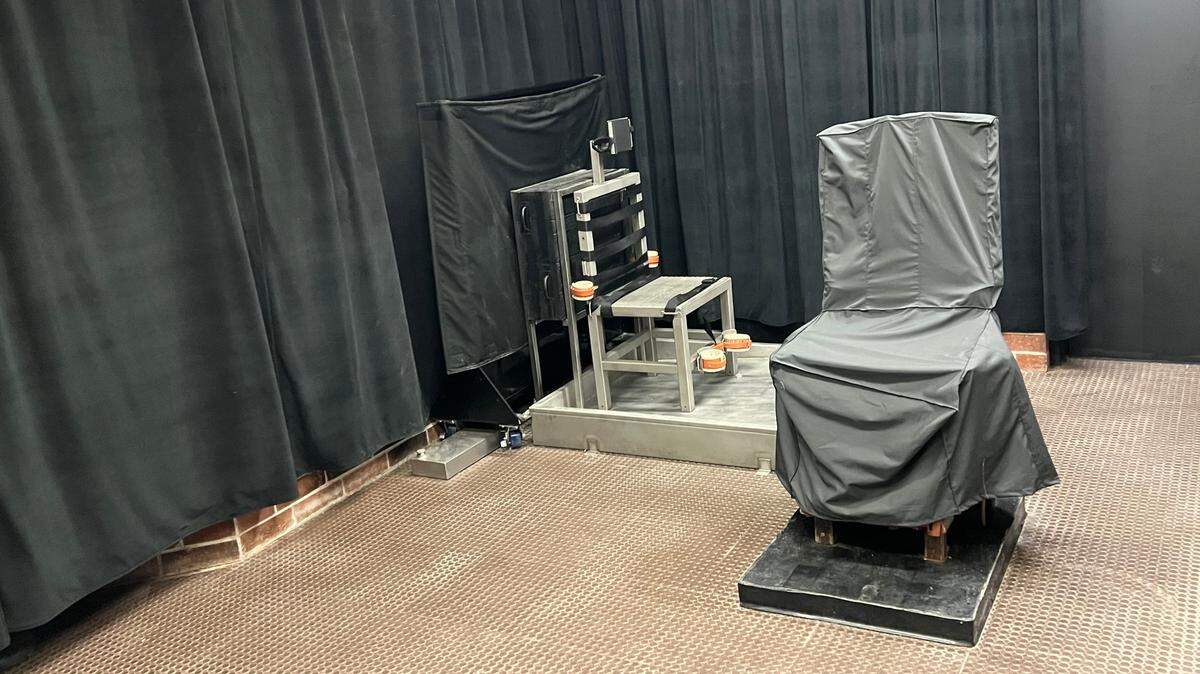
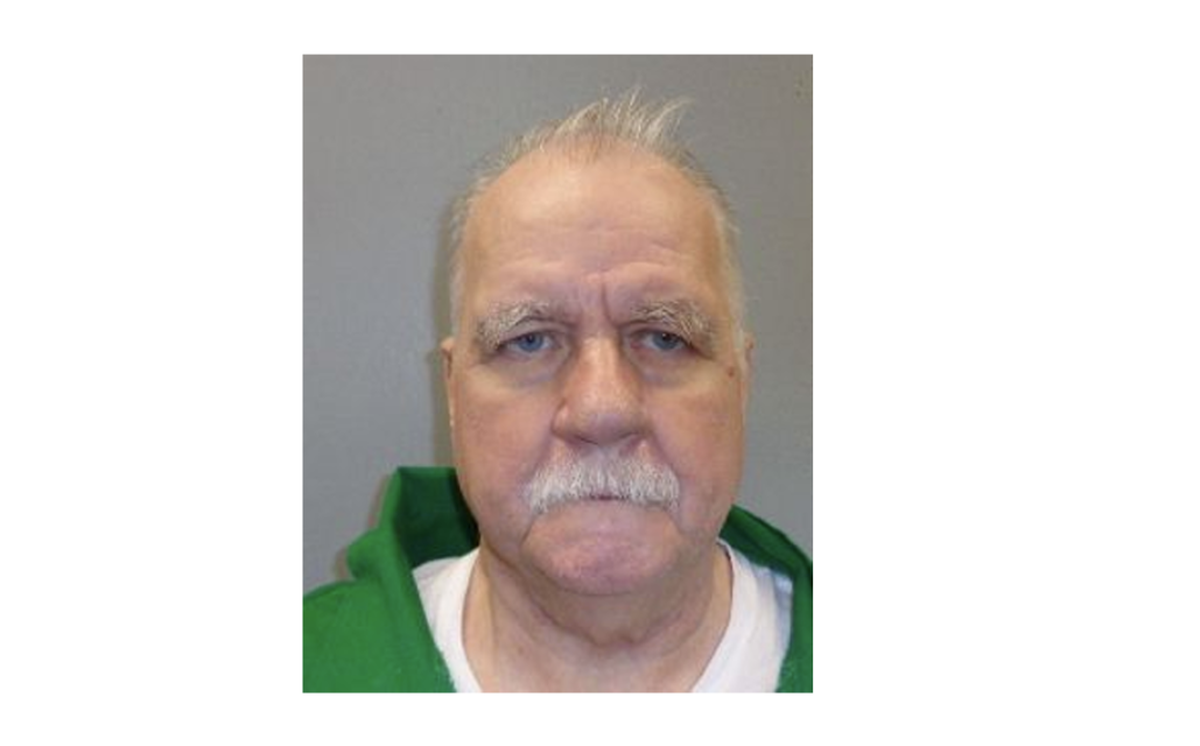
Barring a last-minute reprieve, Brad Sigmon will be led into South Carolina’s death chamber Friday evening. He will be strapped into a metal chair and, nearly 24 years after beating his ex-girlfriend’s parents to death, he will wait for three people to shoot him.
He’ll be the first South Carolina death row inmate ever to be killed by a firing squad. If his appeals fail and Gov. Henry McMaster does not commute his sentence, Sigmon will be shot to death inside of the state death chamber at the Broad River Correctional Institution in Columbia.
The firing squad was added as an option for the death penalty in 2021 following a nearly decade-long effort to restart executions after the South Carolina Department of Corrections ran out of the the chemicals needed to perform the lethal injection in 2013.
South Carolina is one of five states, along with Mississippi, Utah, Oklahoma and Idaho to have adopted the firing squad as a method of execution.
Since 2021, the South Carolina Department of Corrections has spent $53,600 renovating the state’s death chamber to facilitate death by firing squad, but like many processes related to the death penalty in the state, few details are known about how the execution will be carried out.
But some information has emerged. Execution by firing squad is performed by volunteers from the South Carolina Department of Corrections. These volunteers must meet certain undisclosed “qualifications,” according to a statement released by the department in 2021.
Shortly before 6 p.m., when executions in South Carolina take place, Sigmon will be strapped into the chair, which is in a corner of the room. It’s away from the electric chair, which cannot be moved, according to the Department of Corrections.
Sigmon, 67, will be dressed in a standard prison uniform. A hood will be placed over his head, and a small “aim point” will be placed on his heart, according to the corrections department.
The three members of the firing squad will be armed with rifles, all loaded with live ammunition. Traditionally, firing squads have at least one rifle unloaded or loaded with blank rounds so members of the squad are unsure if they fired a fatal shot.
The Department of Corrections has not disclosed what kind of rifles it intends to use, but representatives have stated that four rifles were purchased. Purchase orders show $14,600 spent on rifles.
During a 2022 hearing before the South Carolina Supreme Court, Colie Rushton, the director of security and emergency operations at the Department of Corrections, said the agency planned to use .308 Winchester 110 grain TAP URBAN ammo in executions by firing squad.
The bullet was chosen because it expands and fragments on impact, causing a more “instantaneous” death, Rushton said.
The firing squad will aim and fire on Sigmon through a rectangular opening in a wall of the death chamber 15 feet away. During lethal injections, the IV lines have similarly been described as running to a hole in the chamber’s wall.
The metal chair used during the firing squad is located against a wall. During renovations to the death chamber, it had to be located near the electric chair, which is attached to the floor in the middle of the room.
Purchase orders from the Department of Corrections from 2021 show that the department spent $3,400 to purchase a ballistic blanket, made of woven Kevlar or a similar material that can stop bullets, as well as a “ballistic armor partition” for $7,400.
Spokespeople for the department have previously confirmed that renovations included replacing the window separating the witness room from the death chamber with bullet-resistant glass. Witnesses to the execution traditionally include members of the victim’s family, a representative of the solicitor’s office that prosecuted the inmate, law enforcement agents, media representatives, and the individual’s spiritual advisor and attorney.
While the electric chair directly faces the witness room, Sigmon will only be visible to witnesses from his right profile, according to the department’s memo.
“The firing squad is honest about the brutality of the death penalty,” said Hilary Taylor, a Methodist pastor who is Sigmon’s spiritual advisor and executive director of South Carolinians for Alternatives to the Death Penalty. It is “probably the most honest of the methods for what it means to kill somebody as a citizen of a state. Lethal injection is designed to look like a real medical procedure, but it’s just pumping people full of poison.”
Attorneys for Sigmon say that he made the “impossible” choice to die by firing squad because South Carolina’s shield laws meant that he did not have enough information about the state’s lethal injection process to ensure that he would not suffer a prolonged death.
“Unless he elected lethal injection or the firing squad, he would die in South Carolina’s ancient electric chair, which would burn and cook him alive,” said federal Public Defender Gerald “Bo” King. “Given South Carolina’s unnecessary and unconscionable secrecy, Brad is choosing as best he can.”
Why does South Carolina use the firing squad?
In 2021, the South Carolina General Assembly approved the use of a firing squad for executions. The intention behind the change in the law was simple, said former state Sen. Dick Harpootlian, D-Richland, one of the champions of the change: saving people from the electric chair.
“I thought then and I believe now that it (the electric chair) is a horrendous, barbaric way to kill somebody,” Harpootlian said.
His conviction came from an unusual place. As the 5th Circuit solicitor, Harpootlian secured a death penalty conviction against infamous serial killer Donald “Pee Wee” Gaskins, who killed fellow inmate Rudolph Tyner using plastic explosives hidden inside of a radio while both were incarcerated at the former Central Correctional Institution in Columbia.
Harpootlian did not attend Gaskins’ execution — the former prosecutor said that he decided not to leave his family alone because Gaskins had reportedly put out a hit on Harpootlian’s then 4-year-old daughter just two weeks before. But he said multiple people, including Department of Corrections employees, told him how Gaskins’ execution went wrong.
“They had to give him two jolts. His hair was on fire and his eyeballs popped out,” Harpootlian said. The brutality of Gaskins’ execution led Harpootlian to push for another method.
For much of the last 100 years, executions in South Carolina have been performed primarily by electric chair. In the mid-1990s, the method of execution shifted to lethal injection. Since 1995, 39 people have been executed by lethal injection.
Thirty-six were killed using a three drug cocktail, where the inmates received chemicals that anesthetized, paralyzed and then ultimately stopped their hearts. But in 2013, South Carolina ran out of the drugs.
Companies that produced the drugs and pharmacies that prepared them stopped providing the drugs following a public outcry. The companies also stopped providing the drugs to other states and the federal government.
But in 2021, South Carolina lawmakers pushed to resume executions by introducing the firing squad and reintroducing the electric chair.
“Back when we reinstated the death penalty, I told everybody, ‘If you push that green button you’re voting to execute a couple of people. You may as well be throwing the switch or pulling the trigger yourself,’” said Rep. Justin Bamberg, D-Bamberg.
The law does not prescribe how the firing squad is to perform, leaving it up to the Department of Corrections to develop the state’s protocol.
“I have spoken to people in my years as a prosecutor who have been shot and survived. Some feel pain and some don’t feel pain, but all of them indicate that if it’s a high-powered weapon, the shock of getting shot means you don’t feel much,” Harpootlian said. “I know it’s more humane than the electric chair. Now whether or not you pick that over the lethal injection is a matter of your conscience.”
What have other states done?
In 2010, Ronnie Lee Gardner was executed by firing squad in Utah. It was the last time that the firing squad was used to execute someone in the United States.
Gardner, who shot and killed a liquor store clerk during a robbery and a lawyer during a botched escape attempt, requested to be executed by firing squad. The firing squad shot at Gardner from 15 feet away through horizontal gun ports in the Utah death chamber’s walls.
He asked that his family not attend the execution. But afterwards, his brother, Randy Gardner, viewed Ronnie’s body along with Ronnie’s daughter.
When Randy unzipped the body bag, he saw four holes in his brother’s chest.
“I thought, ‘God I could fit my fingers in those holes, like a bowling ball with one extra hole,’” Gardner said. “The autopsy pictures were far worse than I thought. Blood and bones and lungs were shot out the back.”
His brother’s shorts and socks had turned red with the blood.
Utah’s firing squad has five people. All have to be police certified. One member is given a wax bullet as a blank round — the intention is that any member of the firing squad can tell themselves that they did not fire the lethal shot.
“Everyone can consider themselves the one person, but in the long run everyone volunteered,” Gardner said. “It’s kind of a silly thing they do to cover up the inhumane fact of what it is.”
On Gardner’s death certificate, the manner of death was listed as “state sanctioned homicide,” his brother said.
“I don’t condone what my brother did; I never have,” Gardner said. “But I don’t condone the government doing the same thing that he did.”
This story was originally published March 6, 2025 at 12:00 AM.