
You’d ‘get a beer’ with Pee Wee. Harpootlian’s book describes notorious SC killer
Dick Harpootlian has been many things over his storied and sometimes controversial life: attorney for killer Alex Murdaugh, a state senator who exposed a crooked solicitor, a top Democratic politico, a lawyer who corralled an estimated half-billion dollars in legal settlements and verdicts, and a prosecutor who sent a serial killer to the electric chair.
Now Harpootlian has another persona: author of a book about Donald “Pee Wee” Gaskins. It’s a nonfiction tale of the intersection of Harpootlian’s life with that of an infamous South Carolina serial killer with an astronomical body count.
Called “Dig Me a Grave: the inside story of the serial killer who seduced the South,” the hardcover book is due out in December, said to be the best month of the year for booksellers. It’s not exactly “Good Will Toward Men,” but devotees of the macabre may find it the perfect Christmas gift. A social media campaign kicked off Monday to hype prepublication order sales.
“This is not just a biography of Pee Wee Gaskins or me. It’s a path I took, and a path he took. He bore the consequences of his act, and I bore the consequences of mine,“ Harpootlian said in an interview last week in his office. “I guess the title could have been ‘Pee Wee and Me’.”
It’s an unlikely pairing — writer and subject. Harpootlian drives a Mercedes, favors Italian suits, Italian shoes and Charvet silk designer French ties he buys at Bergdorf Goodman in New York City.
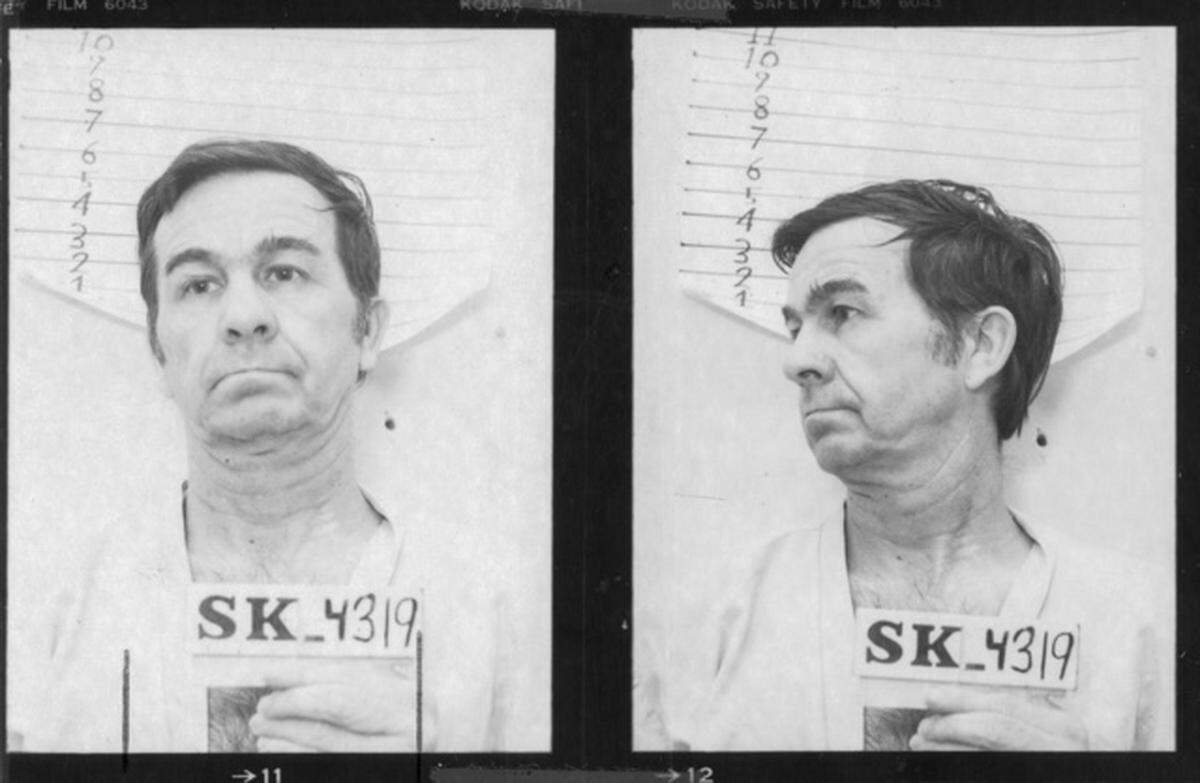
On the other hand, Gaskins was a creature of the underworld, a scrappy runt of a man — five foot three — who was true crime 50 years before Murdaugh became true crime.
With a high-pitched squeaky voice and a gift for gab, Gaskins combined a magnetic country boy charm with a lust for killing people of all ages and both sexes in brutal ways: drowning, poison, shooting, strangling and beating. A former carnival worker who assembled a family of “misfits, runaways and con men,” Harpootlian writes, Gaskins killed for fun, for money, when people became inconvenient to him and for racist reasons. In the 1970s, traveling around in a hearse, he buried the bodies in rural areas in the Pee Dee. Journalists couldn’t get enough of Pee Wee.
His final killing, in September 1982, has never been equaled for its cunning and sensationalism.
On a Sunday afternoon while inmates were watching pro football on television, he blew up a condemned inmate on South Carolina’s supposedly secure Death Row using contraband C-4 military grade plastic explosives. Prison officials were horribly embarrassed. At the time, Gaskins was serving multiple life sentences for his various murders, and he couldn’t resist the challenge of one more killing.
It fell to Harpootlian, then the 34-year-old top deputy solicitor in the Richland County prosecutor’s office, and his boss, the late Solicitor Jim Anders, to work with investigators to find out who blew up the inmate, Rudolph Tyner, who himself had killed two shopkeepers in Horry County, and then to put Gaskins on trial.
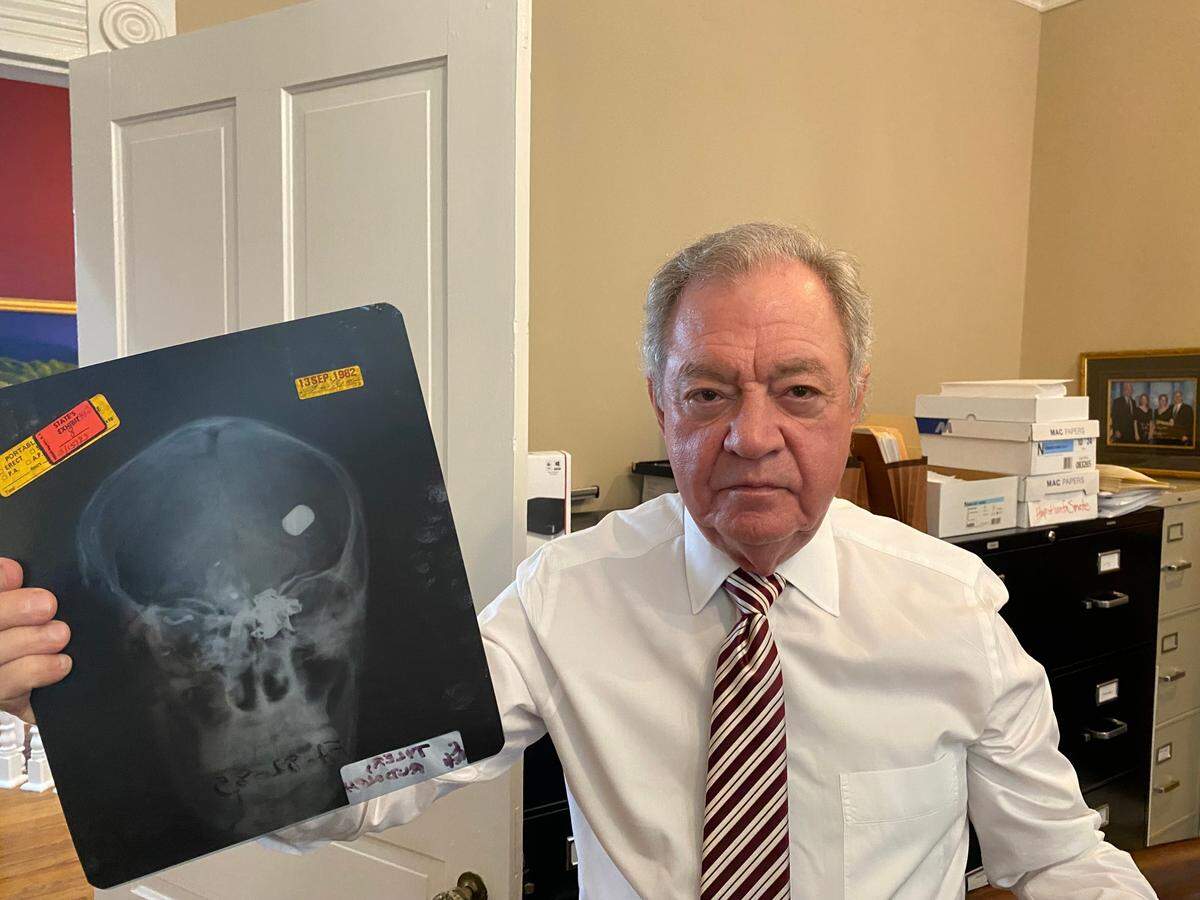
Based on thousands of pages of court and investigative records, Harpootlian’s 245-page book is a detailed account of all of Gaskins’ crimes and the subsequent trial in which Harpootlian as prosecutor played a key role in getting a jury to find Gaskins guilty and sentenced to death. The book is also Harpootlian’s meditation on his life, justice, the law, vigilantism, the death penalty and Harpootlian’s evolving attitude toward capital punishment.
Relationship with Gaskins
During the trial and over the years afterward, Harpootlian developed an arm’s length but personal relationship with the crafty serial killer, whom the lawyer writes was “a jumble of paradoxes: uneducated but intellectual, cold but courtly, a loner who loved company.”
Gaskins was “a guy you’d get a beer with,” Harpootlian writes, a guy with “an uncanny ability to seduce just about any judge, juror or witness.” Once, during a break in the death penalty trial, the late Judge Dan Laney called Gaskins up to the bench to chat, and the killer “began grinning from ear to ear. To this day, I have never seen a defendant joke around with a judge like that.”
Over the years when Gaskins and Harpootlian talked to each other — during the trial as adversaries and later when Harpootlian was one of the many people Gaskins telephoned from Death Row — one thing Gaskins said to Harpootlian stuck with him.
“You like killing, just like me. You’re going to enjoy killing me, Dick, I know you will,” Gaskins told Harpootlian during a break in the death penalty trial.
“I said, ‘No, I don’t’,” writes Harpootlian
“Well, you like killing me,” Gaskins replied.
Harpootlian pondered that exchange, eventually concluding that while he’s no great fan of the death penalty, he believes that in certain cases of incorrigible killers, it is fitting.
The book relates a conversation Harpootlian had with his father, a former bomber pilot in World War II who dropped bombs on Germany, that helped Harpootlian conclude that when it comes to someone like Gaskins, the death penalty is an act of “communal self-defense.”
“If I couldn’t work to put a man in the chair for committing a 14th homicide, what was the point of even having capital punishment? When I went to Anders to ask for a green light in a capital case, it was with no doubt in my mind,” Harpootlian writes.
How he came to do the book
Although Harpootlian had toyed with the idea of writing a book about Gaskins over the decades, it wasn’t until after the Murdaugh murder trial was finished in March 2023 that he got serious about doing it. Murdaugh was sentenced to two life sentences in state prison for the June 2021 killings of his wife, Maggie, and son Paul.
The Murdaugh trial, with its daily packed courtroom and national cable television audience on Court TV, made Harpootlian realize the fascination many have for true crime. Millions ended up watching the Murdaugh trial, Harpootlian said, and he believed “the same crowd would be interested in “the Gaskins “experience.”
Harpootlian had assets most nonfiction writers don’t have. He was actually there and helped shape events, he knew all the players, and he had boxes of evidence from the trial. Being a former state prosecutor and former state senator with loads of personal and political connections, he had no problem getting the S.C. Law Enforcement Division and state Corrections Department to turn over ancient investigative records. And he had the lengthy transcript of a two-day confession of the murders that Gaskins had given former Florence County Solicitor Kenneth Summerford.
And he had the perfect killer: Gaskins. “Fist, knife, shooting, poison, drowning, blowing people up – he was a virtuoso murderer,” Harpootlan said.
He also loved the idea of bringing the long ago Pee Wee mania to life: “When we tried Gaskins, there were no cameras in the courtroom, which is a real shame. So the only way you’re going to get a sense of what happened in the case is by somebody who was intimately involved in all aspects of it.”
Despite years of connecting with juries in closing arguments, Harpootlian lacked the journalist’s ability to put a story in print. And despite his reputation as a raconteur, a storyteller and first-rate quote machine, he knew he needed someone with a print background to help him put a readable book together.
He found Shaun Assael, a Wilmington, NC-based writer whose website describes him as “an award-winning journalist, author and producer who covers politics, sports and true crime… sometimes all at once.”
Harpootlian said in the interview, “I have the story. Shaun has the ability to shape that in a digestible, attractive way.” The credit on the book will read “Dick Harpootlian With Shaun Assael.”
Harpootlian made a galley copy of the book available to The State. It is an easy read, with plenty of dialogue, weaving together a complex series of fact-based events and people and themes. It will have a photo section, an index and a pictograph that’s a simple reference for Gaskins’ killings. There are no pseudonyms, no anonymous sources. “It happened 50 years ago,” said Harpootlian. “Why would I need anonymous sources?”
Now that the book is in its final stages of production, Harpootlian is looking forward to spending more time on his legal work as well as with his wife, Jamie Harpootlian, a lawyer and the former ambassador to Slovenia.
“Weaving these stories together in a coherent form … was a relief, to get this off my chest – the stories, the life experiences, the moral questions,” said Harpootlian.
What does he hope people get out of the book?
“I’d like people to read it and say this was entertaining, this was interesting, I’ve learned some things I didn’t know before” he said.
Story contains mysteries
The best stories are combinations of stories. Harpootlian’s book is no exception.
It is a story of the grotesque rise and fall of Gaskins and how detectives like SLED agent Tom Henderson and Corrections Department investigator Al Waters solved his crimes.
It is the story of the young man Gaskins assassinated with high explosives — Rudolph Tyner, an African-American from Harlem in New York City who was visiting Murrells Inlet when he talked a friend into robbing the country convenience story of Bill and Myrtie Moon. Using his friend’s shotgun, Tyner executed the Moons in their store during a night robbery. An Horry County jury gave Tyner the death penalty within months.
It is the story of vigilante Tony Cimo, the Moons’ angry son who couldn’t wait for justice. After Tyner’s death penalty conviction was overturned by the S.C. Supreme Court, Cimo became consumed with killing Tyner. Cimo used intermediaries to smuggle C-4 into the prison directly to Gaskins.
And it is the story of the electric chair, a means of death so terrible to Harpootlian that as a state senator he proposed and got passed a law allowing state condemned inmates to chose to die by firing squad. So far, two have chosen to die that way rather than lethal injection or the chair.
In the days leading up to his execution, Gaskins — once called a “poster boy for the electric chair” — hatched a scheme with people outside the prison to kidnap Harpootlian’s preschooler daughter Kate and hold her hostage. The plot was foiled, but not before Harpootlian and his family were put under heavy armed guard by SLED agents with Uzis, Harpootlan writes.
Gaskins died in South Carolina’s electric chair on Sept. 6, 1991, at the age of 58. He was the first white man in South Carolina executed for killing an African American. The New York Times ran a front-page story about how rare it was in the United States for whites to be executed for killing Black people.
In his book, Harpootlian writes about electrocutions and what happened to Gaskins the night he died. “His organs simmered in boiling blood. His eyes, indeed, did explode.”
Being so bound up in Gaskins’ story, did he witness the execution?
“No,” says Harpootlian. “I didn’t go. I don’t enjoy killing and that would have made me the same as him.”
This story was originally published April 29, 2025 at 5:30 AM.