
AG says he didn’t pressure solicitor to seek death penalty. SC lawyers disagree
The senseless murder of Logan Federico allegedly by a repeat offender in Columbia, has become a flashpoint in the national conversation over crime.
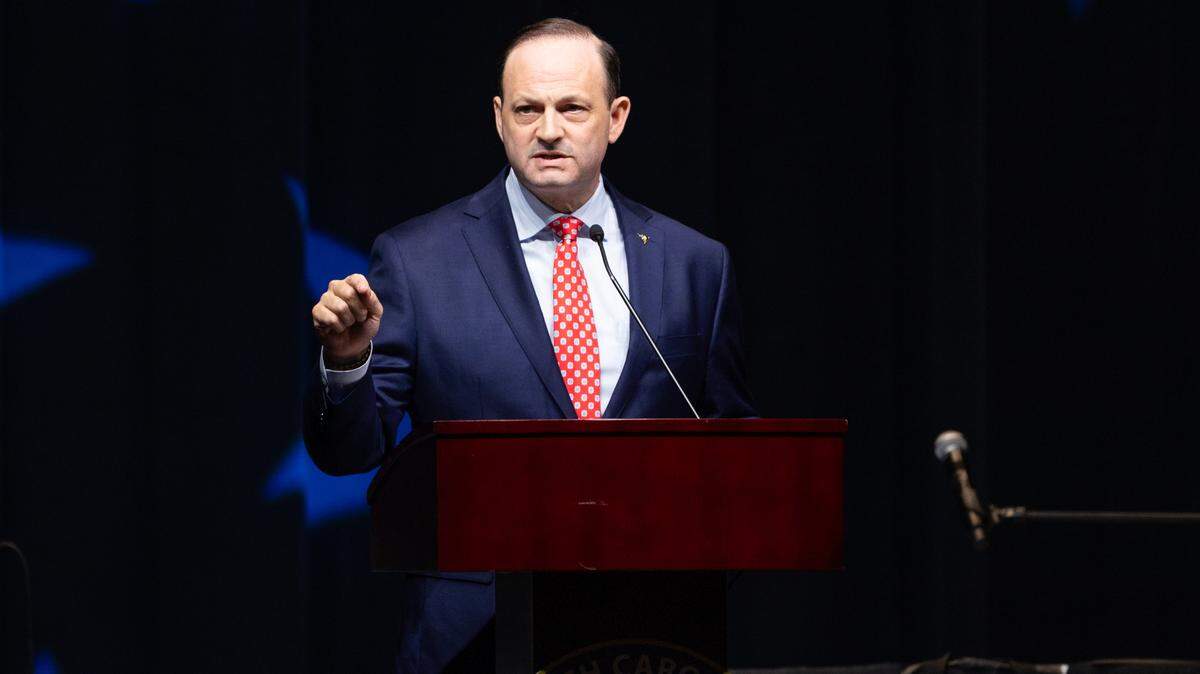
Last week, South Carolina Attorney General and candidate for governor Alan Wilson announced that his office was “ready to assume” responsibility for the case if Fifth Circuit Solicitor Byron Gipson declined to consider the death penalty for alleged killer Alexander Dickey.
Attorneys who spoke with The State described this as an unprecedented move by the state Attorney General’s Office to take a case away from a local prosecutor. And a move that appeared to be so openly political by a candidate for office could also have serious consequences for the legal case.
“In 50 years, I’ve never seen it,” said Dick Harpootlian, a prominent Columbia defense attorney and former Fifth Circuit solicitor.
Several other attorneys who spoke with The State also said that they had never seen the South Carolina Attorney General’s Office take a case away from a solicitor based on whether the solicitor would seek the death penalty.
Did Wilson make demand over death penalty?
Wilson’s letter asked the Fifth Circuit Solicitor’s Office to “strongly consider” noticing the case for the death penalty. The letter cited Dickey’s long criminal history as proof that he was an “appropriate candidate for the ultimate punishment.”
“If you or your staff feel unable to proceed forward with this decision, please understand that [the Attorney General’s Office] stands ready to assume that responsibility after appropriate review of the evidence.” The letter appeared to set a deadline of Friday, Oct. 10 for a response from Gipson’s office.
However, since then the attorney general’s office has attempted to back away from the impression that the letter was a demand.
Robert Kittle, a spokesperson for the Attorney General’s Office, told The State Monday that Wilson simply wanted to know whether Gipson’s office would consider the death penalty.
The state has reached out to the Fifth Circuit Solicitor’s Office.
In a letter responding to the attorney general’s office, Gipson wrote that his office was still working to “meticulously review, research and assess the case.”
“As of right now, we are not in a position to ethically make an informed decision about something of this magnitude in order to meet you imposed deadline,” Gipson wrote.
On Tuesday, Jacqueline Lane from the Attorney General’s Office said that while the office had not had a chance to review all of the evidence against Dickey, Wilson was “absolutely” in support of the death penalty.
The Attorney General’s Office say that they dispatched Melody Brown, a senior attorney with the office who represents the state in death penalty appeals, to review the case against Dickey.
But Wilson’s letter comes as Federico’s killing has emerged as one of several high-profile slayings that are currently animating Republican politics. While Wilson sent the letter in his capacity as attorney general, he is also a candidate in the closely watched the Republican primary for governor. Other candidates, including representatives Nancy Mace and Ralph Norman, have also issued statements critical of failures in the state’s criminal justice system that allowed Dickey, 30, to receive probation after being convicted of a series of crimes in 2023.
For its part, the attorney general’s office has denied that there are political considerations.
“This case has nothing to do with politics,” Kittle said.
The attorney general’s office also does not typically prosecute death penalty cases. While the office does handle all of the litigation for death penalty appeals, they typically only take cases from a solicitor’s office when that office has a conflict.
However, it is the second time this year that the attorney general’s office has weighed in on a case at the Fifth Circuit Solicitor’s Office.
In April, Wilson’s office took over the prosecution of another high-profile case that touched on a political flashpoint: the prosecution of Rosali Isaac Fernandez-Cruz for a hit-and-run that resulted in the death of University of South Carolina student Nathaniel Baker. Fernandez-Cruz was an undocumented immigrant who struck and killed Baker at a busy Columbia intersection.
Fernandez-Cruz was sentenced to one year in prison, according to court records.
Attorney general clarifies position
But since Wilson’s letter became public, his office has sought to clarify his position.
“I’ve never seen anything like this before,” said First Circuit Solicitor David Pascoe, who is running for attorney general. Over the weekend, Pascoe said that he spoke with Wilson who told him that the letter was not intended to be an “ultimatum.”
Gipson’s response that his office was continuing to review the evidence and had not come to a decision was enough to satisfy the Attorney General’s Office, Kittle said.
However, the letter was “inartful,” said Pascoe, who has prosecuted death penalty cases, including that of spree-killer Mikal Mahdi who executed an off-duty Orangeburg police officer. Mahdi was executed by firing squad earlier this year.
Longtime defense attorney Jack Swerling, who has defended death penalty cases, said that the law grants public officials like Wilson protections for making political statements.
But, Swerling said, “I can honestly say I’ve never heard of the attorney general taking over a death penalty case.”
Logan Federico’s father, Steve Federico of Waxhaw, North Carolina, testified before Congress last week. He was critical of what he described as a lack of communication from the solicitor’s office, as well as gaps in the state’s criminal justice system that allowed Dickey to walk free.
Both prosecutors and defense attorneys who spoke with The State pointed out that the amount of discovery — evidence that the prosecution must turn over to the defense — increases significantly in a death penalty case.
The amount of evidence that is turned over has also increased dramatically in the past 5-10 years, attorneys say. Now, prosecutors and defense attorneys must wade through hours of surveillance and bodycam footage as well as cellphone data and forensic reports.
This story was originally published October 7, 2025 at 1:47 PM.