
Trump’s SC judge nominee takes fire, praise in Senate hearing
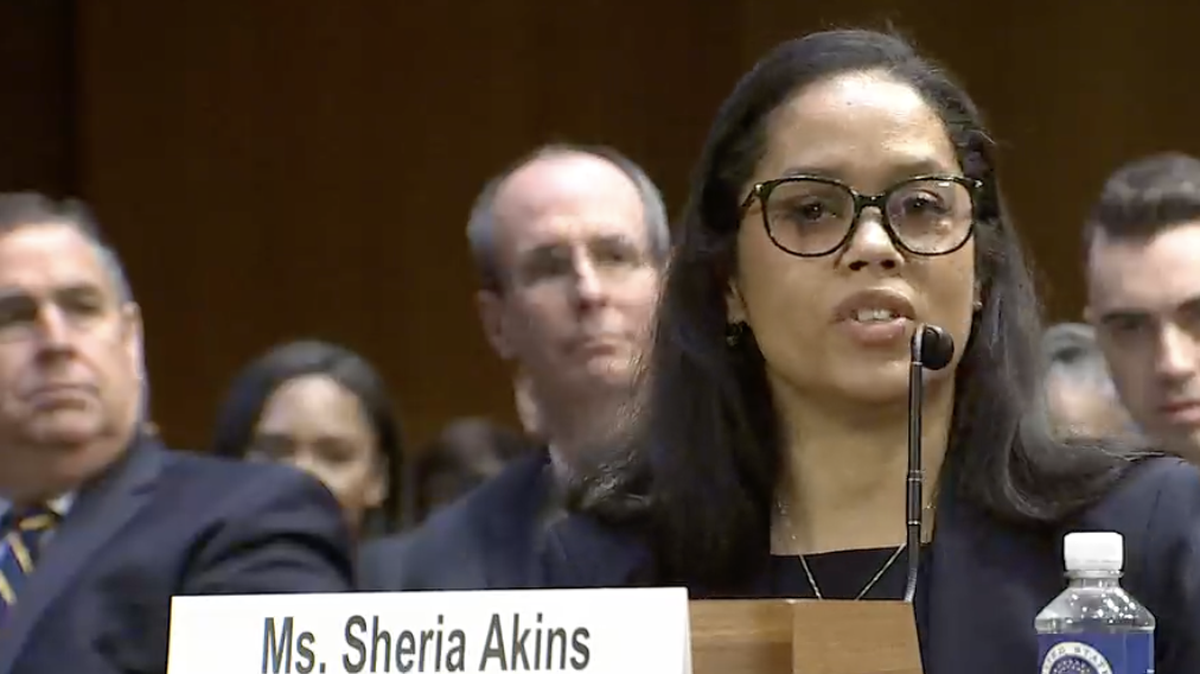
Sheria Clarke, an African-American female attorney who is President Donald Trump’s nominee for a South Carolina federal judge’s post, heard balmy words of praise from Republican senators as well as withering words of criticism from Democrats at her Senate Judiciary Committee confirmation hearing on Wednesday.
But criticism leveled against Clarke at the hearing was mild compared with the verbal attacks leveled at two of Trump’s other judicial nominees who appeared with her — one who had a history of posting inflammatory conspiracy theories and insults on social media and another who graduated from law school in 2017 and had scant courtroom experience. Federal judges have elite jobs: lifetime appointments and a current salary of $249,000.
Clarke, who is in her mid-40s and has a record of high-profile legal jobs with congressional committees, the U.S. Attorney’s office in South Carolina and is currently a partner in a top-tier law firm, had both experience and no record of broadcasting falsehoods on social media, making her far less controversial than two other nominees.
“She was lucky because she was on a panel with a couple of other candidates the Democrats attacked,” said Carl Tobias, a University of Richmond Law School professor and nationally-known expert on the federal judiciary who watched the live-stream of the nearly two-hour hearing.
In any case, Clarke “did well. She seemed calm and in control and balanced — all the qualities you want in a judge,” Tobias said. “I think she’s in great shape.”
Clarke does not have a long history in South Carolina and apparently with the help of political connections beat out many qualified South Carolinians who have been in the state much longer for the nomination.
Born in Lynchburg, Va., she spent most her life in Virginia, North Carolina and Washington, D.C., before moving to South Carolina in 2019, according to her resume on file with the Senate Judiciary Committee. Since 2019k she has worked for the U.S. Attorney’s office in South Carolina and a private law firm.
Who won the 2020 election?
A rough spot for Clark came under questioning by Sen. Richard Blumenthal, D-Connecticut, when he asked her, “Mrs. Clarke, who won the 2020 election?”
Clarke dodged the question and began to explain to Blumenthal how presidents are elected. “Senator, under our Constitution, the mechanism for electing a president—“
Blumenthal, who had just heard a similar answer from another Trump nominee, who declined to say who won the 2020 election, interrupted Clarke, saying “I am amazed. I am just amazed by the insult to this committee of witness after witness who seeks to be a federal judge subverting our Constitution and showing how you have no independence, which is essential to a federal judge.”
Dozens of Trump’s judicial nominees have been refusing at Senate Judiciary Committee hearings to say who won the 2020 presidential election, according to a guest essay in The New York Times by legal analyst Jeffrey Toobin. Nominees are refusing to say that facts show that former President Joe Biden won the election in order to show they are loyal to Trump’s ongoing “fantasy” that he, and not Biden, won in 2020, Toobin wrote.
Trump has continued to claim without evidence that the 2020 election was “rigged” by the Democrats, and some 60 lawsuits protesting the election in swing states brought by Trump supporters were kicked out of court because of a failure to show fraud.
Actually, Biden won the 2020 popular vote with 81.2 million votes, or 51%, compared with Trump’s 74.2 million votes, or 46.8%, according to a 2022 Federal Elections Commission report. Biden won the 2020 electoral vote by 306-232, the commission report said.
Blumenthal also asked Clarke, “Who won the 2024 (presidential) election?”
Clarke replied, “Senator, under the process set out by the Constitutional, the electoral college elects the president.”
After Clarke and her fellow three nominees continued to use similar language to avoid saying who won the 2024 and 2020 presidential elections, Blumenthal said, “You know, the answers here, which obviously are canned, prerehearsed, they are Orwellian in their denial of reality, and they are a subversion of this process. They are an insult to this committee, but they also fundamentally show a complete lack of independence and backbone and impartiality — which are the fundamental requirements of a U.S. District Court judge or a judge on any panel.”
Another senator, Sheldon Whitehouse, D-RI, told Trump’s nominees, “I hope you realize how ridiculous the four of you look spouting these preposterous canned answers in a forum in which a), you are supposed to tell the truth, and b), you are supposed to demonstrate the judicial capacity to make independent factual decisions in hard cases.”
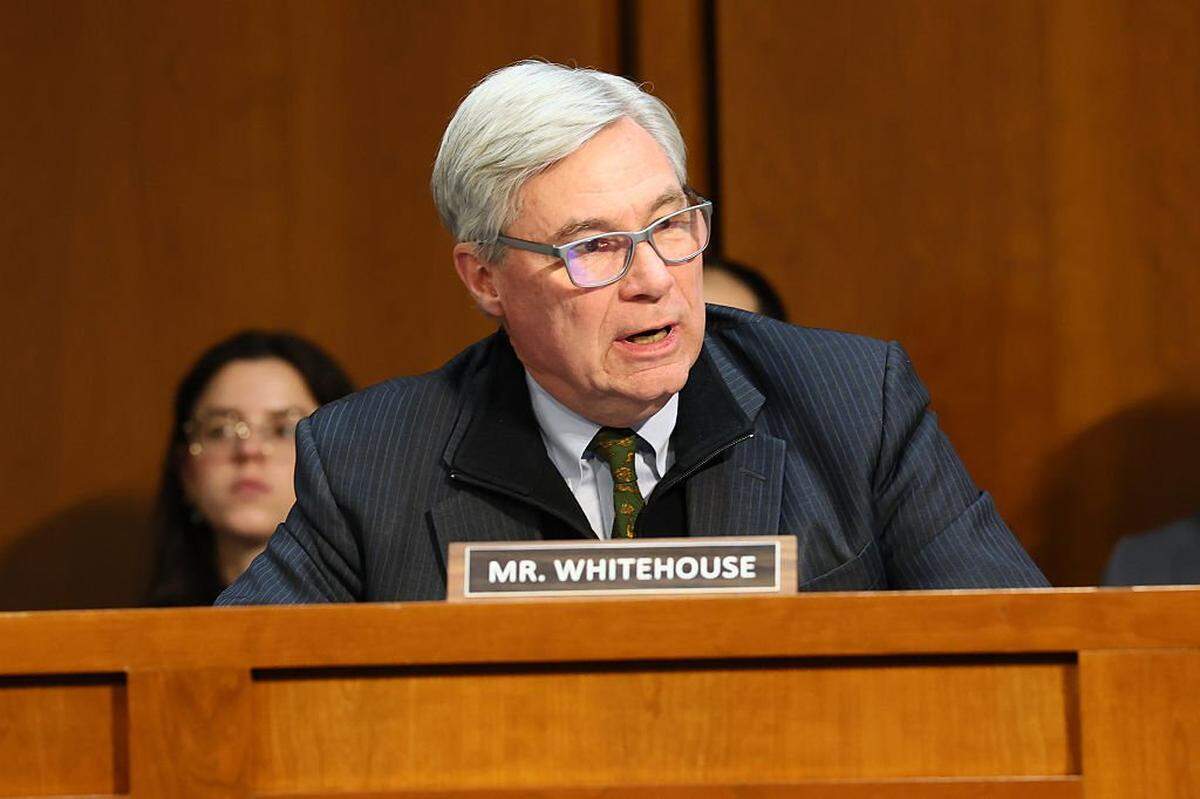
Speaking to Clarke, Whitehouse said, “It would have been great if your answers were simple and honest here today. It’s really disappointing.”
Whitehouse did appear satisfied with one answer Clarke gave. He asked her whether anyone else in addition to a person who makes a threat against a judge could be held responsible for the threat. Clarke said, “Senator, as a prosecutor there are instances where there is some responsibility that is assigned to someone who is not the utterer of a threat to an individual.”
How Clarke sought judge’s post
Clarke said in a written response to the Judiciary Committee’s questions that she began seeking a federal judge’s post in November 2024, when she contacted U.S. Sen. Lindsey Graham’s staff and met with one of his aides.
In October 2025, she met with Sen. Tim Scott at his Washington office to discuss becoming a federal judge. “During our meeting, Sen. Scott asked if I would like to be considered for the vacant U.S. District Judge position in the District of South Carolina,” she wrote.
Since then, she has been in contact with White House and Department of Justice officials to discuss the nomination. On Feb. 9, Trump called her to say he would be nominating her, Clarke wrote.
In her presentation to the committee Wednesday, Clarke paid tribute to her parents and her husband and said she is the mother of three children.
Where was Gowdy?
Notably absent from Wednesday’s proceedings was former U.S. Rep. Trey Gowdy, R-S.C., for whom Clarke served as top staffer on Gowdy’s high-profile Select Committee on the 2012 terrorist attack in Benghazi. Often, prominent people supporting judicial nominees come to a nominee’s hearing.
In remarks to the committee Wednesday, Graham said that Gowdy brought Clarke to his attention by pointing out “her distinguished career.”
Clarke also told the committee that Gowdy had given her much support over the years.
Gowdy could not be reached for comment.
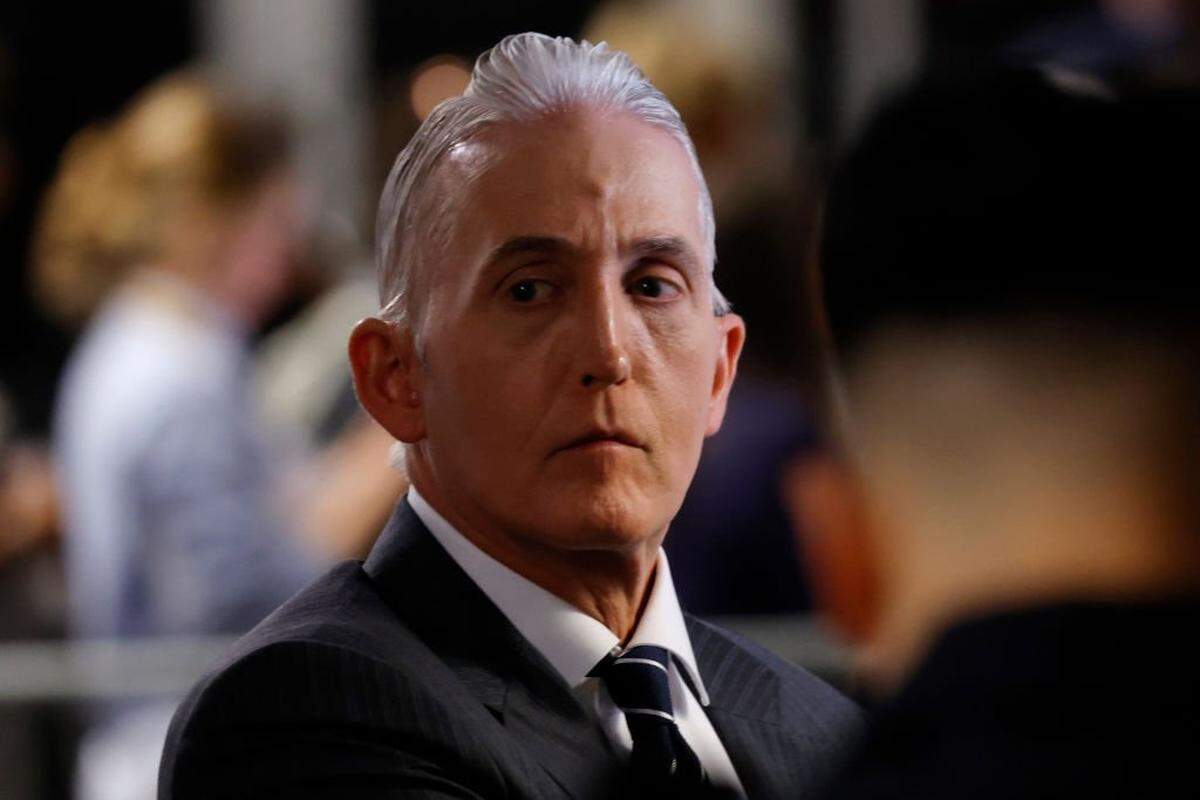
Gowdy, who retired in 2019 and has been close to Trump, is a Fox News commentator. He has written thrillers and an advice book on decision-making.
Scott, Graham speak highly of nominee
Both senators Graham and Scott appeared at the hearing and spoke highly of Clarke.
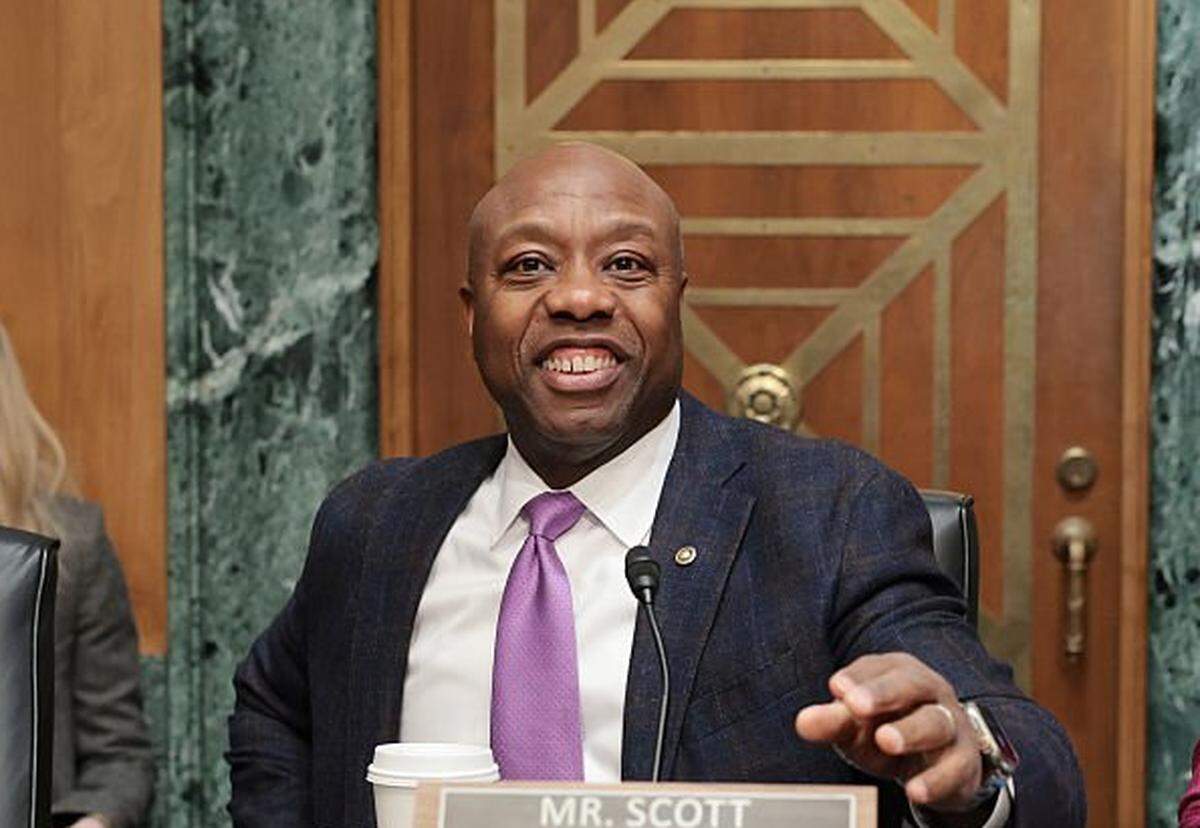
Scott said in part that Clarke was homeschooled and graduated from the evangelical Liberty University in Lynchburg, Va., before working her way through law school at the University of North Carolina.
“Sheria has built a distinguished legal career rooted in service both in the courtroom and in her community. She has held several roles with increasing responsibility from her time at the Ethics Committee to eventually leading one of the most high-profile and consequential committees in Congress as a staff director for the House Oversight and Government Reform Committee,” Scott said.
Scott continued, “Her commitment to serve extends into the community where she serves on the board of directors of Jasmine Road, supporting women recovering from trafficking, addiction and exploitation. She also serves as chair of the Miriam Foundation and has supported organizations like the PhillisWheatley Community Center and the Governor’s School for Science and Mathematics Foundation.”
He added, “Sheria’s faith is central to who she is and is reflected in her approach to justice, her respect for others, and her commitment to fairness. She understands that the law requires not just intellect, but sound judgment, restraint, and a deep awareness of how decisions impact people’s lives, and she brings those qualities to the bench.”
Scott said he had met Clarke though Gowdy 14 years ago and had come to realize she is “one of the most outstanding people of character I have ever met. She brings a rare combination of humility and conviction to her work with a clear understanding of the responsibility and trust required by a federal judge.”
Graham, who is a member of the Judiciary Committee, said that “of all the people we could have picked to serve as a federal district court judge in South Carolina .... we could not have done better than you (Clarke).”
If confirmed by the U.S. Senate, Clarke will likely handle cases in Columbia, Florence and Greenville. She is filling the post vacated by Judge Bryan Harwell, who is no longer on active status. Harwell worked out of Florence.
Tobias said every nominee for a judge’s post “has given the same answer so far. They are obviously being prepped for that. It’s too bad Clarke couldn’t depart from that. But as a Trump nominee, she couldn’t do anything else.”
Tobias, asked if Trump won the 2020 election, laughed and said, “Are you kidding?”
This story was originally published March 26, 2026 at 5:30 AM.