Desk-sized drones and 30‑pound drops at SC prisons. State AG asks Trump for help
South Carolina corrections and state officials say drones smuggling drugs, phones and other contraband into prisons have become an “everyday battle,” with increasingly sophisticated aircraft capable of hauling heavy and deadly loads, such as fentanyl.
The problem has grown steadily since at least 2017, when an inmate who escaped from the Lieber Correctional Institution used wire cutters that were flown in by a drone. Chrysti Shain, spokesperson for the corrections department, described the incident as one of the first major warning signs for the state.
Since then, the agency has built a counter-drone program “piece by piece every year,” she said, adding that corrections has installed 50-foot netting around major prisons — a barrier meant to stop contraband from being thrown over fences but one that drones often bypass.
Joel Anderson, director of the state corrections department, said stopping drones from dumping illegal contraband into S.C. prisons is a daily — or nightly — fight.
“We are under nightly attacks by drones dropping deadly drugs and other contraband onto our prison yards,” Anderson said. “It’s dangerous for our staff, our inmates and the public, and we take extraordinary measures to stop it.”
This week, South Carolina Attorney General Alan Wilson — who’s bidding for governor — said he’s asked President Donald Trump to help law enforcement to detect, disable, and intercept drones before they reach prison grounds.
“Right now, federal law limits who can detect and stop these drones, leaving correctional officers and local law enforcement without the authority or tools to act in real time,” Wilson said in a post on Facebook. “That’s a dangerous gap.”
Detection systems and desk-sized drones
Shain said South Carolina uses drone detection technology at prisons, alerting officials when a drone enters restricted airspace. Drones are not allowed to fly over prisons under Federal Aviation Administration rules, but smugglers can bypass common manufacturer restrictions with modifications, she said.
“If you just have a recreational drone… your drone won’t fly over our prison or the airport because there’s technology (built into the aircraft) that will stop it,” Shain said. “But you can order a fix on Amazon pretty cheaply, and drones fly right over our prisons.”
The detection systems can show where a drone is and its trajectory, Shain said, sometimes allowing law enforcement to backtrack and arrest operators — though geography can make that difficult, including near the Broad River where a pilot may launch from across the water.
Corrections has also developed its own drone program, Shain said, with drones and trained pilots stationed at every prison. Those drones are used to search roofs and prison grounds quickly after a suspected drop and to help locate packages that may have landed out of view.
The stakes can be deadly, Shain warned, particularly with fentanyl.
“We can’t shoot a drone out there. That’s illegal and potentially dangerous” she said. “If it crashes carrying a large bag of fentanyl, everybody’s dead.”
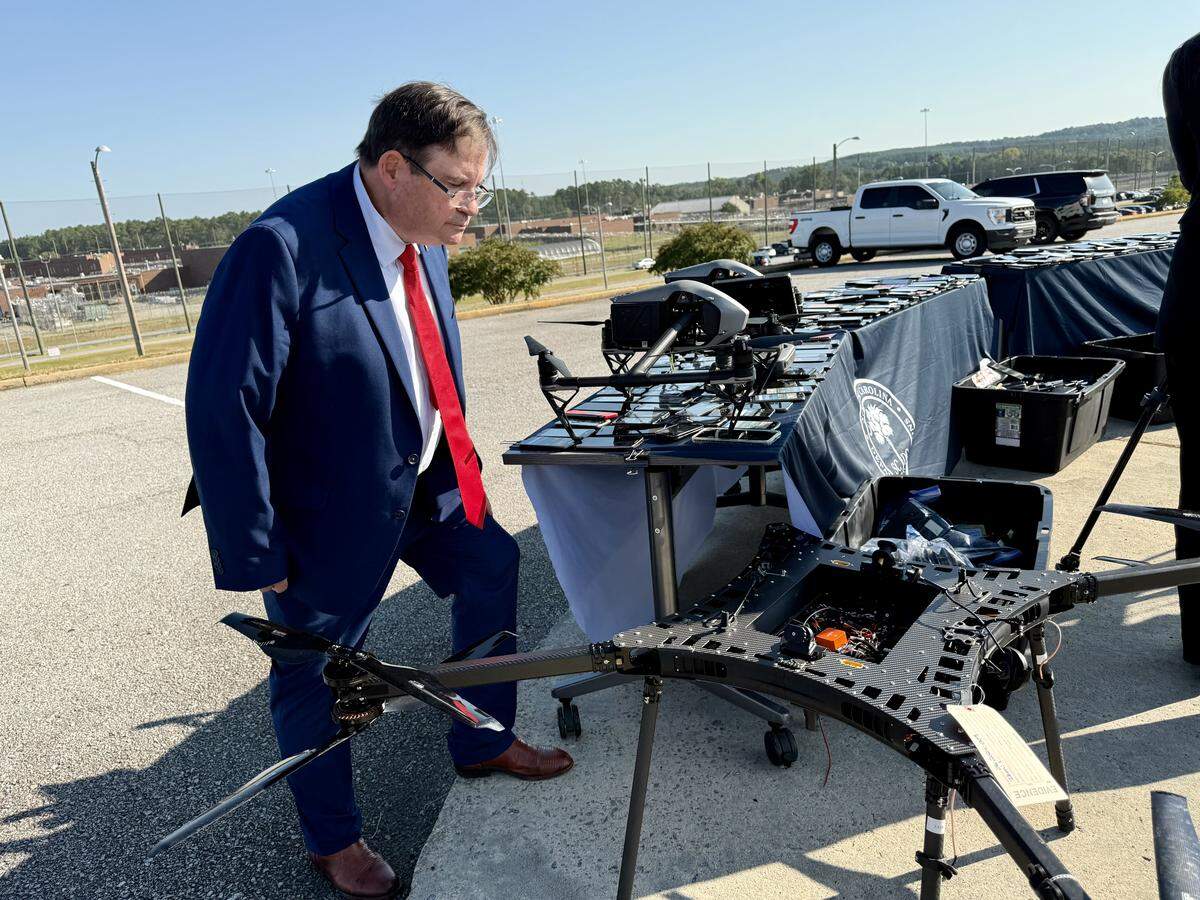
Shain said the drones used by smugglers have evolved dramatically, from smaller models that once carried only a few phones or some marijuana or tobacco to larger aircraft capable of hauling 20 to 30 pounds. Some of the confiscated drones, she said, were enormous.
“The drones we have confiscated that have crashed are as big as my desk,” Shain said.
Diversions, disguises and multiple drones
Officials also described tactics that resemble cat-and-mouse operations.
Sometimes a drone alert will register in one part of a prison yard, Shain said, only for another drone to drop contraband on the opposite side — an apparent diversion to pull attention away from the real delivery.
“They’ll have two drones at a time,” Shain said, explaining that one can be detected on one end of a facility while another “comes in, drops something and takes off.”
Packages themselves can be disguised to blend in with prison recreation areas or landscaping, she said, including drops designed to look like common objects, such as a basketball.
“You know, we take a step forward, and the criminals take a step forward,” she said. “Technology changes all the time… it is an ongoing battle every night.”
This story was originally published April 1, 2026 at 5:00 AM.