
John McIntosh, advisor to high SC officials, mentor to young lawyers, dies at 87
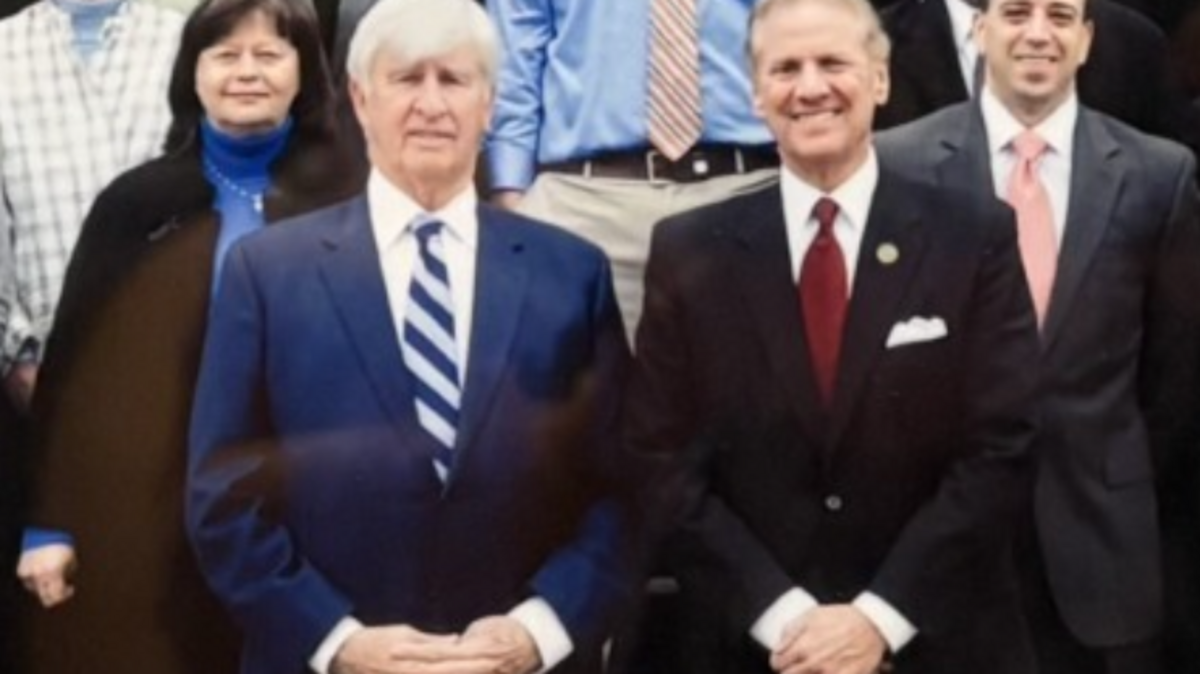
John McIntosh, a one-man brain trust who over the span of more than 50 years advised four S.C. attorneys general, two U.S. attorneys and one governor, died Thursday, June 11, 2026. He was 87.
McIntosh oversaw prosecutions in some of the state’s biggest drug and white collar crimes in the last half century.
They included the Jackpot marijuana smuggling operations of the 1980s, the 1990s Lost Trust legislative corruption scandals where 17 lawmakers were convicted and the early 2000s Home Gold investment collapse, where more than 8,000 investors lost $277 million.
After retiring from the attorney general’s office in 2016, McIntosh worked for three years as an adviser to South Carolina Gov. Henry McMaster.
McIntosh had come full circle. Thirty years earlier, in the 1980s, he had worked for McMaster when the governor was a young U.S. attorney overseeing the state-federal Operation Jackpot investigation into large-scale marijuana smuggling in South Carolina.
“He was a kind and gentle man, completely trustworthy,” McMaster said. “He always gave good advice. He was quiet. He was not a talkative person, unless you were asking him things.”
McMaster recalled that in his youth, McIntosh had been a smoke jumper, one of those elite firefighters who parachute into remote areas where forest fires rage.
One time, McIntosh — who lifted weights and was in superb physical condition — landed high in a tree and let himself down with a rope, but the rope wasn’t long enough and he fell hard to the ground, McMaster recalled.
“He landed in a sitting position, on his hips and his wrists, he broke both wrists and broke his back. He was lying there paralyzed. I don’t know how they found him,” McMaster said. “It took a long time, but he finally got better.”
Tall, large and silver-haired, McIntosh commanded attention in the courtroom.
“He was totally focussed. He’d walk into the courtroom and everything would go quiet. He had quite a presence,” McMaster said.
McIntosh’s Five Rules
McIntosh played a role in hiring young prosecutors, and he developed a system of five rules for what he looked for in staff, said U.S. District Judge Sherri Lydon, who worked with McIntosh in both the U.S. Attorney’s office and the attorney general’s office.
The rules were: 1. Common Sense. 2. Good Attitude. 3. Hard Work. 4. Loyalty. 5. Organizational Adaptability.
McIntosh’s passing is “the end of an era,” Lydon said.
Former U.S. Attorney Bart Daniel, who oversaw the FBI’s investigation into bribes offered to S.C. state lawmakers in 1989 and the early 1990s, said there was no one like McIntosh.
“John McIntosh had the best judgment of anybody I have ever known,” said Daniel. “He would always say you can’t teach judgment. I think there’s some truth to that, but I think you can learn judgment from somebody like John. I’d like to think I have better judgment just because I watched John and saw what he did in tough situations.”
Daniel continued, “He was a career prosecutor, but he was always compassionate with people, he never treated defendants poorly. He was the consummate No. 2 man, making the trains run on time. He was in charge of logistics in any office he was in. All the younger lawyers, they would watch John. They’d say, ‘what would John do?’ “
Stay calm in the arena
Veteran criminal defense attorney Dick Harpootlian recalled that when he was a young prosecutor in the 1970s in the Columbia-based 5th Circuit Solicitor’s office, McIntosh —the top prosecutor in that office — was “the guy we looked up to.”
When he was trying his first case, McIntosh told him he had to stay calm in a jury trial, Harpootlian said. “He was very calm, and he said, ‘Calmness helps you sell your case’.” Fifty years later, Harpootlian said, he stays calm at trials such as the 2023 Alex Murdaugh double-murder trial, where he defended the accused killer.
Greg Harris, a criminal defense lawyer who worked with McIntosh as a young prosecutor in the U.S. Attorneys office, said, “John was always the most reasoned person in the office. Back in the day, we had a bunch of young attorneys who thought they knew how to do things, and John would say, ‘No, you aren’t going to do that,’ and he’d explain to you why. He helped so many young lawyers become good lawyers.”
McIntosh got him the job at the U.S. attorney’s office, said Harris. “I literally owe what I now do to the level that I have any expertise to John McIntosh.”
Laura Hudson, a longtime South Carolina victims’ rights advocate, met McIntosh in the attorney general’s office in the 1990s when she was working on a victim’s bill of rights to add to the state constitution.
“Any idea that went through the attorney general’s office went through John’s brain,” Hudson said. “Everybody looked to him as a balanced wheel. He was that person who would look at every aspect of every little thing. He would question me and ask me what I wanted to do and what I wanted to accomplish.”
McIntosh was highly concerned about how anything new would fit into the state’s criminal justice system, and his concerns sometimes seemed to slow things down, Hudson said. “One could always count on John to find some issue that needed to be addressed.”
Jack Swerling, a veteran criminal defense attorney, did court battle at times with McIntosh, who was a prosecutor trying to convict Swerling’s clients.
“He had this incredible patience with young lawyers. He was very even-tempered,” said Swerling, whose first case as a young defense lawyer was defending an accused rapist against McIntosh, then a veteran prosecutor in the 5th Circuit Solicitor’s office.
McIntosh could have clobbered him in court by taking advantage of his inexperience, but he didn’t, Swerling said. “When you’re a young lawyer, you make all kinds of mistakes,” Swerling said. “Everybody went to him as a mentor, even defense attorneys.”
“He had an enormous impact on many prosecutors in this state,” said U.S. Attorney Bryan Stirling, helping young attorneys in the attorney general’s office and the U.S. attorney’s office learn the difficult arts that go into trying a case before a jury.
Stirling distilled lessons from McIntosh into two simple ones: Show up on time and work hard.
Attorney General Alan Wilson said in a statement, “John McIntosh was my Chief Deputy for the first six years I was Attorney General. He was a dedicated servant to the people of South Carolina and a mentor to me and countless others. Our office still uses the things he taught us and focused on in his life. He will be deeply missed by all those who had the opportunity to work with him.”
A top lawyer in the attorney general’s office, Solicitor General Emeritus Bob Cook, who has been in that office nearly 49 years, said, “I thought the world of John. He was a great man. He was an institution in this office and in government in general.”
The attorneys general whom McIntosh worked for were Daniel McLeod, whose tenure was 1959-1983; Charlie Condon, 1995-2003; McMaster, 2003-2011; and Wilson, 2011-present. McIntosh left Wilson’s office in 2016.
More than just a lawyer
McIntosh graduated from Presbyterian College in 1961 in Laurens County, where he is remembered for a “generous donation” for a college athletic building.
The building, which a large practice area and locker rooms, is called the John McIntosh Athletic Center.
In his later years, McIntosh spent his time at his farm in Blythewood, enjoying cutting the grass on his John Deere tractor, hosting events for old legal and law enforcement friends and being with his rescue dogs, including one named Fluffy, friends recalled.
State Law Enforcement Division Chief Mark Keel said, “Besides being a great lawyer, he was a better person. Very humble. I used to call on him all the time. Always, you could seek his advice.”