Tattoo parlor sues South Carolina, saying tattoo law amounts to censorship
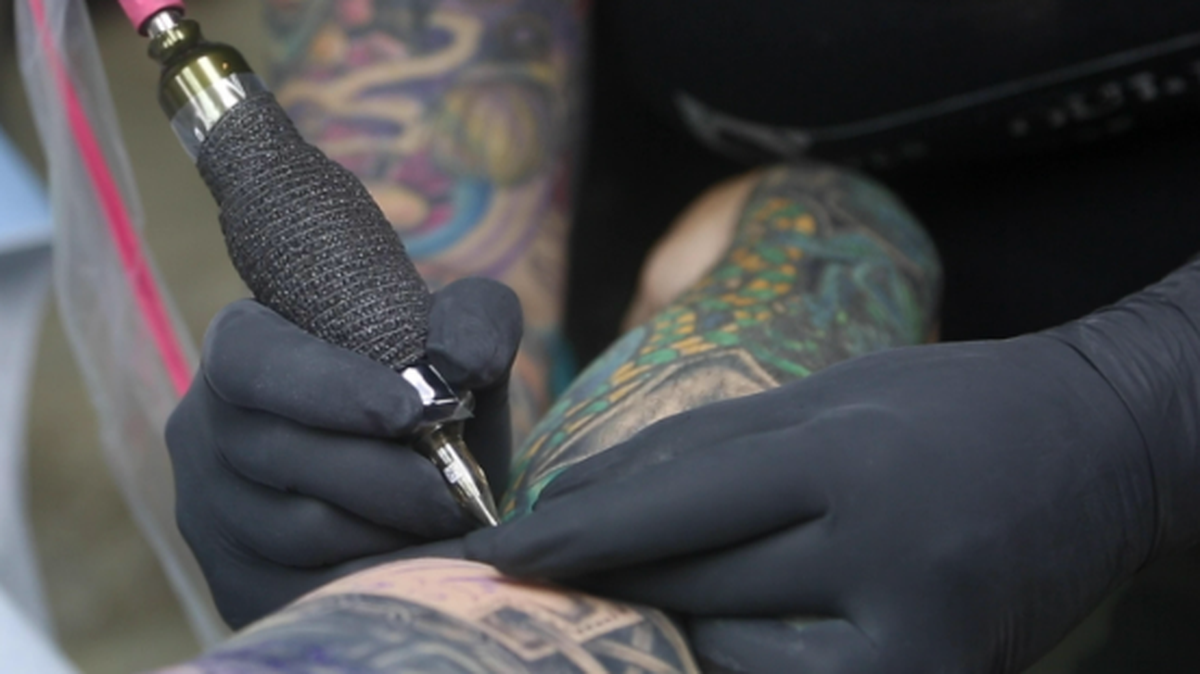
A New York tattoo start-up seeking to expand into Charleston has sued South Carolina health and law-enforcement leaders, arguing that two long-standing restrictions on tattooing violate the First Amendment by treating ink on skin as second-class speech.
In a complaint filed Friday in federal court in Charleston, Tiny Zaps Co. — a company founded in 2024 by entrepreneur Sam Kelly and tattoo artist Bruno Levy — challenged a state rule that bars licensing tattoo facilities within 1,000 feet of a church, school or playground. The company says the rule makes it effectively impossible to open in Charleston’s historic core, a neighborhood dense with churches and schools and marketed, in local lore, as “the Holy City.”
The lawsuit also takes aim at a criminal statute that makes it a misdemeanor for tattoo artists to tattoo “any part of the head, face, or neck” of another person — a ban that can carry penalties of up to a year in jail and a $2,500 fine.
Tiny Zaps argues that the prohibition blocks an “entire category” of tattoo art sought by consenting adults, including small designs that the company says it routinely performs safely in other states.
“Tattoos are a form of artistic expression protected by the First Amendment,” the complaint says, contending that the state’s approach regulates not hygiene or training but “the speech itself”: where artists may work and what kind of work they may create.
Tiny Zaps portrays itself as part studio and part lifestyle brand, built around online booking, curated designs and pop-ups in commercial spaces. The complaint says the company has been negotiating a draft agreement with a national operator of boutique hotels and other brands to host tattoo pop-ups, including one at a Charleston hotel in the historic district. The company says it has already identified a licensed South Carolina tattoo artist eager to run the operation.
But during due diligence, Tiny Zaps says it discovered legal barriers that made the plan untenable.
The 1,000-foot rule is measured by “the shortest route of ordinary pedestrian or vehicular travel,” according to the complaint. In downtown Charleston, Tiny Zaps says, that means a hotel could be surrounded by invisible boundary lines drawn from nearby churches and schools.
Besides Tiny Zaps, plaintiffs in the case include Joshua and Stephanie McDonald — a married couple from Fountain Inn, S.C., who say they have multiple tattoos and would seek additional tattoos, including on the head, face or neck, if state law allowed artists to perform them.
Brannon Traxler, the acting director of the South Carolina Department of Public Health and Alan Wilson, the state attorney general, are listed defendants.
Tiny Zaps and the McDonalds are being represented for free by Pacific Legal Foundation, according to a news release.
“South Carolina cannot treat tattooing as second-class expression based on stigma or discomfort,” Caleb Trotter, senior attorney with Pacific Legal Foundation, said in a news release. “The First Amendment protects artistic expression, whether it appears on canvas, paper, or skin.”
The complaint, brought under the civil rights statute 42 U.S.C. § 1983, does not challenge South Carolina’s sanitation and licensing requirements — rules governing sterilization, single-use gloves and needles, training in bloodborne pathogens and infection control, and inspections. Instead, it argues, the contested provisions are not health measures at all.
To underline the point, the suit compares tattooing with body piercing, another procedure that punctures the skin and carries infection risks if performed improperly. South Carolina does not impose comparable location restrictions on piercing studios or broad bans on where piercings may be placed, the complaint says, suggesting the state is singling out tattooing because of its expressive content and cultural baggage.
Until 2004, South Carolina was one of only two states that outlawed tattooing, the complaint says, and the state Supreme Court upheld that prohibition in a 2002 decision that rejected First Amendment protection for tattooing.
Although tattooing was later legalized, Tiny Zaps argues that the challenged restrictions reflect the same “outdated premise” that tattoos are not “real art” entitled to full constitutional safeguards.
The plaintiffs are asking the court to declare the restrictions unconstitutional and to issue permanent injunctions blocking their enforcement. If successful, the suit could force state regulators to rethink how — and where — tattoo businesses can operate in cities like Charleston, where the geography of tourism and the geography of worship overlap block by block.
And it could reach beyond commercial zoning fights. Tiny Zaps’s broader claim is about what it means to speak through the body: that the “meaning” of a tattoo comes not only from its design but from its placement — the line along a jaw, the small mark at a temple, the message carried where it can be seen.
South Carolina, the complaint suggests, is not merely regulating commerce. It is deciding where art may go.