
A mom got her kid into a top Columbia school by paying a stranger’s water bill
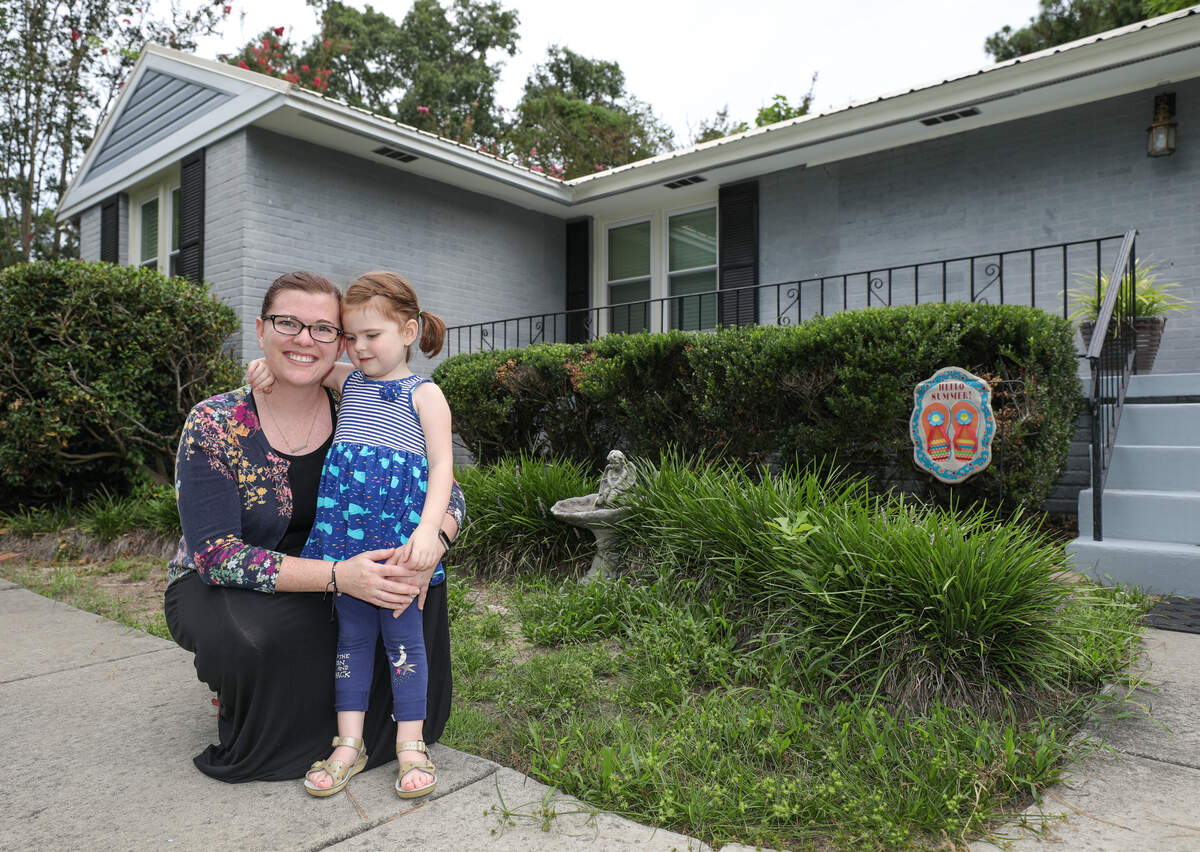
When Leah Cordoni rented a Columbia home a few years ago, the lease came with an unwritten condition: She had to collect mail for her landlord’s friend, who was using the address to send her children to the neighborhood schools.
Cordoni accepted. Previous tenants had agreed to do the same. The house in the Rosewood neighborhood was a good deal. And there was another financial perk.
“The trade-off was the water bill was in this woman’s name,” Cordoni said.
The mother and landlord’s arrangement shows how parents will go to great lengths — even illegal lengths — to send their students to the city schools of their choice in Richland 1. That includes using addresses of relatives or rental properties and hopping on utility bills or leases, according to residents of Columbia’s and Forest Acres’ high-demand neighborhoods.
The stakes are high as families fight for houses zoned for the hottest schools in an urban market with limited inventory. Those homes and schools are beyond the reach of some families, driving some to take extreme measures that come with risks.
After the mail carrier picked up a bag of school mail intended for the mother, a tool box with “Do not remove” written on it was placed on the porch for the tenants to deposit the mail.
“I think they were worried the mail was going to go back to the school and that they were going to be found out,” Cordoni said.
Many parents seeking spots in the city’s most desired schools don’t game the system.
Instead, they request transfers to schools in other attendance zones — Richland 1 received 525 such requests last year.
Others roll the dice in district-held lotteries, hoping for a spot in magnet and other special “choice” programs, including Carver-Lyon Elementary’s language immersion program and Brockman Elementary, a Montessori school.
And others choose a more direct — and expensive — path to the city schools of their choice.
Daniela Cuddington recently found out the home she bought in 2011 on Sylvan Road in Forest Acres was zoned for Forest Lake Elementary in Richland 2.
So in June, she and her husband bought a house six doors down so her daughter, now 3, could attend Richland 1’ s Satchel Ford Elementary when she’s old enough.
Cuddington said her online research about the two schools’ standardized test scores helped her make the decision to move. The proximity of Richland 1 schools — on the route to downtown Columbia where she and her husband work — helped too.
“Satchel Ford has a reputation of giving students a great education,” she said.
Rifts in race, income in hot schools
It’s no secret that school quality drives real estate values in every city.
But unique to Richland 1, a majority-black district with a high poverty level, is the existence of a small cluster of majority-white, high-achieving schools. As a result, there’s a scramble among many white and professional families in Columbia and Forest Acres to buy a home zoned for the schools, setting home values at premium levels.
That contrast is most evident in four of the district’s 28 elementary schools — Brennen, Brockman, Rosewood and Satchel Ford — the only majority-white student bodies in the district, which boast high test scores and have the lowest poverty rates of any district elementary schools.
Consider:
▪ Last year, the four schools posted the highest percentage of students who met or exceeded expectations on state reading and math standardized tests out of the district’s 28 elementary schools.
▪ They reported the lowest percentages of students in poverty of any elementary schools in the district — ranging from 25 percent to 46 percent
▪ More than half of Richland 1’s 4,400 white students attended the four elementary schools last year.
▪ Two of the schools are over student capacity: Satchel Ford and Brennen. Brockman is at 91 percent capacity. The fourth school, Rosewood Elementary, is at 86 percent capacity, according to district data, but has portable classrooms on its campus.
Brennen and Satchel Ford are growing fast. The schools alone enrolled 1,700 students last year, up from 1,465 five years ago.
Asked whether demand on the Forest Acres schools underscores a need to address the racial differences in the district’s schools, Richland 1 Chairwoman Cheryl Harris said, “I’m not going to allude that it has anything to do with race.”
“The story of Richland 1 is finally being told the way it needs to be told,” she said, noting a “huge amount of opportunities for our students regardless of which school they attend.”
“You’ve got mayors, you’ve got senators, you’ve got doctors, you’ve got the head of NASA out of this district. You’ve got Miss America coming out of this district,” she said.
Some Richland 1 parents worry that race is sometimes a factor driving parents away from great Richland 1 schools.
“What I hear is people transfer out of Meadowfield because of the black-white ratio,” said Anna Moore, PTO president at Meadowfield Elementary, a 76-percent minority school near Woodland Park behind the Veterans Affairs Hospital off of Garners Ferry Road.
Moore’s husband has taught at Meadowfield for a decade, and the couple has sent all of their children there.
“I tell people all the time not to look at tests, not to look at the scores and the grade” the state gives out on school report cards. Instead, she tells neighbors to visit the school and talk to parents. The PTO hosts two outreach programs a year, introducing families to the school.
The hope is to encourage more parents, including many who send their kids to the nearby private Hammond School, to pick Meadowfield instead.
Going to the hottest schools doesn’t always work out for families, Moore said. She recently talked to a mother who moved her child from Meadowfield to Brennen but realized, “ ‘We’re just a number there.’ “
“”It’s such a big school. They don’t feel like a family the way they did at Meadowfield,” she said.
‘Trying to be creative’
No plans exist to expand the popular elementary schools or build new ones, said Richland 1 Superintendent Craig Witherspoon.
The district’s demographics, including the high demand on the Forest Acres schools, will factor into the district’s next five-year strategic plan, slated to begin in 2020, he added.
Asked whether parents cheating the system to get into the schools of their choice is a problem, Witherspoon said, “The anecdotes are out there.”
The district requires parents to provide two proofs of residency when enrolling students, such as a copy of a lease or mortgage agreement or a utility bill.
When district officials suspect school enrollment fraud, a staff member checks it out. That includes making home visits and requesting to see beds and bedrooms, to make sure students are actually living where they say they are.
But unlike in some parts of the country, where they’ve hired private investigators to catch parents who are committing “education theft,” Richland 1 has not gone that far.
The district also has worked to expand school choice options to attract families to schools around the district, Witherspoon said, including offering Montessori education at three elementary schools and W.G. Sanders Middle. And a high school program could be in the future while Caughman Road Elementary is adding a Montessori wing.
With the help of a $15 million federal grant, the district is launching four new magnet programs at some of the district’s highest poverty schools. Career magnet programs aimed at exposing and preparing students for different career paths will be available at Bradley Elementary, W.G. Sanders Middle and W.J. Keenan High.
Parents also can request to transfer their children into a school in another attendance zone for a variety of reasons, including access to a program that is unavailable at the child’s zoned school or if the student’s child care provider is located in the school zone. Of the 525 transfer requests the district received for this coming school year, 459 of them — or 87 percent — were granted.
“We’re trying to be creative and innovative in terms of the various curricula that we offer and to provide parents and children with options,” Witherspoon said.
Richland 1’s high-stakes real estate game
A cluster of Richland 1’s 46 schools are in high demand, meaning homes zoned for them typically sell fast and fetch a premium price.
The State newspaper reviewed recent sales of homes zoned for the highly sought Satchel Ford Elementary and Bradley Elemenary, located less than 2 miles away.
▪ A 3,000-square-foot house on Wolf Circle, zoned for Bradley, sold in May for $250,000 or $85 a square foot. The home boasts granite counter tops, a pool and a sun room. A slightly smaller and older house on Fernwood Road, zoned for Satchel Ford, sold in February for $450,000, or $156 a square foot.
▪ A 2,500-square-foot home on Briarwood Road, zoned for Satchel Ford, sold for $399,000 in March. Another home of the same size and age on Stepp Drive, zoned for Bradley, sold for $237,000 in December.
This story was originally published August 5, 2018 at 5:00 AM.