
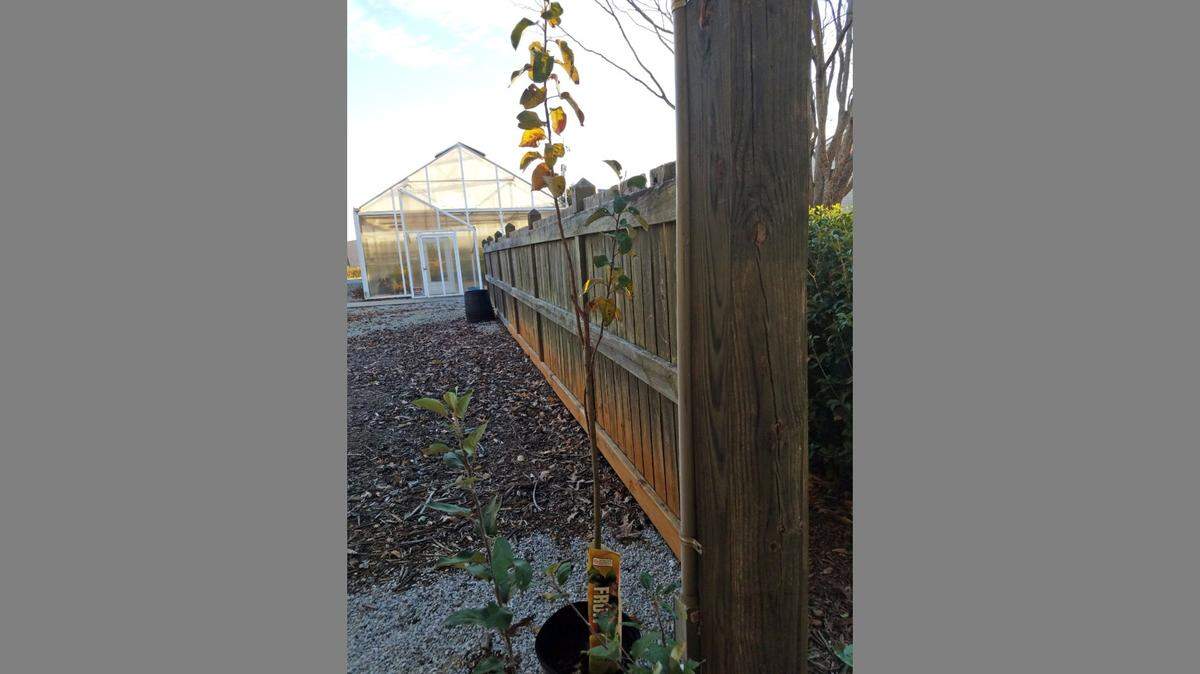
The tree set to be planted at Clemson is close to “7 feet tall and is as thin as a broomstick,” the university said in the news release.
Clone of apple tree at core of Newton’s theory of gravity to be planted at Clemson
The seeds for the idea were planted when a student picked up an apple.
The fruit had fallen from a special tree — a clone of the apple tree that inspired Sir Isaac Newton’s theory of gravity, according to Clemson University.
After taking several apples, the doctoral candidate gave one to his professor. An idea took root that will culminate Wednesday with “the planting of a grafted clone of the Newton apple tree” on the Clemson campus, the university said in a news release.
When the tree is planted, Clemson will join other universities such as MIT, Occidental College and Trinity College in Cambridge, among other locations on every continent other than Antarctica to have a direct descendant or clone of Newton’s original tree, according to Atlas Obscura.
Clemson is adding what it calls a “living piece of scientific history” because of Bishwambhar Sengupta’s trip to the National Institute of Standards and Technology in Gaithersburg, Maryland, in August 2017, according to the university news release.
A doctoral candidate in Clemson’s College of Science’s department of physics and astronomy, Sengupta saw that campus’s clone of Newton’s tree and picked up some apples that had fallen from its branches, the university said.
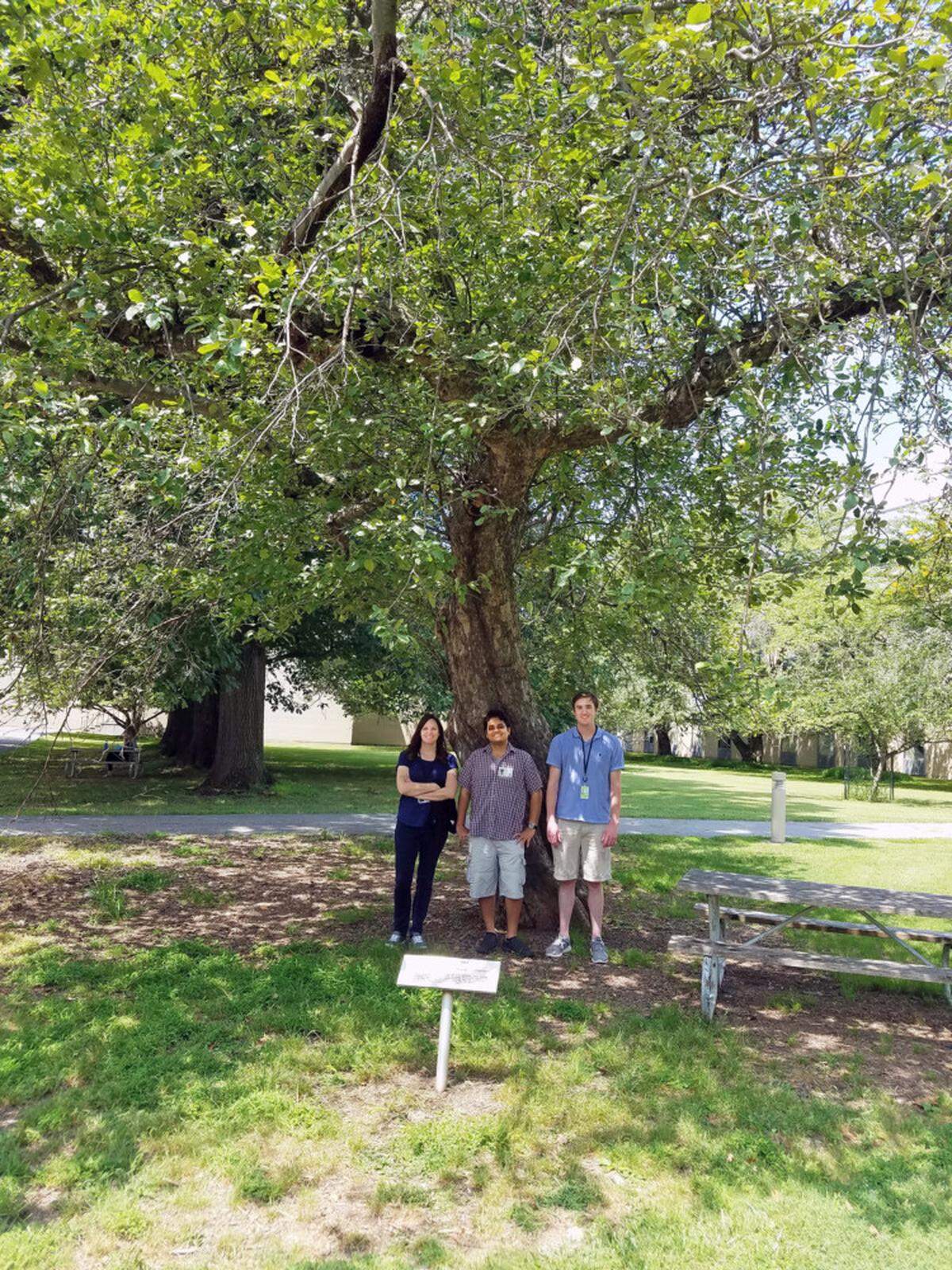
“Seeing that tree was a very special experience for me as a scientist. It gave me goosebumps,” Sengupta said in the news release. “When I touched the trunk of the tree, it felt like being connected across time with Sir Isaac Newton.”
Sengupta gave one of the apples to his faculty mentor Endre Takacs, who was eventually inspired to form a group in Clemson’s physics department, which was named Newton’s Apple Club, according to the university’s release.
“We didn’t know at the time if we were going to do anything meaningful, but starting a club can be the first step to new discoveries,” Takacs said in the news release.
While the group was active on campus, its main focus became a plan to add a Newton tree to Clemson, according to the news release.
Led by Sengupta, the Newton Apple Club connected with the U.S. Department of Agriculture, which sent “three young branches – with buds prepared for grafting onto modern rootstock” to Clemson in February 2018, the university said in the news release.
With the aid of scientists in Clemson’s Musser Fruit Research Center, the branches and buds have been nurtured to the point where it is ready to be planted, the university said. The tree will need “extra-special care,” since it is not genetically prepared to fend off diseases borne since the 1600s, and it is not expected to bear “fruit for at least three years.”
The tree that will be planted on Wednesday does not bear much resemblance to the original apple tree that inspired Newton in 1666 and still remains on his family home in Lincolnshire, England, the University of York reported.
“I hope this apple tree serves as a reminder of the lasting impact one person can make across the centuries if unafraid to ask why and follow curiosity with careful thought and hard work,” Clemson physics and astronomy department chair Sean Brittain said in the news release.

Noah Feit
The State