
Protesting students say USC is giving those accused of harassment ‘a vacation’
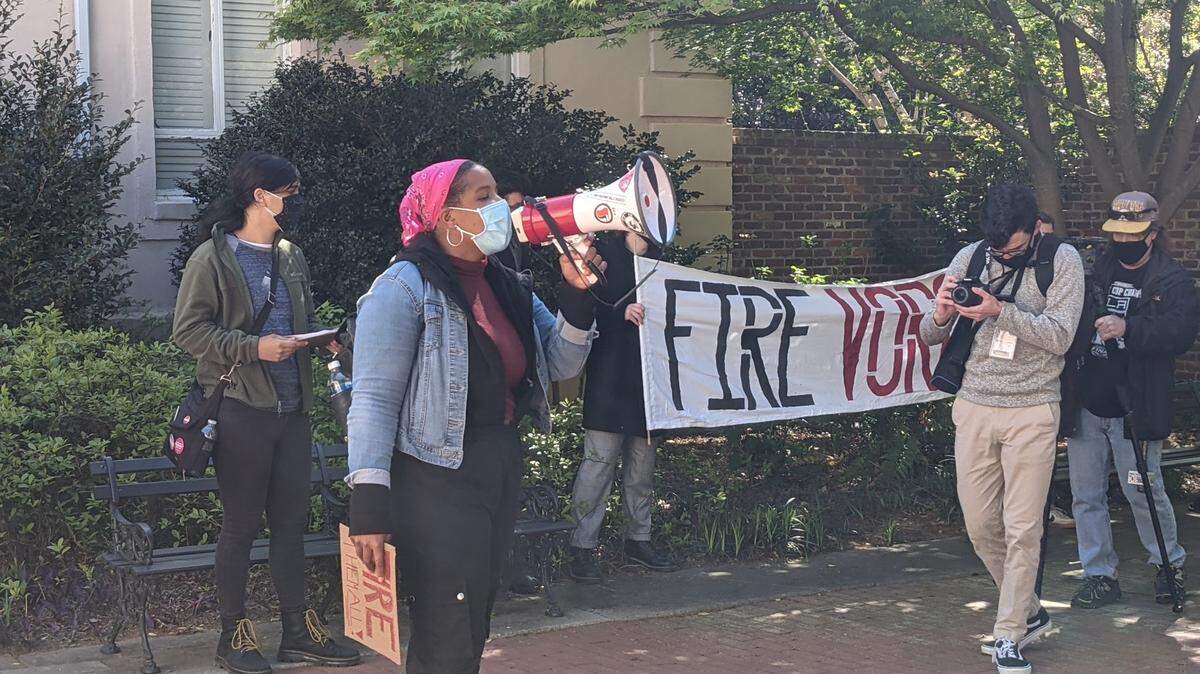
Around 100 people marched throughout the University of South Carolina’s campus Friday to call for the firing of all university employees accused of sexual harassment.
Protesters, who carried signs with slogans such as “fire all abusers,” and “protect students, not abusers,” said the current approach of removing faculty accused of sexual harassment from classrooms is not enough.
“They rewarded (accused sexual harassers) with a paid vacation,” Sophie Luna said.
Cece Taylor, a freshman majoring in criminal justice and English, agreed with Luna.
“Even the people they’re removing from campus, they’re still enabling them to be paid, to take a vacation and not waiting until after trial to make a full decision,” Taylor told The State.
USC student Ian Grenier, who spoke at the protest, also described USC’s removal of professors accused of sexual harassment from campus as “a paid vacation.”
Following allegations documented in lawsuits and an investigative report from The State newspaper, USC has removed several employees from campus who were accused of sexually harassing students, staff or colleagues. The employees remain on USC payroll, but are not in direct contact with students and are not allowed to come on campus without permission from a superior, USc said previously..
In response to the protest, USC spokesman Jeff Stensland issued a statement highlighting moves the university has announced in the last several weeks that aim to boost resources for those who report sexual harassment and he urged anyone who experienced sexual harassment to come forward.
“The University of South Carolina takes accusations of sexual harassment seriously and respects the right of students to make their voices heard on this important issue. President Bob Caslen has taken strong action to ensure faculty accused of wrongdoing were removed from the classroom and their access to campus revoked,” Stensland said. “Additional personnel action may be pursued in the near future in accordance with the law and with respect to due process.”
Charlotte Morrison, a sophomore journalism major, called on protesters to email Provost William Tate to pressure him to fire faculty accused of sexual harassment.
“The Carolina community will not tolerate the behavior of abusers,” Morrison said.
Lauryn Workman, the head of USC’s College Democrats who has been a campus activist since at least 2019, said many of her experiences with faculty were positive, but a recent allegation hit home. A lawsuit filed against History Professor David Snyder — a professor in a class Workman took — has contributed to her feeling unsafe on campus, she said.
“I love my community and I want to support it, but how can I right now?” Workman said.
The protest started at Longstreet Theatre and stopped at Gambrell Hall, the Pickens Street bridge, the president’s house on the Horseshoe and Osborne Administration Building. Protesters also passed by several campus tours attended by potential students.
The term “fire all abusers” was a tagline for the protest in the planning period, according to protesters and social media posts . Demonstrators also called for additional systemic change in how USC responds to sexual harassment complaints.
“I think we need to establish a system where faculty who have past cases of sexual abuse against them should not be allowed to be hired,” said Sophia Riley, a computer science major. “I also believe our current system for reporting sexual harassment and abuse should be overhauled and rewritten because it obviously doesn’t work now. All the students have reported harassment by these faculty members, they have just been completely ignored.”