Financial turmoil plagued SC State for years before president was fired
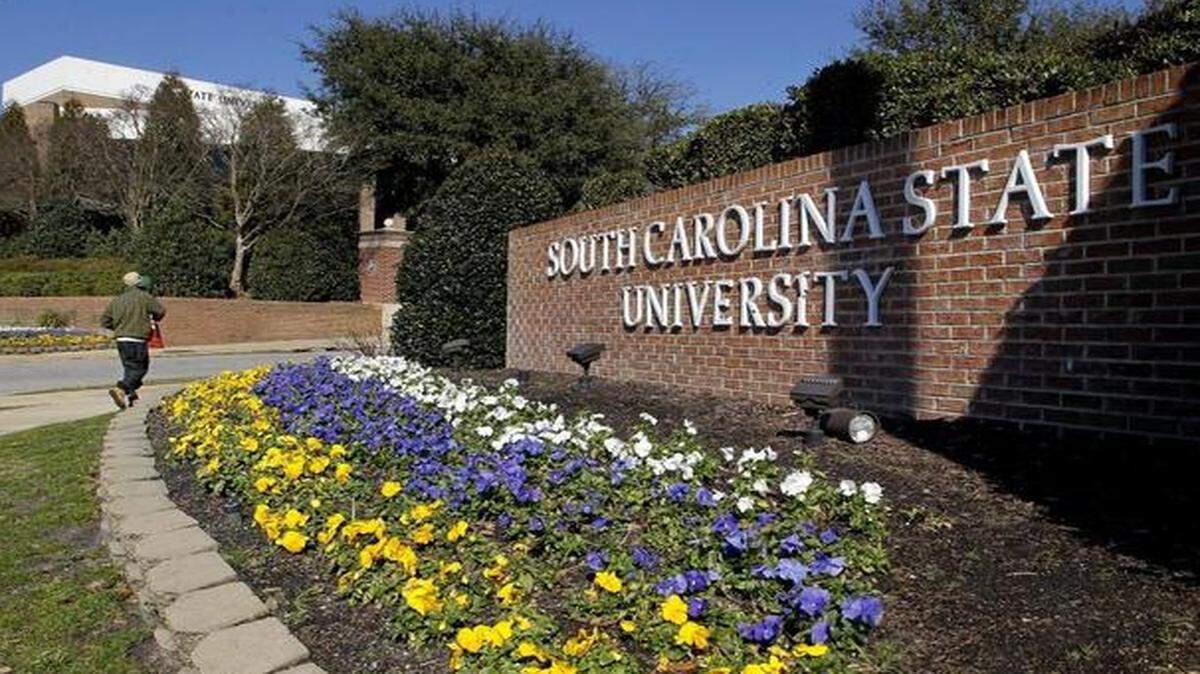
Only six years ago, South Carolina State University was in danger of shutting its doors as it faced daunting financial challenges. On Tuesday, the university’s board fired its president, James Clark, the latest moment of upheaval in the school’s recent history of turmoil.
Clark was ousted after a 10-3 vote by the university’s board of trustees.
His firing comes after the university — South Carolina’s only publicly funded, four-year historically Black university — has struggled to right itself from years of failing finances and declining enrollment.
Clark was hired in 2016.
The school’s recent troubles began before Clark’s tenure, tracing back to at least the mid-2000s, when enrollment was shrinking, revenue was declining and the school faced yearly budget deficits. The university began cutting staff and athletic and academic programs to save money. It even transferred millions of dollars meant to help poor families to instead fill holes in its regular budget, including payroll.
A 2014 report from the state inspector general’s office said that practice of transferring money to plug budget holes “has only worsened SCSU’s financial situation by allowing deficits to grow while delaying action to address structural business issues causing these deficits.”
That 2014 report on S.C. State’s finances came after the university requested a $13 million bailout from the state Legislature that year. State leaders balked at covering the school’s entire debt, instead offering a $6 million loan.
“I don’t think one more dollar should go to S.C. State until they move toward that process” of hiring an outside financial consultant, then-Gov. Nikki Haley said in August 2014. “To continue to give them money is buying time. To get financial consultants in there is teaching them how to clean up the mess that’s there.”
The same year, as the school’s dire financial situation and governance issues became more clear, S.C. State’s accreditation was placed on probation by the Southern Association of Colleges and Schools Commission on Colleges.
S.C. State was given until 2016 to fix problems ranging from financial stability to student aid to leadership structure or risk losing its accreditation. Students cannot receive federal financial aid at unaccredited colleges.
Amid that probation, in 2015, state lawmakers debated closing down the university for two years and firing all staff, faculty and trustees to give S.C. State “a clean slate,” according to a plan floated by state budget writers at the time. The school’s debt would grow to some $23 million that year.
“We are looking at a bankrupt institution,” then-state Rep. Jim Merrill, a Berkeley County Republican, said in February 2015. “No one takes any pleasure in recommending this. ... It’s not the intention of the committee to wipe S.C. State off the planet.”
S.C. State supporters, including Orangeburg community members, alumni and some state lawmakers, rallied to keep the school open, and it the plan to temporarily shut down the school ultimately fizzled.
In March 2015, the ongoing financial and leadership controversy led the school’s board of trustees to fire then-President Thomas Elzey.
Elzey’s successor, acting president Franklin Evans, asked lawmakers for $23.5 million to wipe out the school’s debt — “We are pleading, begging and asking for assistance,” he told a Senate panel in March 2015. The state didn’t bite.
Then in May 2015, Haley signed a bill, supported by the S.C. House and Senate, that wiped out the entire S.C. State board of trustees. Even U.S. Rep. Jim Clyburn, D-Columbia, S.C. State’s most prominent and powerful alum, had said he supported overhauling the school’s leadership board.
S.C. State’s accreditation was taken off probation in mid-2015 as new leadership was installed.
James Clark was one of new board members appointed that year. In 2016, he was named the university’s president.
The university continued trimming its budget, and its financial situation appeared to grow more stable under the new leadership. The political controversy surrounding the school, its finances and leadership largely died down after 2015, at least publicly.
S.C. State reported that enrollment increased for three straight years under Clark’s leadership.
Still, alumni and faculty criticized lackluster enrollment figures that Clark was unable to fix. Between 2011 and 2019, enrollment at S.C. State fell from more than 4,300 to under 2,500, a 43% decline, according to data from the S.C. Commission on Higher Education.
In the 2021 spring semester, S.C. State’s total enrollment was recorded at 1,960.