
Caslen’s comments about regretting his time at USC could hurt presidential search
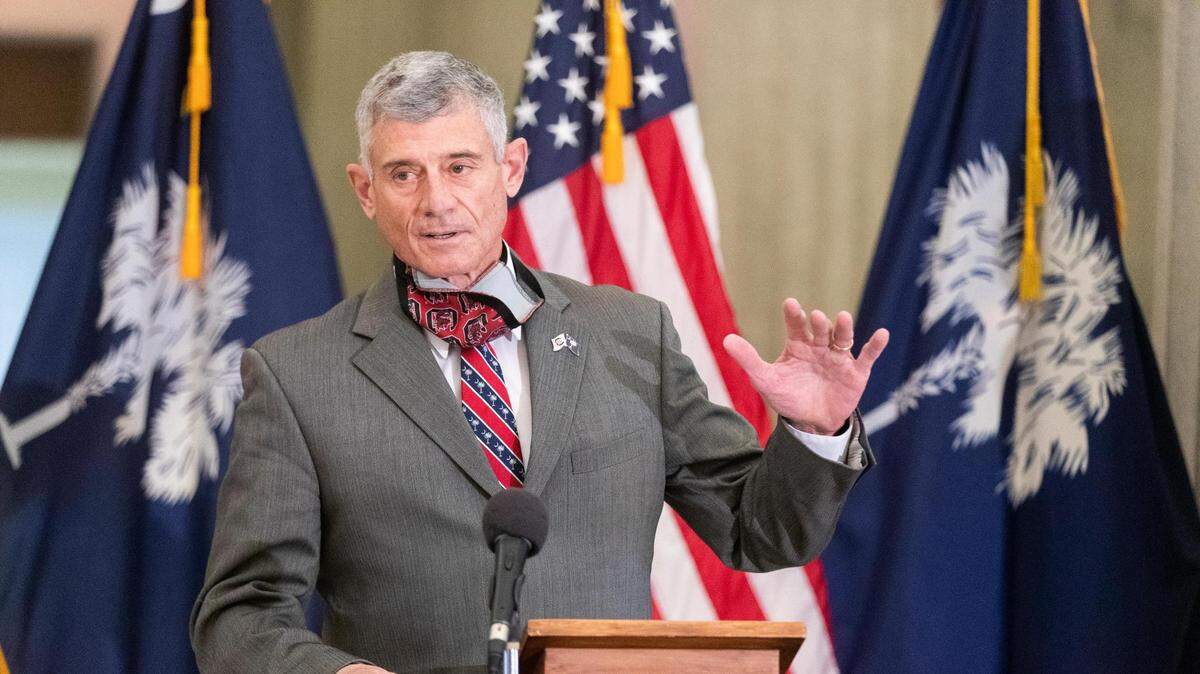
Former University of South Carolina President Robert Caslen’s recent public comments that he regretted taking USC’s top job could hurt the school’s ongoing presidential search, according to a former trustee and former student body president.
The former trustee, Chuck Allen, and the former student body president, Taylor Wright, both had a role in the presidential search that ended with Caslen becoming president in 2019.
Caslen told the Post & Courier of Charleston in a recent interview that coming to USC was “the biggest regret of my life.” The retired three-star general who led troops in Iraq said the university community is the most “hostile and destructive” community he had ever been part of.
“Having a person who had the job say he completely regretted taking the job, no matter what the job is, it’s going to make people think twice before they apply,” Wright said.
Wright, who was on the presidential search committee after Harris Pastides announced his retirement in 2018, said Caslen’s comments about the university made a splash further than just newspaper headlines and tweets in South Carolina. He’s living in Washington, D.C., now and is hearing about it from non-Gamecocks, he said.
“Even a few folks up here who aren’t directly connected to the university brought it up to me when I told them I went to USC, so it’s getting some exposure,” Wright said.
The State asked Caslen if he thought his comments could hurt the presidential search.
“I suspect it would,” Caslen said.
“If I was considering coming to the University of South Carolina and I heard about how my predecessor was treated, I would certainly look into it,” Caslen said.
Allen isn’t sure what the effect would be on the presidential search, but “I don’t think it would help,” he said.
“I would certainly think the harmony or lack of harmony of the relationships among your constituent groups or your stakeholders would matter,” Allen said.
In spring 2019, roughly six months after Pastides announced his retirement, a search committee selected a slate of four finalists., one of which was Caslen. After protests and a divided board of trustees, the board voted to continue the search. In the summer, while students were away from campus, S.C. Gov. Henry McMaster — who is ex officio chair of the board — began calling board of trustee members and successfully forced an 11-9 vote on Caslen.
The State reached out to multiple board of trustees members and a spokesman for McMaster for this story. None returned a request for comment.
Allen, a Gamecocks Hall of Fame football player and Upstate attorney, initially supported Caslen’s presidency, but later voted against him because of the controversial process that forced an up-or-down vote on Caslen. Last year, Allen withdrew his bid to be re-elected to the board of trustees after saying state lawmakers retaliated against him for voting against Caslen.
The state Legislature selects members of the USC board and other public colleges in South Carolina.
It’s “critical” that the board and the selection committee are primarily concerned with “the best interests of the university, with independent judgment and that political cronyism doesn’t pollute and almost consume the process with the decision,” Allen said.
Wright did not speak publicly about the search until McMaster forced the vote on Caslen. When that happened, Wright was no longer on the search committee and voiced his disagreement with McMaster’s involvement.
Going forward, the university needs to do a better job listening to students and employees and making candidates more diverse, Wright said. Thus far, the presidential search committee is significantly more diverse than the last search, The State reported previously. In 2019, the search committee had three nonwhite members and in 2021 that number had doubled, The State reported previously.
Asked what the university needs to do going forward, Wright said, “Step one is don’t force a guy in during the summer that was strongly opposed by the students and the faculty and the staff. That just sort of should be a no brainer, but that’s what happened.”
“The reason the general was opposed from the beginning was because so many felt it wasn’t the right fit for him, Which turned out unfortunately to be true,” Wright said.