
Politicians are getting involved in classrooms. Could that be the last straw for teachers?
The last thing South Carolina’s K-12 schools need right now is more teachers leaving the profession.
But the increasing involvement from politicians in what teachers teach could do just that, educators say.
While COVID-19 and long-simmering issues — such as low pay, overcrowded classrooms, disrespect for the profession, frustrations with school administration and burnout — have forced many teachers to their breaking point, recent political involvement in the classroom may be the last straw for some of them, educators say.
In fall 2021, South Carolina had the largest teacher shortage on record, with schools being short 1,060 teaching positions. That is 50% more than the prior year, according to the 2021 Annual Educator Supply and Demand Survey by the Center for Educator Recruitment, Retention, and Advancement.
The most recent political flashpoint has been over critical race theory, a field of study on how seemingly innocuous policies such as the interstate highway system, banking and zoning increase inequality on racial lines. Critics of critical race theory say it unfairly makes white children feel guilty for actions they didn’t commit and is too negative about America.
In a June 2021 statement, S.C. Superintendent of Education Molly Spearman said critical race theory has “no place” in S.C. classrooms and that schools will “teach the truth, both good and bad, to our students so they have a deep appreciation of what it means to be a South Carolinian and an American.
“Setting of the curriculum used in our classrooms have no business being handed down from Washington D.C., Los Angeles or New York. Those decisions should be made at the state and the community level by South Carolinians,” Spearman’s statement said.
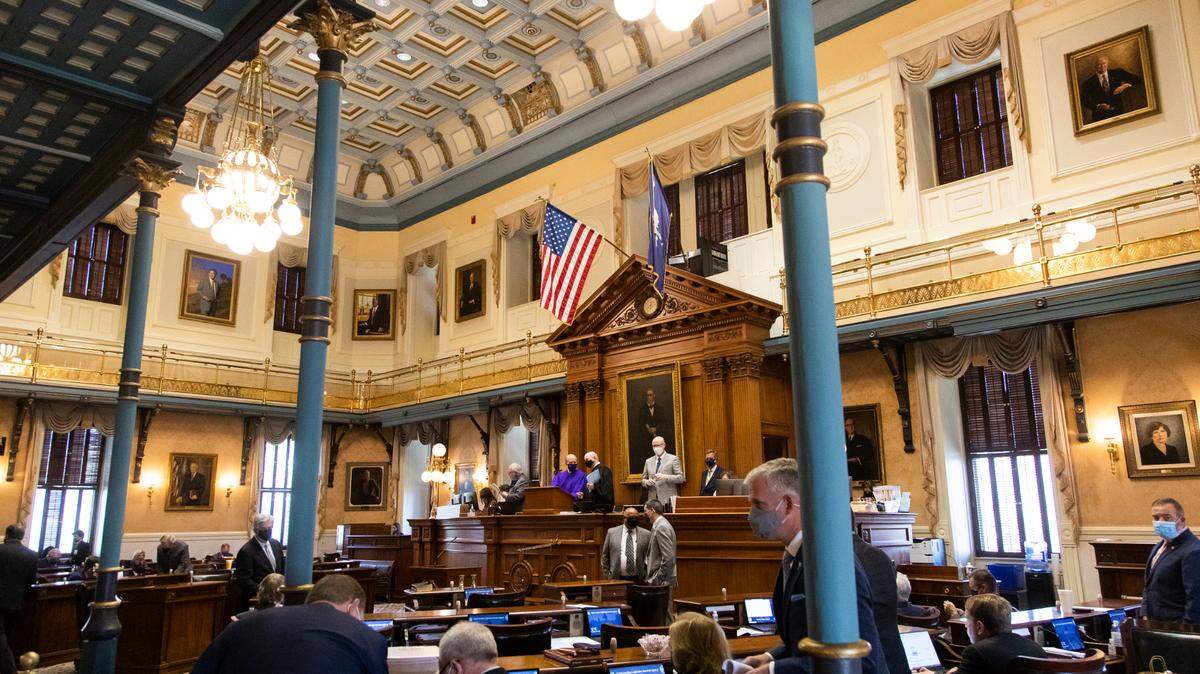
S.C. lawmakers are set to discuss a series of bills meant to target what they call critical race theory during Wednesday, Jan. 26, committee meetings.
However, educators say critical race theory is not being taught in K-12 schools.
“The whole thing coming from (critical race theory) is just unfounded, and then to attack teachers on that level, it’s just one more thing that’s like, ‘I’m done. I’m not built for this. I can’t deal with more and more things on my plate right now,’” said Sherry East, a high school science teacher and president of the S.C. Education Association, which advocates for K-12 education policy changes such as higher salaries and school safety.
While teachers may want politicians out of the classroom, educators are “begging for parent involvement,” East said.
“It’s disheartening to teachers because we need social support, but we don’t need to be attacked,” East said.
Steve Nuzum, a teacher at Ridge View High and a member of teacher advocacy group SCforEd, agreed.
While teachers are trying to cope with skyrocketing COVID-19 cases in South Carolina K-12 schools, the “intrusive, anti-intellectual and counter productive mandates and proposals” from politicians are “destroying our recruitment and retention.”
One proviso in the 2021-2022 budget says teachers can’t tell students one race is superior or inferior, that certain races are inherently racist or sexist or that one race should feel guilty for past actions they didn’t commit. While the language of the one-year law isn’t an issue on its face, it has emboldened the “loudest, angriest parents” and caused a chilling effect around classroom discussions about race and history, Nuzum said.
“In a state as segregated as ours...and with a history so deeply tied to race issues, it is unconscionable that we would tie parent ‘comfort’ levels to whether or not we honestly teach history and current events,” Nuzum said.
Margaret Gillikin, a Winthrop University associate professor and director of social studies education, said the issues facing K-12 teachers are so multifaceted, it’s hard to say whether the encroachment of partisan politics into K-12 curricula is forcing teachers out. However, “I do think it is a serious problem,” Gillikin said.
While critical race theory isn’t in S.C. K-12 curricula, teaching uncomfortable, crucial parts of S.C. history could cause some to feel as though teachers have crossed a line, said Will McCorkle, a former teacher and current teacher educator.
“If you talk about the ramifications of slavery or Jim Crow today, that could be considered critical race theory,” McCorke said. ”All it would take is one group of parents to come after someone and it could cause real problems.”
As a result, teachers may self-censor, McCorkle said. If teachers begin to muzzle themselves about key topics, it could hurt the quality of education, McCorkle said.
While it’s important to not have teachers push their agendas on students, McCorkle said, “what makes education great” is that each teacher has the freedom to teach state standards in a way that challenges students to think differently.
“I prefer my child have some conservative teachers, some liberal teachers, but passionate teachers rather than micromanaged teachers,” McCorkle said.
Politics in the classroom
In recent years, K-12 schools have become a new front for America’s partisan culture wars. Last year, South Carolina legislators proposed bills that seek to limit how teachers can talk about race, in an attempt to block critical race theory from being taught in classrooms. Another bill bans transgender athletes from participating in girls sports. Those bills are still pending.
This year, South Carolina lawmakers are considering a bill aimed at remedying what conservative lawmakers see as an “ideological slant” in classrooms.
The bill would ban, among other things, schools from teaching students under the age of 18 about “sexual lifestyles, acts, or practices,” and “gender identity or lifestyles.” It would also require the state attorney general to establish a hotline that would allow reporting of alleged violations.
In November, S.C Gov. Henry McMaster sent a letter to Superintendent of Education Molly Spearman demanding an investigation into the presence of an illustrated memoir of a nonbinary person in a school library, noting some illustrations in the book were sexually explicit, which he called “pornographic.”
The book was removed from the Fort Mill School District library and the state board of education has created a new, model policy for which library books are added or removed from S.C. schools, S.C. Department of Education spokesman Ryan Brown said in an email.
The intersection of politics and education, and especially discussions around critical race theory, emerged as a significant factor in the Virginia governor’s race in 2021, according to multiple media reports.
The political energy pointed at classrooms ramped up during the debate over whether to require students to wear COVID-19 masks in schools, East said.
“I think it was an eye-opener to people that everybody is in just a state of anger right now with everything,” East said. “And next came curriculum and CRT and ‘I don’t want my child exposed to this or that.’”
A one-year law rolled into the 2021-22 state budget, termed a proviso, initially prevented K-12 school districts from requiring masks in classrooms, despite the recommendations of state and federal health agencies. Some school districts, such as Richland 1, defied the ban by requiring masks. In September, a federal judge blocked the proviso, saying it discriminates against children with disabilities, The State reported previously.
Locally, the mask debate proved especially divisive in the Lexington-Richland 5 district before then-Superintendent Christina Melton abruptly resigned at a school board meeting. After Melton contradicted a board decision to not require masks on campuses, a board member threatened to censure Melton, The State reported previously.
While topics like critical race theory, mask mandates and books about gender identity are new to mainstream education discussions, politics isn’t new to schools.
For example, topics like teaching evolution or sex education in health have sparked controversy in the past. But politics in education goes further than that.
When South Carolina creates state education standards, the S.C. Department of Education selects parents, teachers, representatives from professional organizations, education experts from various backgrounds such as special education or career and technical education and more, S.C. Department of Education spokesman Ryan Brown said in an email.
After the group creates a draft of the standards, it is publicized and members of the public can submit official comments on the draft. The draft then is voted on by the State Board of Education. After that, the standards head to the State House, where lawmakers must give final approval to the standards, Brown said.
Current state standards call for all S.C. students to have at least some education about how race has intersected with American society. The first mention of slavery or racism is in the 4th grade, when students are required to learn about the “settlement and colonization of North America,” the role of slavery in causing the Civil War and Reconstruction, according to state standards.
Educators say they can’t teach their students the state-approved standards without discussing race and the ramifications of systemic racism in America.
“I’m an English teacher in a majority-minority school, so I can’t do my job and help students to authentically read, write and think without touching on issues of race,” Nuzum said.
New school
When parents or grandparents look at their students’ education, particularly history or social studies, they may often recognize topics are taught differently than when they attended school, said Gillikin, the Winthrop professor.
For example, history books in the 1950s and early 1960s taught the history of slavery largely based on slave owners’ journals because that was a readily available source of written history from the time, Gillikin said.
But in the ‘60s and ‘70s, the perspectives of enslaved people, recorded decades before, were published. Those perspectives, the diversifying field of those who study history and the use of other disciplines like archaeology to tell a more complete picture of how enslaved people lived, Gillikin said.
“The way that history is understood by schools changed dramatically in the last 100 years,” Gillikin said.
The difference in what parents learned versus what their children learn may be startling to parents, but that doesn’t mean something nefarious is afoot, Gillikin said.
“It’s hard for people to accept that people we trusted, parents and teachers, didn’t tell us the whole story. But they did tell us the whole story they knew,” Gillikin said. “In African American communities, they told these stories.”
If parents want to know more about what their students are learning, the best way to do so is by talking to teachers and being skeptical of inflammatory information shared on social media, Gillikin said.
“I hope we can step back, take a breath and say, we all want what’s best for these children,” Gillikin said. “It doesn’t have to be such an antagonistic situation… I think social media and the political wrangling has only made this worse.”
This story was originally published January 26, 2022 at 10:09 AM.