USC plans to remove 200,000 books from its campus library. Here’s why
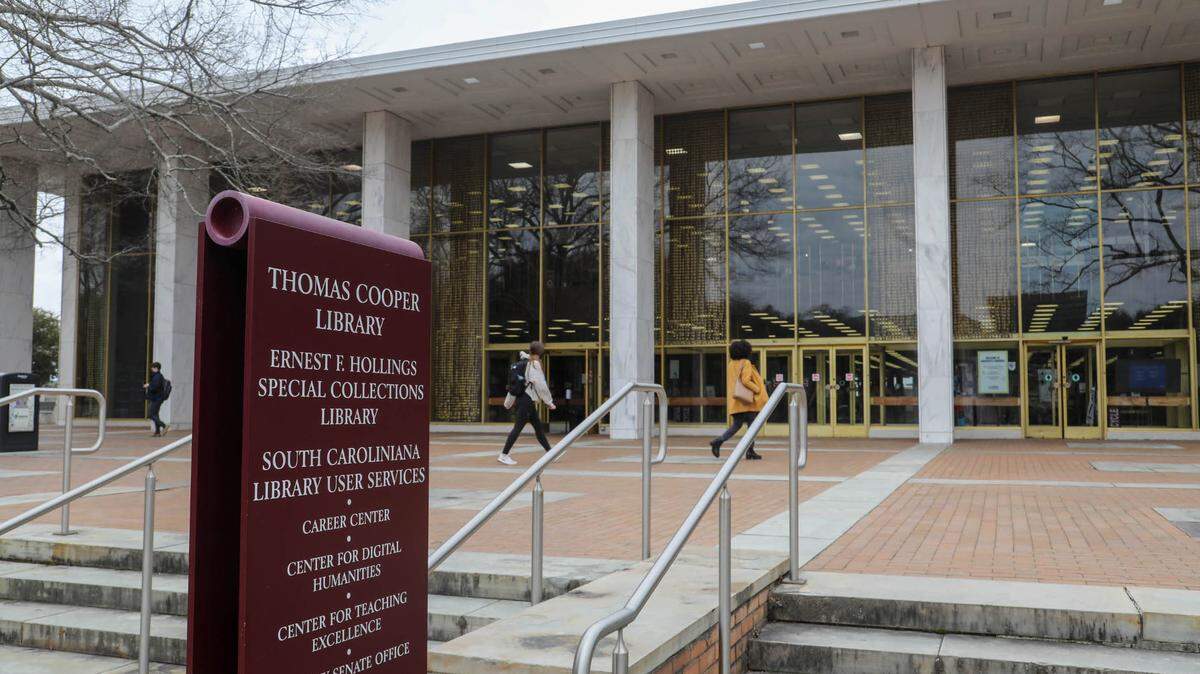
Thousands of books could soon disappear from the shelves of Thomas Cooper Library at the University of South Carolina.
Part of a “materials project,” university librarians will embark to remove some 200,000 books in the coming months and years. The goal is to free up space in the library or to get rid of materials that are in poor condition or do not serve USC’s research and teaching mission, according to the university.
“Increasingly fewer patrons have been browsing our stacks, and circulation of our print collections has declined dramatically,” the project’s web page reads. “With growing enrollments, we need more space for students, for classrooms, and for other academic support initiatives.”
While it plans to remove the books over the next several years, the university will start withdrawing some “low-use” materials in February, according to an email obtained by The State. It will begin with a set of 90,000 volumes following this “stringent” criteria, including:
▪ Published between 1930 and 2010
▪ No documented circulations
▪ More than 10 copies in WorldCat, a catalog that itemizes the collections of libraries worldwide
▪ At least 5 copies are available at other libraries within 500 miles
▪ More than 3 copies in the Eastern Academic Scholars Trust, a collaboration of academic libraries committed to providing access to print collections
These materials represent about 25% of items held onsite, and are “demonstrably” not serving the USC community, the university claims.
Some of the books will be transferred to the custody of other university departments; others will be moved into storage. But those that have been damaged will be recycled, said university spokesman Jeff Stensland.
“Libraries routinely rotate out books that are damaged or that haven’t been checked out in a very long time, some of which will go to a storage annex,” Stensland said.
According to an email obtained by The State, state regulations bar USC librarians from selling others, or giving them away. The S.C. Library Association was not aware of such a regulation. However, USC is in conversation with the university’s purchasing department about the State Surplus, which could mean that some books could be sold or donated, Stensland said.
Many of the books on the initial list are seemingly foreign language books, philosophy books, religious studies books and textbooks.
The Department of Languages, Literatures and Cultures has the opportunity to go through the list and ask that the library retain certain materials, and books checked out before the process begins will be kept.
Libraries are often likened to a garden. Known as “weeding,” reviewing library materials is a fairly commonplace practice among libraries of all sizes and statures, according to the American Library Association. As more and more materials are published, libraries must review their collections for currency, accuracy and usage. Space limitation and physical condition of items can also be deciding factors. However, the library association did note that it cannot be a system by which a library removes controversial material.
USC is not removing any materials because of challenges seen at the state’s K-12 public schools.
This story was originally published January 12, 2024 at 10:14 AM.