
They oversee SC charter schools. Why are Charter Institute’s leaders planning schools in TN?
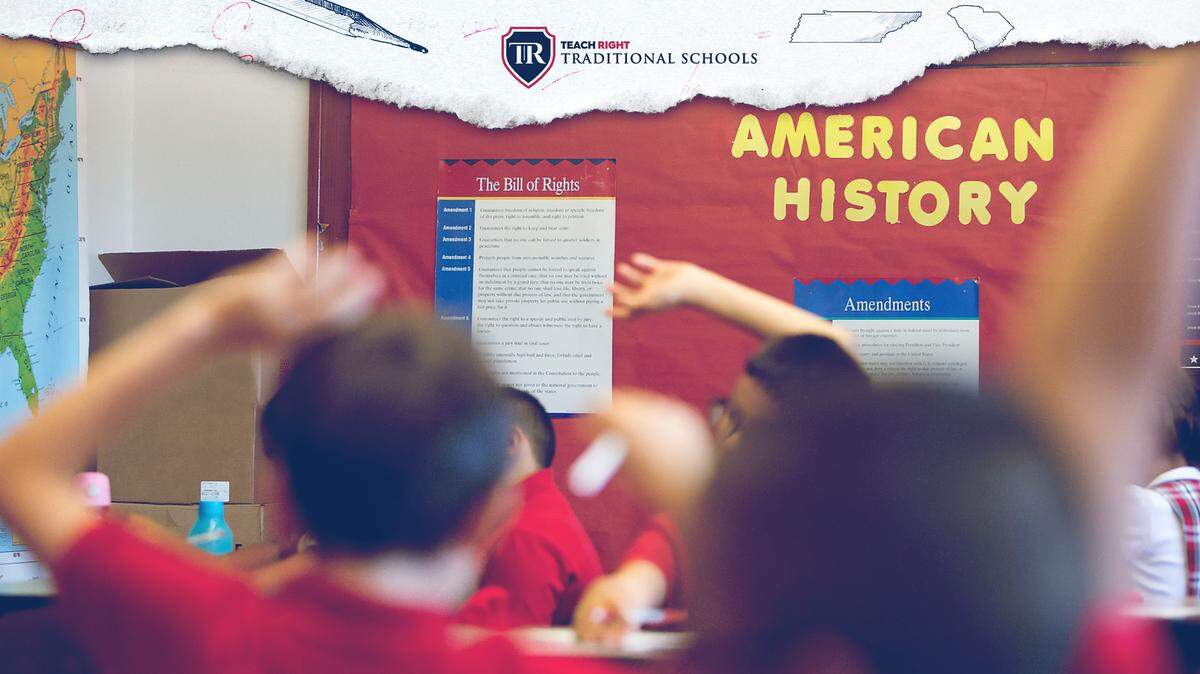
This is the first installment in Unchartered Territory, an ongoing series by The State Media Co. about South Carolina’s changing charter school landscape.
For the past year, the leaders of South Carolina’s largest charter school district have been quietly working with unidentified business partners on a mysterious project to open three charter schools in Tennessee.
The proposed charter school network, known as Teach Right Traditional Schools, recently paused its plans to open next year in the Volunteer State, but not before filing paperwork that offers a glimpse into the organization’s vision and reveals its deep ties to the Charter Institute at Erskine, a South Carolina taxpayer-funded affiliate of Erskine College that oversees more than two dozen of the state’s charter schools.
The out-of-state enterprise, disclosed to the Charter Institute’s board but not to the public, raises questions about why the publicly funded organization’s leaders want to open schools in another state and whether taxpayer dollars or employee time were expended on the effort.
Charter schools are taxpayer-funded and free to attend. But unlike traditional public schools, they are exempt from certain regulations to encourage innovation, and operate under a contract, or charter, with an authorizing agency, such as the Charter Institute at Erskine. Authorizers rely on taxpayer dollars to fund their operations and are responsible for vetting new charter applications, overseeing schools they approve to open and shutting down schools that fail to live up to their commitments.
In a recent interview, Charter Institute CEO and Superintendent Cameron Runyan acknowledged his work with Teach Right Traditional Schools, but denied the misuse of public money or time. He said he and his Charter Institute colleagues worked on the project outside of business hours and were not compensated.
A recent trip to Tennessee that he and several colleagues expensed with Charter Institute credit cards was for “official business,” Runyan said, not in the interest of advancing the nascent charter school network.
“As a private citizen, I can do whatever I want to do with regard to that, and so can other people,” he said. “And there’s nobody that can tell me I can’t.”
Charter Institute board member Stu Rodman, a former Beaufort County council chairman, expressed support for his superintendent’s out-of-state endeavor and said he kept the board apprised of its progress throughout the past year.
“I don’t know of any objections about anything they’re doing,” he said.
According to Runyan, he and other top Charter Institute officials became involved with the project more than a year ago at the request of several out-of-state individuals whose names he declined to share.
The parties discussed their plans on multiple occasions over the past year, both in-person and over Zoom, culminating in December with the submission of documents declaring their intention to open three K-8 schools in Tennessee.
The group’s preliminary proposal laid out an ambitious plan to generate interest in the new schools through outreach at local preschools, summer camps, community programs and via direct mail, email campaigns, in-person and virtual meetings and social media marketing.
Teach Right Traditional Schools launched a website and Facebook pages for each school around the same time and began promoting their Fall 2025 opening.
“Our New Year’s Resolution?” Teach Right’s Chattanooga school posted on Facebook Jan. 1. “Bring a tuition-free public charter school to the Chattanooga area that reinforces your family values, teaches understanding for American history and institutions, and produces excellence in academics and extracurriculars.”
Identical messages were posted to Teach Right’s Nashville and Knoxville pages, which each linked back to the Teach Right Traditional Schools website where parents could fill out an interest form.
Despite its social media promotion, however, Teach Right failed to submit a charter school application by Tennessee’s Feb. 1 deadline, effectively pushing back any school opening by a year.
Runyan confirmed last week that he and fellow Charter Institute officials had stepped away from the venture, but didn’t rule out resuming their work with Teach Right in the future.
“From our standpoint and our ability to volunteer and support something in another state, we’ve just got a lot on our plate right here in South Carolina right now,” he said. “We’re very focused on this state, continuing to work in this state.”
Teach Right’s ties to the Charter Institute
Since helping found the Charter Institute in 2017, Runyan, a former Columbia city councilman, has grown it into the state’s largest charter school authorizer.
Today, it sponsors 27 schools that together enroll more than 25,000 students, and could more than double in size over the next few years as the approved schools in its pipeline open.
Runyan said it was the Charter Institute’s impressive track record that prompted outside interests to contact him for assistance when they wanted to open schools in Tennessee.
“People see what we’ve done in South Carolina and they want that in their state,” he said. “I think it’s a great honor, to be honest with you.”
But the documents Teach Right Traditional Schools filed in Tennessee tell a different story.
The group’s paperwork presents Teach Right Traditional Schools as the brainchild of the Charter Institute’s leaders and does not mention the unidentified backers Runyan said initiated the project.
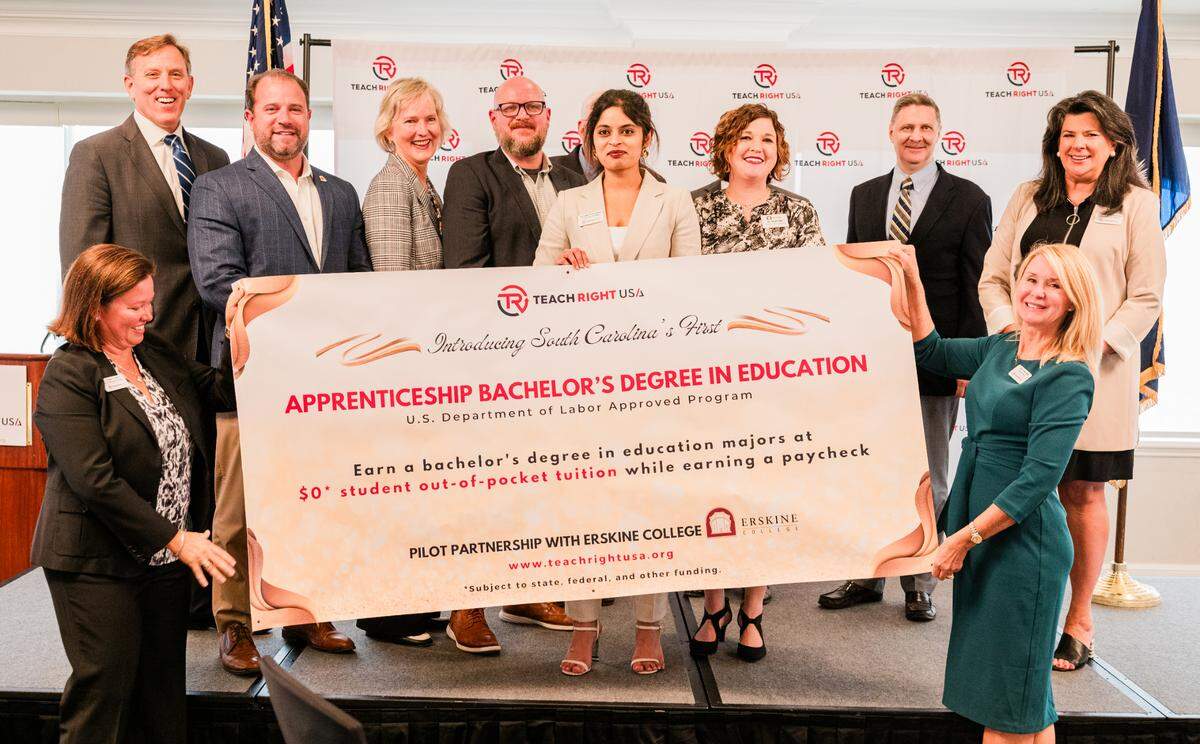
Teach Right’s 12-member governing body is composed almost entirely of high-level Charter Institute employees and associates, and the group’s paperwork identifies Teach Right USA, a teacher training nonprofit the Charter Institute recently formed and financed, as the schools’ sponsor. (A sponsor, in this case, refers to the management organization that oversees the school.)
Kusuma Buddhiraju, a Charter Institute employee who serves as Teach Right USA’s chief of data and strategy, is listed as Teach Right Traditional Schools’ primary contact and gave the Charter Institute’s Columbia office, which doubles as Teach Right USA’s office, as her mailing address. Buddhiraju, who did not return requests for comment, is one of three Teach Right USA executives on the Teach Right Traditional Schools board.
Runyan said the apparent connections between Teach Right Traditional Schools, Teach Right USA and the Charter Institute are not what they seem.
The paperwork Teach Right Traditional Schools submitted identifying Teach Right USA as its sponsor was the result of a typo, he said. The actual sponsor, Runyan said, was Teach Right Traditional Schools.
He said that despite sharing directors and similar names, Teach Right Traditional Schools and Teach Right USA are unrelated organizations with different missions and completely separate finances.
“The names sort of imply some kind of linkage, and so I can understand how people maybe were a little confused about that,” he said. “But at the end of the day, there’s just no there there. There’s been no connection between these organizations other than the fact that there’s some folks who have agreed to volunteer.”
When asked why unrelated organizations would have such similar names, Runyan said the unidentified private individuals behind the charter network were responsible.
“They needed a name and they liked the name,” he said.
Neither South Carolina nor Tennessee has any record of Teach Right Traditional Schools filing articles of incorporation. Teach Right USA, on the other hand, was incorporated in South Carolina early last year and received federal tax-exempt status in August, IRS records show. Runyan and the Charter Institute are Teach Right USA’s incorporators.
University of South Carolina law professor Derek Black, an expert in education law, said he was in no position to dispute Runyan’s assertions, but that the discrepancies in Teach Right Traditional Schools’ paperwork warranted further examination.
“I cannot say that anything wrong has been done here, but there is, it seems to me, a clear blurring of the lines,” Black said. “It’s consistent with the type of blurring of lines that has created problems elsewhere in the charter school industry.”
Charter school management can be a lucrative business, and conflicts of interest abound.
Management companies earn millions of dollars each year by opening charter schools, leasing them property and contracting with them to provide a host of financial, operational and administrative services.
“The opportunities to cash in are limited only by the charter school entrepreneur’s imagination,” the Network for Public Education, a public education advocacy group, wrote in its 2021 report, Chartered for Profit.
Runyan, whose role as CEO of a charter school authorizer puts him in a position to monitor and mitigate such conflicts of interest, dismissed the notion that his involvement with Teach Right Traditional Schools was financially motivated and said he was driven only by the desire to transform students’ lives.
“That’s why I do what I do,” he said. “I want to be where I can have the biggest impact on that.”
Traditional schools flourish in SC
Over the past six years, Runyan has not only grown the Charter Institute into the state’s largest charter school authorizer, but one with a distinct niche. The Institute specializes in opening traditional charter schools, sometimes called classical or back-to-basics schools, that emphasize morality, character development and the exceptionalism of Western values — a model that has proven particularly popular with conservative families.
Teach Right Traditional Schools was conceived as an incubator of that type of school.
According to a two-page abstract the organization submitted in Tennessee, its educational program is founded on three pillars: reinforcing “A.M.E.R.I.C.A.N. virtues;” teaching respect and understanding for Western history and institutions, and stressing excellence in academics and extracurriculars — a mission virtually identical to the one Runyan has articulated for the Charter Institute.
Since 2017, when the South Carolina Public Charter School District denied his group’s application to open a classical school in Hampton County, Runyan has worked through the Charter Institute to bring like-minded charter operators to the Palmetto State.
In fact, the trip that five Charter Institute officials, including three members of Teach Right Traditional Schools’ governing body, took to Tennessee last year was for recruiting purposes, he said.
“This is just part of our model and how we bring good schools to South Carolina,” Runyan explained. “We went up there and we met with some folks that we were trying to recruit to come to South Carolina.”
Charter Institute credit card statements show that Runyan, chief operating officer Vamshi Rudrapati, deputy superintendent of institute initiatives Christy Junkins, deputy superintendent of fiscal and student services Missy Brakefield and chief of communications Ashley Epperson flew to Nashville in September and spent a night at a downtown hotel.
Runyan, Rudrapati and Junkins are all members of Teach Right Traditional Schools’ governing body.
Their one-day excursion, which Runyan said was unsuccessful, cost the Charter Institute more than $4,000, records show.
“You win some, you lose some,” he said. “That’s a well worn and very familiar path for how we operate.”
This story was originally published February 15, 2024 at 5:30 AM.