Richland 1 took action in $31M building dispute, but won’t say what. That may be illegal
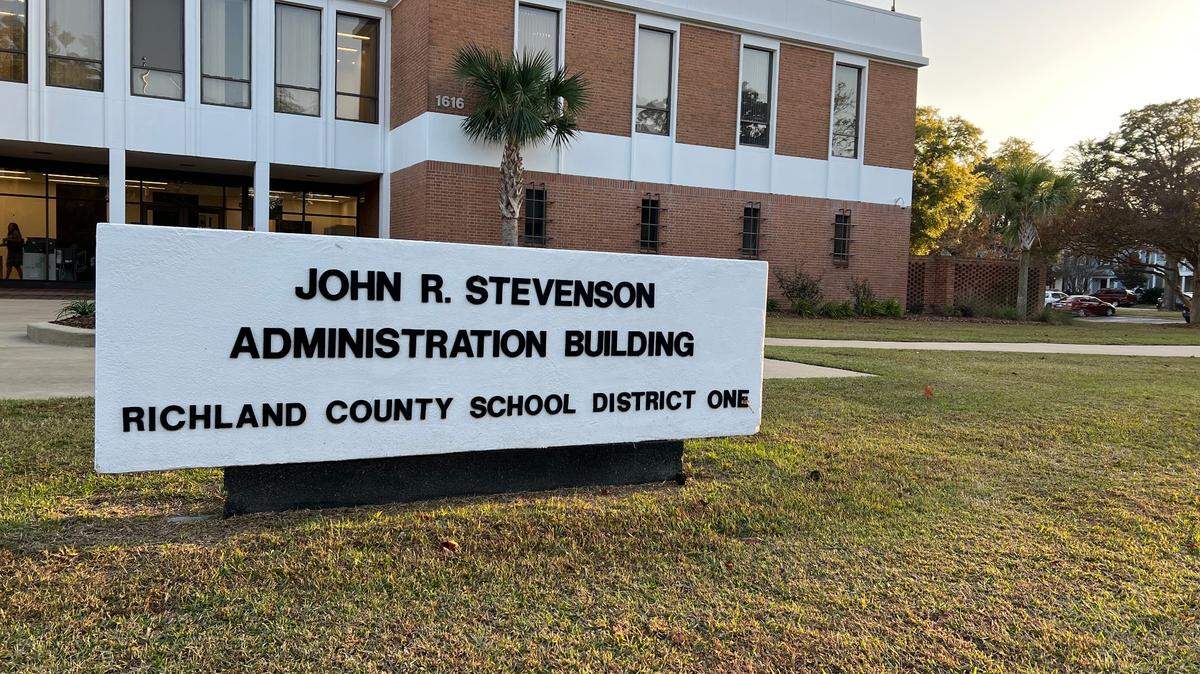
The Richland 1 board voted Thursday to take its next steps in the construction of a $31 million early learning center in Lower Richland, a project that’s under investigation by the state Inspector General. But the district refuses to say what those next steps are.
That refusal violates state law, said veteran attorney Jay Bender, who has represented The State and the S.C. Press Association on open meetings and open records issues.
Board members met behind closed doors for an hour Thursday evening. Afterwards, they voted unanimously in public to approve “recommendations as outlined” behind closed doors. The board then adjourned without specifying what those recommendations are. Board member Cheryl Harris was absent.
Board chairman Aaron Bishop said that the recommendations involved taking the “necessary steps” to bring resolution to the Vince Ford Early Learning Center, construction of which was stopped Jan. 19 after the state Education Department said the building couldn’t be considered a school because the initial plan was to serve children as young as infants.
“We can’t divulge what was talked about in executive session,” Superintendent Craig Witherspoon said. “But we look forward to continue to process working with the agencies that are involved and just moving forward.”
Richland 1’s general counsel determined that the action taken by the board was protected under attorney client privilege, district spokesperson Karen York said.
“We can’t say what the legal advice was,” York said.
But Bender said that if an action is taken after a closed-door meeting, under the South Carolina’s Freedom of Information Act, the public must know the substance of the decision.
“How is the board ever going to be able to justify what action was taken?” Bender said. “Under that motion, somebody could do almost anything.”
Because there was no disclosure on what action was being taken, the minutes can’t possibly reflect what was authorized, Bender said.
The meeting agenda listed “Legal Advice Related to Construction Project” and “Legal Advice Related to IG Investigation” as items for discussion in executive session.
The board also violated the state open meetings law when it voted to go into executive session, Bender said. Board members voted unanimously to meet in private to discuss the agenda items. But that was insufficient, Bender said.
“The broad statement made by the chair made the executive session illegal,” Bender said. “The specific purpose was not stated prior to entering executive session.”
South Carolina’s appellate courts have defined “specific purpose,” Bender said, as “sufficient information to allow the public to know what is being discussed.”
“It’s not up to the public to guess what problem the district wants to hide,” Bender said. “This board is trying to hide its incompetence or corruption.”
Bishop would not comment on Bender’s legal opinion. He did, however, say the district would be providing an update on its course of action by the board’s Feb. 13 board meeting.
The board also voted unanimously to a hire the Wyche Law Firm. “We use attorneys all the time for different matters,” Bishop said.
The Vince Ford Early Learning Center is still lying in wait, Witherspoon said. The district is losing approximately $2,300 each day the site sits untouched. It has been two weeks.
Richland 1 has faced at least two lawsuits in recent years that alleged that the district was violating the state’s open meetings law.
A court ruled in 2019 that Richland 1 had unlawfully conducted public business behind closed doors, when the board was sued for deciding how to respond to a letter from a parent in executive session.
A second lawsuit, brought by Richland 1 resident George Bowie, said the district was not giving the public proper notice of its closed-door meetings and was violating the state Freedom of Information Act. The case was settled in October 2022.
South Carolina’s FOIA law dictates that public officials are only allowed to meet in executive session to discuss contracts, personnel matters, security issues, criminal matters or to receive legal advice. Any decisions must be made in public session.
“It’s clear that this school board doesn’t learn,” Bender said.
This story was originally published February 2, 2024 at 12:51 PM.