Is SC education department refusing to cooperate with Richland 1? School board says yes
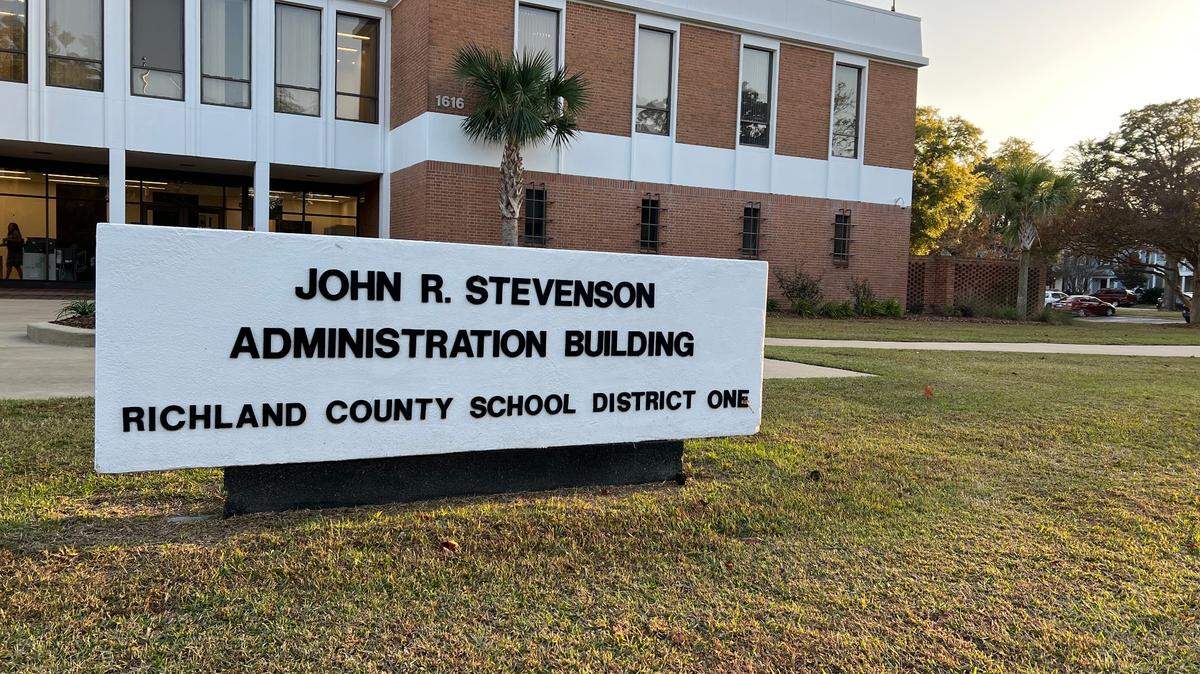
After a rejected financial recovery plan, some members of the Richland 1 school board say that the state Department of Education and Superintendent Ellen Weaver are not cooperating with the district as it seeks to move forward with a contentious $31 million construction project.
Richland 1 was placed on “fiscal caution,” the second-most severe state designation of budgetary concern, in August, which required the Columbia school district to submit a recovery plan to the state education department. The state imposed the designation after the state Inspector General issued an audit critical of the project and the district’s procurement procedures.
But the state would not approve the plan, calling it “deficient,” and ordered another audit of the district.
“Some of the District’s seemingly cursory responses have amplified the Department’s concern regarding the District’s apparent failure to grasp the gravity and full implications of the SIG’s findings,” Kendra Hunt, the department’s chief financial officer, wrote in an Oct. 31 letter.
A frustrated school board met Friday to discuss the recovery plan. Administrators argued that the plan had addressed recommendations and concerns, and said that when they asked for clarification from the state department, they did not receive it. Instead, the plan was flat out rejected.
Sherri Matthews-Hazel, chief financial officer for Richland 1, told the board that the district had worked with a team from the state department to develop the recovery plan. She said she was surprised when she learned it had not been approved.
One board member, Barbara Weston, made the observation that the district seemed to be going around in circles with the state department, and another, Tamika Myers, who lost reelection on Tuesday, said that Weaver simply did not want the district to invest in Lower Richland.
“This superintendent does not want this facility to be built in the Lower Richland area, so there’s no need to even sit at this table like we don’t understand why,” Myers said.
Lower Richland is a rural area in southeast Richland County with a large Black community.
The board asked Superintendent Craig Witherspoon if he requested a meeting with the state education department to discuss the district’s issues, rather than communicate through email and written correspondence alone.
Witherspoon said he had indeed made that request, but in the 11 months that Richland 1 has fallen under the department’s critical eye, no meeting has been held. The superintendent would not speak with The State on Friday, and did not clarify if the department had ignored or declined requests for a meeting.
“Richland 1 wants the meeting,” board chair Aaron Bishop said. He declined to comment further.
A spokesman for the education department said that the Oct. 31 letter from its CFO “speaks for itself.”
“The public should not be confused by diversionary tactics,” the spokesman said. “The Department looks forward to working closely with the new Board to implement necessary fiscal improvements and rebuild the trust that the Richland One community deserves.”
Two newcomers — Richard Moore and Ericka Hursey — were elected to the seven-member board on Tuesday. Both raised questions about the center during the campaign. Weston and fellow incumbent Robert Lominack have been skeptical about moving forward with the center.
Richland 1 was required to submit a recovery plan after the department placed the district on “fiscal caution” following the critical report from the state Inspector General. The report raised concerns about the district’s efforts to build an early learning center in Lower Richland and about the district’s procurement practices.
The recovery plan had shared intentions to better train staff, but denied the claim that it has mismanaged $31 million since beginning to build the Vince Ford Early Learning Center.
The plan said that while officials believe they complied with the district’s own guidelines, they intended to implement training and professional development courses on procurement code, follow state requirements and update how procurement records are digitized and secured.
In response to the finding that the district had mismanaged $31 million for the Vince Ford Early Learning Center, the district said there was not “criminal activity or indication of fraudulent activity” and did not provide plans on how to rectify it.
The state Department of Education first raised concerns about the district’s financial practices in 2022. That year, an audit discovered “significant deficiencies and material weaknesses” that could affect the financial well-being of the district and improper use of procurement cards — or “p-cards.” Richland 1 attempted to appeal the department’s decision, but it was denied. That year, the district was placed on “fiscal watch,” the least severe level of financial concern.
Further criticism from the education department stemmed from the scathing report from the state Inspector General in July. It determined that while Richland 1 had not committed any criminal activity in its conception and construction of the early learning center, the district had broken state and local building and zoning codes and cost taxpayers more than $350,000 when it began construction on the early learning center without the proper permits.
Weaver asked the Inspector General to investigate Richland 1 after the district failed to obtain permission from Richland County and the state Education Department before beginning construction on the Ford center on Caughman Road.
After construction started, the Education Department said that because the center would serve children as young as infants, it could not be considered a school, which meant the Education Department couldn’t approve it. Richland 1 continued construction anyway, and the county issued a stop work order in January.