With HBCUs booming, SC State is no different. Now, it wants to meet the demand
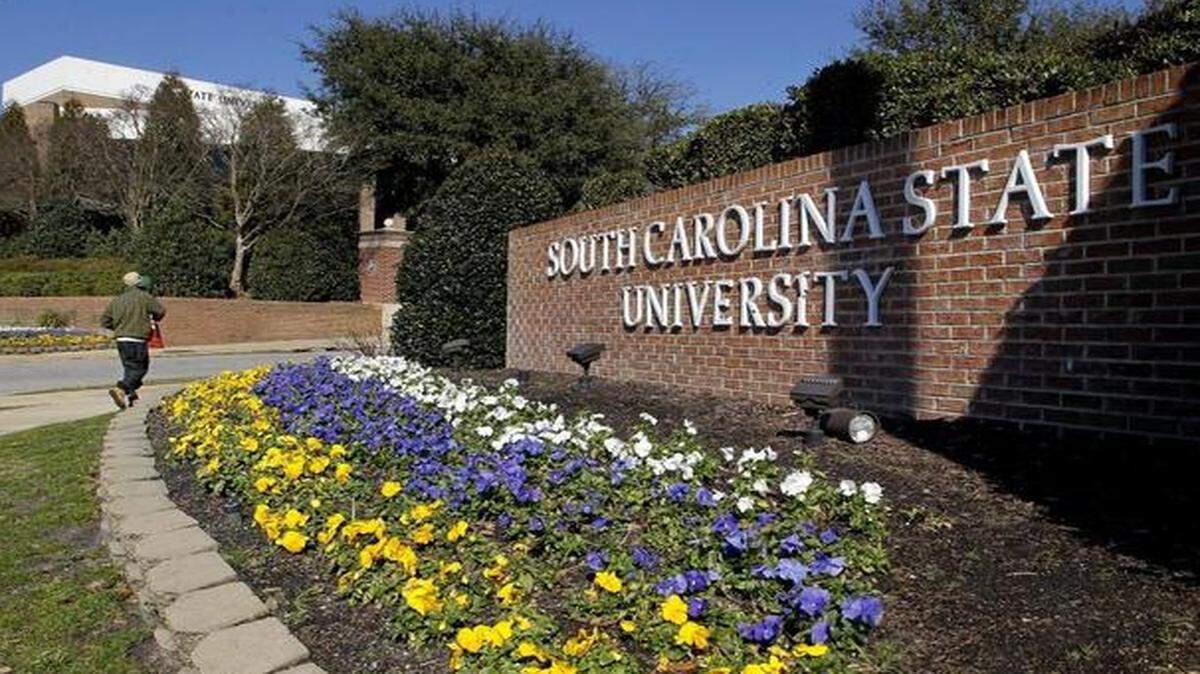
When the S.C. State Bulldogs invade USC’s Williams-Brice Stadium Saturday night, they’ll boast more than last year’s conference championship or the school’s famed Marching 101 band. The Orangeburg school is growing — and fast.
A decade after financial turmoil, accreditation probation and threats of closure, South Carolina State University is now working to keep up with the growth.
S.C. State, the only public, four-year, historically-Black college in the Palmetto State, received a record breaking number of applications for the fall 2025 semester, The Times and Democrat reported. It was about 15,000. It was so many that the university had to cap the freshman class and began offering some students one-time incentives of $1,000 to live in off-campus housing.
It’s a far cry from where the university was in 2015.
Enrollment had been declining since about 2008. Years of budget deficits, financial mismanagement and a corruption scandal put the 120-year-old school’s future in jeopardy. The university’s accreditation was placed on probation by the Southern Association of Colleges and Schools Commission on Colleges in 2014 amid financial troubles. Academic and athletic programs were cut. State lawmakers debated temporarily closing SCSU in 2015 and firing all staff, faculty and trustees to give it a “clean slate” as its debt grew to some $23 million.
Then enrollment dipped even more, and continued to do so until 2020, according to data from the state Commission on Higher Education, with a low of 2,104 students. It was half of the nearly 5,000 students who annually attended the school in the 1990s and early 2000s.
In recent years, SCSU has grown by hundreds of students. This fall, about 3,300 students are predicted to be on campus, a more than 40% jump in enrollment in five years.
With growing interest in the school, and high retention rates for continuing students, SCSU is bursting at the seams.
State Rep. Hamilton Grant, D-Richland, is an SCSU alum and former board member. He said the school is prospering even with outdated facilities, even while doing “more with less.”
When potential students visit campus, walk the same halls as legends like U.S. Rep. Jim Clyburn and experience SCSU’s familial environment, it “seals the deal,” Grant said.
“We’ve shown what we can produce with what little we have,” Grant said. “We’ve always punched above our weight class.”
Now he’s “hoping and praying” that SCSU will soon get the resources it needs from the state.
After several years of not being able to meet student housing needs on the Orangeburg campus, the university’s board of trustees approved a resolution in August to take on debt for capital projects.
A new residence hall, which will add 500 beds to campus, has been approved. SCSU currently has 1,361 beds available on campus, and another 859 beds in off-campus facilities leased by the S.C. State Housing Foundation, for a total of 2,220 beds.
And SCSU has a flurry of other development and renovations to better serve it’s burgeoning student body. About $210 million has been invested in more infrastructure, according to a news release. It should allow the university to lift its cap on enrollment, officials said.
The list of capital projects includes:
- A new health and wellness center
- A new university library
- A new transportation center
- Queens Village Student Apartment renovations
- Sojourner Truth Hall renovations
- Nance Hall renovations
- A student center expansion
“Our students deserve a campus that reflects the excellence of their ambitions,” SCSU President Alexander Conyers said in a news release. “We are transforming SC State with modern facilities that support student success inside and outside the classroom.”
Private developers are also investing in the area, near campus and in downtown Orangeburg, the university said. Between on-campus and off-campus building, university officials expect capacity needs to be met within a few years.
“This is not just construction,” Conyers said in a news release. “It’s a commitment to our future.”
Some predicted this growth years ago, when President Joe Biden’s administration sent letters to governors across the United States in fall 2023, urging them to correct the decades-long systemic underfunding of historically-Black, land grant universities compared to their predominantly-white counterparts. Gov. Henry McMaster received such a letter about SCSU. It said the state owed the university nearly $500 million.
“Students of color are revisiting the idea of attending an HBCU,” state Rep. Cobb-Hunter, D-Orangeburg, previously told The State.
She cited the decision by the U.S. Supreme Court to strike down affirmative action in college admissions. And the state Legislature has targeted diversity, equity and inclusion initiatives at public colleges and universities for several years. Several bills to restrict such programs have not been passed, but some South Carolina universities have taken steps to change, rename or abandon such initiatives anyway.
SCSU isn’t the only one. Enrollment at HBCUs seems to be growing across the board.
From fall 2022 to fall 2024, HBCUs grew by 11.8%, according to data from the National Student Clearinghouse Research Center.
The Washington Post reported that the end of race-conscious admissions by a Supreme Court decision in 2023 and record philanthropic gifts have placed an “enduring spotlight” on the institutions. While official enrollment numbers for the fall 2025 semester are still being determined for many institutions, schools like Howard University and Alabama A&M University have experienced significant growth in the last few years. Columbia’s own Benedict College, a private HBCU, saw record new student enrollment last fall, with 554 new attendees.
“The Supreme Court decision has given HBCUs an opportunity to really tell our story and highlight ourselves as an institution of choice,” Yohannis A. Job, vice president for enrollment management at Benedict College, told the Post. “It has allowed young people to ask the question: Is this the place where I will be celebrated ... where my identity will not just be a diversity checkbox?”