USC has $2.3B budget, plus donations. Where do taxpayer dollars go?
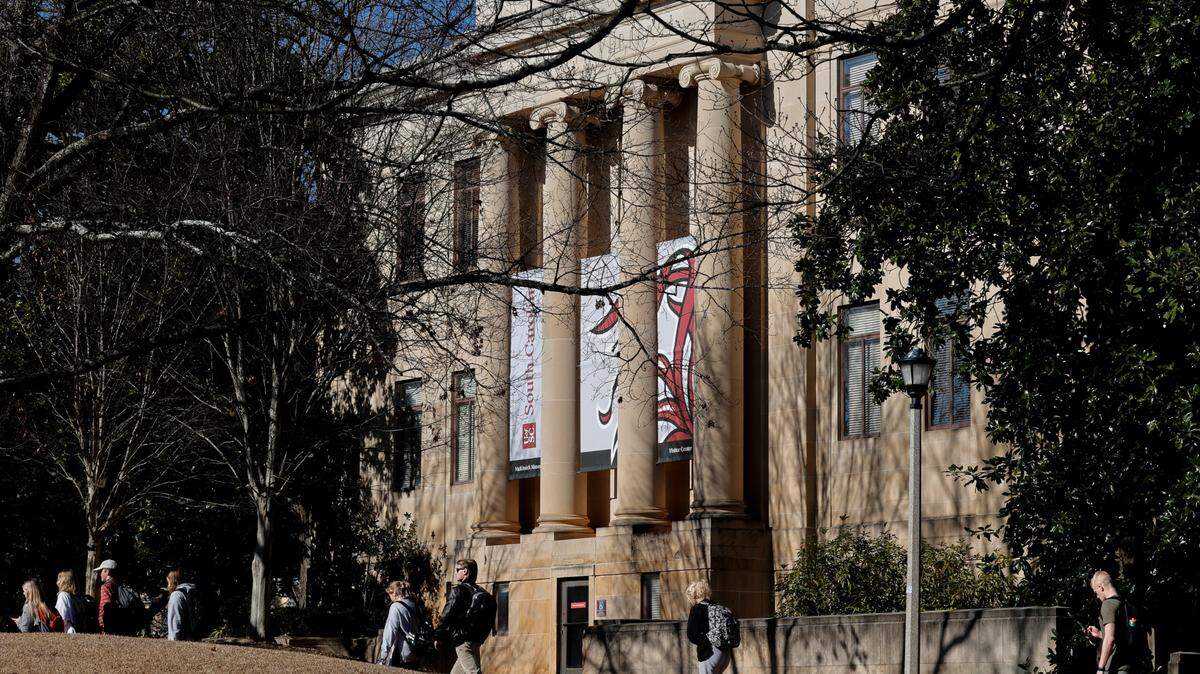
The University of South Carolina has systemwide budget of $2.3 billion.
With the Palmetto State’s largest college in Columbia, plus three additional four-year campuses and four two-year schools, it takes a lot to keep it all running.
Where does the money come from?
USC’s budget is funded by five primary sources of revenue, which makes up the $2.3 million, a 9.6% increase from the fiscal year.
- Tuition and fees: $969,432,277
- State appropriations: $480,215,166
- Grants, contracts and gifts: $513,156,278
- Sales, service educational and other sources: $83,900,555
The majority of the USC’s revenue comes from tuition and fees, and the university has increasingly become reliant on those dollars. It accounts for about 42% of the school’s overall budget.
Enrollment at the Columbia campus has steadily grown over the last 10 years. But with inflation, more tuition cash flow only makes up for increased operating costs like instruction and maintenance, as well as university salaries, which are included in any mandated statewide salary increases.
The school received historic support from state leaders this year, officials have said. That makes up about 20.5% of the overall budget. That can be broken down into two categories: recurring and nonrecurring funds. Recurring funds, appropriations that are expected to occur on a regular basis each year. Nonrecurring funds are one-time monies awarded to the university.
The General Assembly has approved $14.4 million in tuition mitigation funds to keep tuition steady for in-state students in Columbia for the seventh year in a row, while out-of-state students have seen a modest increase. Regional comprehensive campuses received $7.5 million for tuition mitigation, and two-year campuses received $2.3 million. These are recurring funds.
USC Columbia received another $12.95 million in recurring funds for other needs.
The Columbia campus received $15.2 million in nonrecurring funds for specific projects like the Battery Center Facility. The USC regional campuses received a total of $15.2 million in nonrecurring funds for specific projects, as well as maintenance and renovations. Nonrecurring support at the comprehensive campuses totaled $33.6 million, which is slated for already determined projects, maintenance and renovation.
Grants money is made up of mostly federal research grants, but could include state and local grants too. There is very little contract money, which is for services the university might provide another entity.
All $2.3 million is held with the state treasurer’s office.
Where does the money go?
USC spends just under its $2.3 billion budget.
- Instruction: $632,116,033
- Research: $277,302,529
- Public Service: $111,220,067
- Academic Support: $143,406,250
- Student Services: $123,737,893
- Institutional Support: $147,076,778
- Operation and Maintenance: $125,562,741
- Scholarships and Fellowships: $421,279,031
- Auxiliary Enterprises: $287,539,744
- Transfers: $30,405,466
Tuition dollars and the majority of state dollars go into one big bucket, called educational and general funds, which accounts for about $1.5 billion.
That is divvied out for salaries and fringe benefits for academic units, like instructors in the College of Arts and Sciences, and support units, like the Division of Information Technology or Student Health and Well-Being. It also goes towards supplies, travel, utilities and rent and other operational costs.
Auxiliary services, like housing, dining, parking, athletics and the bookstore, are generally self-sustaining.
Awarded money or financial gifts, like grants, are earmarked for specific purposes, such as research or scholarships.
Public service expenses could include anything from free legal services provided by the law school to the state poison control center, and can include faculty time spent on activities that benefit the community.
Gifts to the university, are also often earmarked for specific purposes. But donors are encouraged to work with the university’s foundations, which holds and manages USC endowment.
The endowment
USC has five 501(c)3 foundations that support its mission: the Development Foundation, the Educational Foundation, the Business Partnership Foundation, the Alumni Association and the South Carolina Research Foundation.
Those nonprofits, headed by foundation president Jason Caskey, manage the university’s $1.1 billion endowment.
The USC endowment is a private entity. Because it is not beholden to the financial limitations of the state, which is required to have a certain level of caution, the foundations have more freedom to invest, often receiving better interest rates on investments.
USC cannot use any donor dollars for whatever it wants. That money is also set aside for a donor’s requested cause — it is rare that gifts come as a cash sum with no intended purpose. And it is not easy to move money from the endowment over to support the university’s budget. For that reason, it is not done.