
Free ChatGPT? USC re-ups with OpenAI to provide students, employees chatbot access
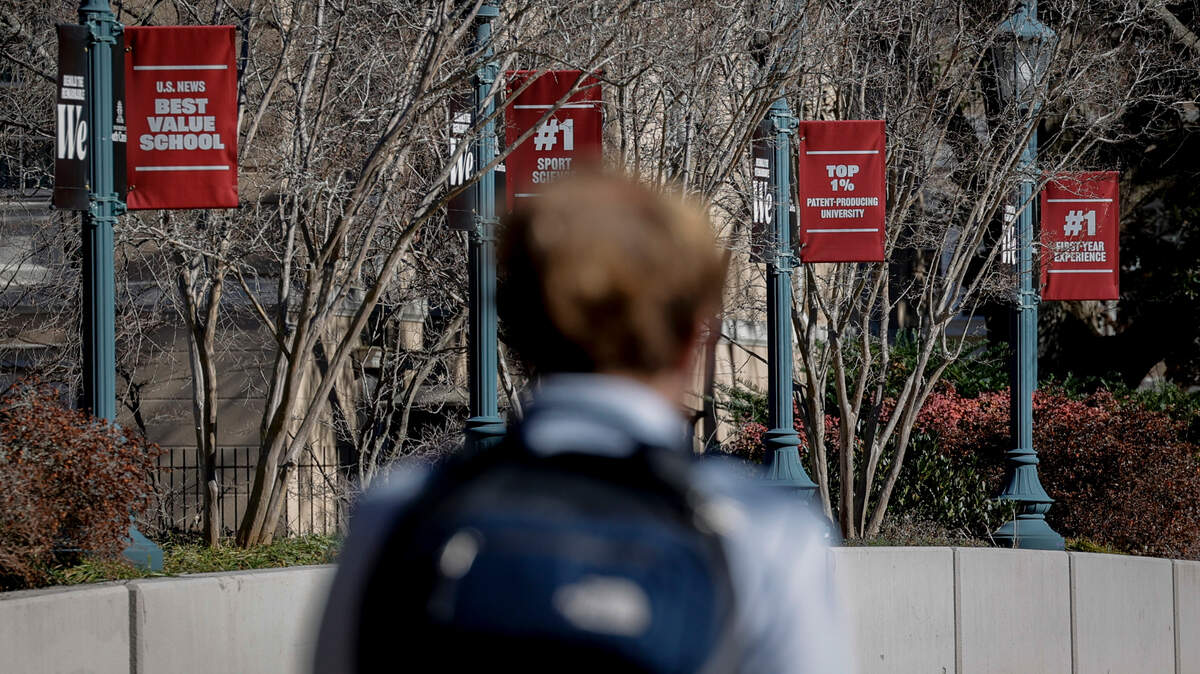
Students, faculty and staff at the University of South Carolina’s Columbia campus will receive free enterprise access to artificial intelligence tools for a second consecutive year.
USC, which last year became the first college in the state to ink a deal with OpenAI, last week extended its agreement with the leading artificial intelligence firm.
The university’s new $2.5 million deal with OpenAI mirrors its prior pact, while allowing for more extensive and computationally-intensive use of ChatGPT, the company’s popular chatbot.
“We have found that people are using it, and they’re using it a lot,” USC spokesman Jeff Stensland said of ChatGPT. “So we’re going to buy some additional credits to meet the demand.”
USC was one of the first public universities in the country to contract with OpenAI when it signed a one-year, $1.5 million deal with the tech firm last June.
Numerous schools, including Clemson University, have since followed Carolina’s lead and partnered with OpenAI, as the nearly trillion-dollar company endeavors to gain converts and future customers at campuses across the country.
USC has explained its decision to embrace AI as an effort to bring innovation to the classroom, enhance academic research and give students a competitive advantage in today’s workforce. Officials also cited the data security benefits that come with keeping queries confined to the university’s information ecosystem rather than releasing them into the world where they could be used to train external AI systems.
A year after partnering with OpenAI, the state’s flagship school now integrates lessons on ethical and efficient AI use into its University 101 curriculum, offers an undergraduate certificate in Artificial Intelligence Literacy and has developed several CustomGPTs, including Cocky Scholar, a personalized study partner powered by ChatGPT.
Last year, roughly 25,000 USC students, faculty and staff activated their university-provided ChatGPT accounts, according to Brice Bible, the school’s chief information officer and vice president of information technology.
Of those users, about two-thirds interacted with the chatbot on a weekly basis, university officials said.
While most users entered only basic prompts (e.g. “Help me write a thank you note to my grandma for my Christmas present”), some used ChatGPT to conduct “deep research,” Bible said.
The university purchases credits, a form of AI currency, for research-focused users who upload large datasets for analysis or ask the chatbot to tackle multistep tasks that would take someone many hours to complete.
The more complex a task, the more credits it consumes.
Last year, USC purchased 1 million credits to cover research-heavy requests, but ended up using 30 times that amount.
“The credit usage has gone through the roof because faculty — mostly faculty, but some students — have figured out they can do deeper research with this,” Bible said.
OpenAI covered USC’s credit overage costs, which amounted to more than $1 million, as a courtesy to the university for being an early adopter of the technology and helping train its models, officials said.
This year, the university recalibrated its usage needs and negotiated the purchase of 40 million credits — at a reduced price per credit — as part of its new deal with the AI firm, Stensland said.
The spokesman couldn’t say whether USC would be charged for exceeding its credit allotment this year, but noted that school officials planned to keep closer tabs on usage.
He said the university was in the process of developing data dashboards that would track AI credit usage by college and alert departments when they were approaching their limits.
“We think that’ll be beneficial both to the colleges and the central administration, just to better understand how all the credits are being used,” Stensland said.