Fort Jackson failed to provide protection before biologist died, feds say
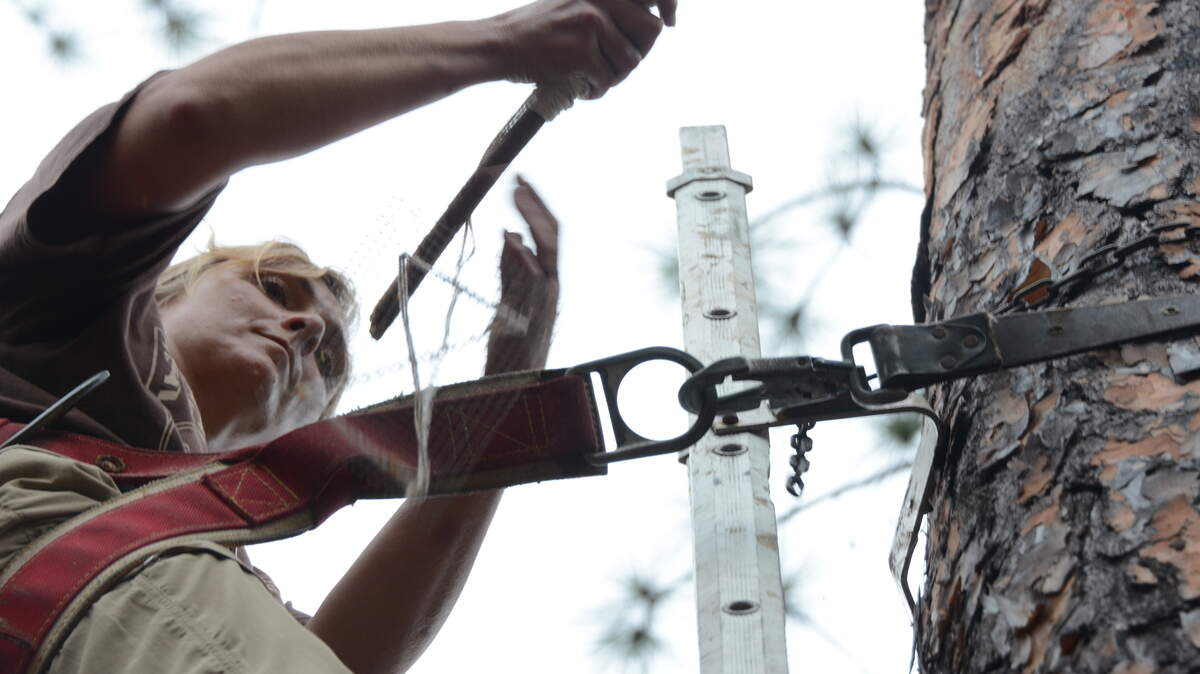
The federal government has issued a safety violation notice against Fort Jackson after a five-month investigation into the death of Nicole Chadwick-Hawkins, a well regarded biologist who was killed during a controlled fire on the military post last spring.
The Occupational Safety and Health Administration’s notice of unsafe and unhealthful working conditions says the fort did not make sure Chadwick-Hawkins was properly protected from hazards while she managed the blaze. It suggested the fort develop a procedure for igniting controlled burn areas that includes watching employees who are involved in the burning.
OSHA did not fine Fort Jackson, but characterized the worker safety violation as “serious,’’ a category that means there was a substantial chance that death or serious harm could result from conditions or practices on the job site. OSHA, a part of the U.S. Department of Labor, is charged with ensuring workplace safety for employees.
Chadwick-Hawkins died May 22 on Fort Jackson while working a prescribed fire, a blaze set intentionally to clear brush and improve wildlife habitat. Her charred body was found near an ATV she had ridden that day to manage the fire on Fort Jackson, family members have said. A mother of three, she left behind two elementary school-age sons and a grown son, as well as her parents and siblings.
Fort Jackson has addressed the issue, OSHA spokesman Michael D’Aquino said in an email. Details on what Fort Jackson had done to follow OSHA’s directive were not known Friday. A fort spokesperson could not be reached for comment.
Friends and family continue to question how someone with years of experience in managing controlled burns could have been killed in a prescribed fire unless there were unforeseen complications. They have suggested faulty equipment may have been to blame because Chadwick-Hawkins had relayed concerns to them.
Deaths during prescribed fires are uncommon, if not unheard of, in South Carolina. Earlier this year, the state Forestry Commission said landowners ignite 20,000 prescribed fires annually, but agency officials said they didn’t remember a case in which someone died in one. Nationally, only 10 of 297 reported wild land fire deaths from 2002-2008 involved prescribed burns, The State reported last summer.
Multiple federal agencies have looked into the death, including the Army’s Criminal Investigation Division and the federal Bureau of Alcohol Tobacco and Firearms. The criminal division looks into deaths on military bases as a regular practice, in addition to criminal matters.
“Just because we are investigating a death, it does not necessarily mean that a crime has occurred,’’ division spokesman Chris Grey said in an email, declining to provide details of the probe. Grey said the investigation is ongoing.
An ATF spokesman had no immediate comment Friday.
Dakota Bryant, Chadwick-Hawkins oldest son, said a federal investigator told him the gas tank on an all- terrain vehicle his mother was using ruptured. All terrain vehicles are sometimes used by those working prescribed fires.
“They did tell me that they did see the tank was ruptured but they’re not sure how it happened,’’ Bryant said. “They were trying to recreate the situation to see exactly what took place.’’
A death certificate Bryant said he has received shows that Chadwick Hawkins died of “thermal injuries.”
Bryant said the results of the OSHA investigation don’t surprise him because of the concerns his mother had expressed about equipment at Fort Jackson.
“She had concerns that the safety standards were lacking for years,’’ said Bryant, a former Columbia resident who now lives in Myrtle Beach. “But we still have no final conclusion of what happened. OSHA was only there to make sure things are safer next time, not really to figure out what happened.’’
Bryant and Nicole’s sister, Kristie Chadwick of Alabama, said the overall investigation is moving slowly and they would like more answers. Kristie Chadwick said her parents are suffering emotionally from the loss of Nicole.
“My mother is still having a rough time,’’ she said.
This story was originally published November 16, 2019 at 5:30 AM.