‘Fierce little old lady’ who opposed nuclear expansion dies at 99
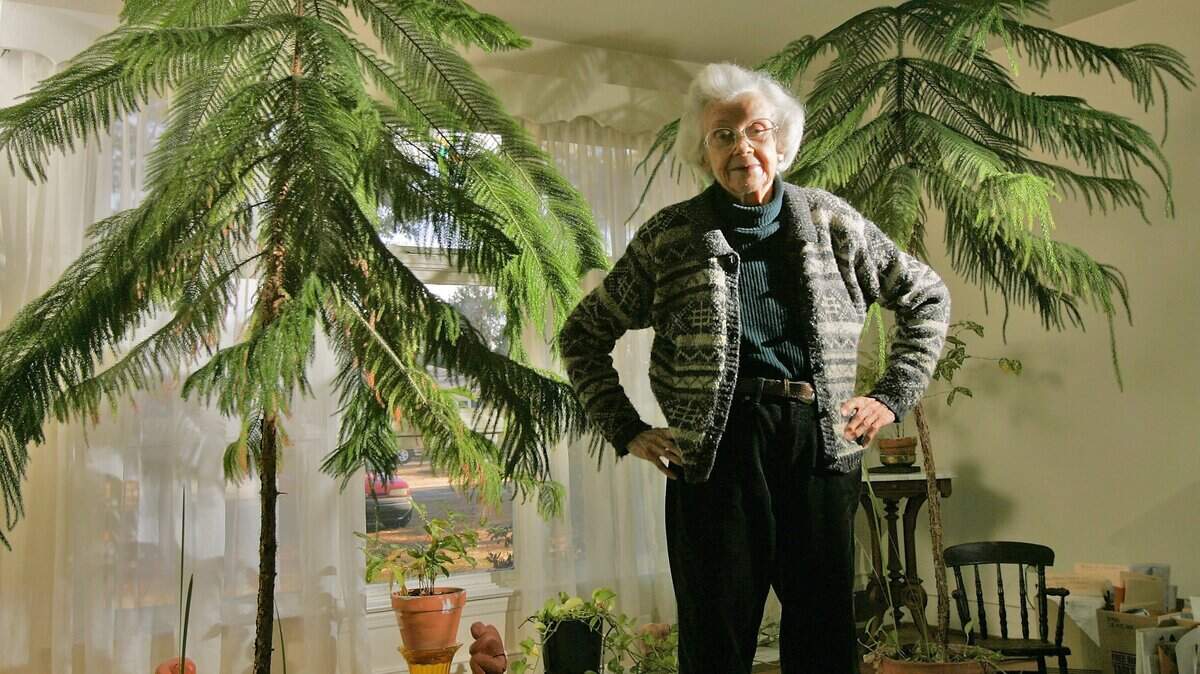
Ruth Sackett Thomas, a teacher turned-environmentalist who for decades was one of South Carolina’s most ardent anti-nuclear activists, died over the weekend after a brief illness.
She was 99.
Known for making state leaders uncomfortable with questions about nuclear policy, Thomas spent nearly 50 years advocating environmental causes and fighting the expansion of atomic plants across South Carolina.
In 1972, after reading a story about a proposed nuclear reprocessing plant near Barnwell, Thomas founded Environmentalists Inc. to oppose the facility, which President Jimmy Carter later canceled because of concerns about the potential hazards. The group’s efforts put the spotlight on a rural, little publicized part of South Carolina that she said faced dangers from the reprocessing effort.
The tiny organization, run out of her home in Columbia, filed more than a dozen lawsuits and legal challenges over the years against projects Thomas believed would harm the environment.
“I would feel worse if I didn’t do this,’’ Thomas told The State in 2007. “When you know you have the ability to have an impact, it’s important to do something.’’
Columbia resident Leslie Minerd, a fellow critic of nuclear energy and atomic weapons expansion, said Thomas was sometimes hard to miss when she visited a courtroom or public hearing, despite her small stature.
The diminutive, gray haired Thomas would show up with piles of documents to support her points, sometimes rolling them into courtrooms in tomato crates. A grandmother, she was always polite but forceful when she spoke, friends said.
“She was a fierce little old lady,’’ Minerd said. ‘’When we would go to hearings ... she would always have prepared statements. She gave copies of them to legislators at whatever meetings we were at. Some cringed (when she spoke). They said ‘Oh no, she’s going to talk now. ‘ But she always had the right thing to say.’’
In 2007, Thomas was among legions of people who fought plans to keep an atomic waste dump near Barnwell open to the nation. The Legislature ultimately agreed to keep the dump closed to all but three states.
She also took on other environmental issues, including efforts to close a hazardous waste incinerator in York County in the late 1980s. Thomas was among those in Columbia who fought successfully to save a small urban forest that was in jeopardy of being bulldozed near the Owens field airport, Minerd said.
Thomas collected so many documents about the environment and nuclear issues, many obtained through public records requests, that she ran out of room to keep them in her house off of Beltline Boulevard in Columbia. Thomas donated thousands of those records, mostly covering the years 1971-1989, to a repository at the University of South Carolina in 1994. Thomas later donated more documents, a family member said.
Even after moving from Columbia to an assisted living home near Tryon, N.C., about 10 years ago, Thomas continued to speak out against nuclear energy and radioactive waste disposal practices, regularly calling reporters and younger activists to offer her viewpoints, while rallying some of her newfound friends in North Carolina to support environmental protection.
Her efforts in North Carolina were featured in a local newspaper, The Tryon Daily Bulletin.
In 2015, at the age of 95, Thomas called The State newspaper to say she was working against the shipment of weapons grade plutonium across the country. The plutonium had at one point been destined for Aiken’s Savannah River Site. As recently as last month, Thomas was drafting a letter to government officials in Ohio to express concern about nuclear contamination at a site that is being demolished there, a friend said.
Her daughter, Janet Orselli, said Thomas had always been interested in the environment, bringing home bird feathers and other items she would pick up on nature walks. It led to her later activism, Orselli said.
“My mother had an unusual mix of tenacity and gentleness,’’ Orselli said. “Her views came from a desire to care for and love.’’
Elaine Cooper, a fellow environmentalist from Columbia, said she met Thomas in the 1980s at The Basil Pot, a vegetarian restaurant on Rosewood Drive, and immediately took a liking to her.
“We realized we had many things in common other than the environment, as well,’’ Cooper said. “We were both vegetarians.’’
Thomas, who was born in Springfield, Massachusetts, moved to South Carolina to attend then-Winthrop College in Rock Hill. She enrolled at Winthrop following a career working for the Milton Bradley toy company in the late 1940s, instructing department stores on how to use art supplies they would sell to the public.
Thomas, an art teacher when she moved to Columbia about 70 years ago, was preceded in death by two siblings and her husband. She is survived by her daughter, Orselli, and a grandson. Thomas died Sunday after a short bout with the flu, her daughter said.
A small family funeral service was scheduled for Monday afternoon at the Ramsey Creek nature preserve, an Oconee County site that bills itself as the nation’s first conservation burial ground. The preserve specializes in simple burials that don’t involve the use of embalming fluids or elaborate caskets that don’t break down in the environment. Graves are marked with rocks.
Orselli said her mother wanted it that way.
“Her desire to protect the environment was so strong that, even with her burial, she wanted to make sure she didn’t contaminate the environment,’’ Orselli said. “It is a beautiful place.’’
This story was originally published January 20, 2020 at 11:22 AM.