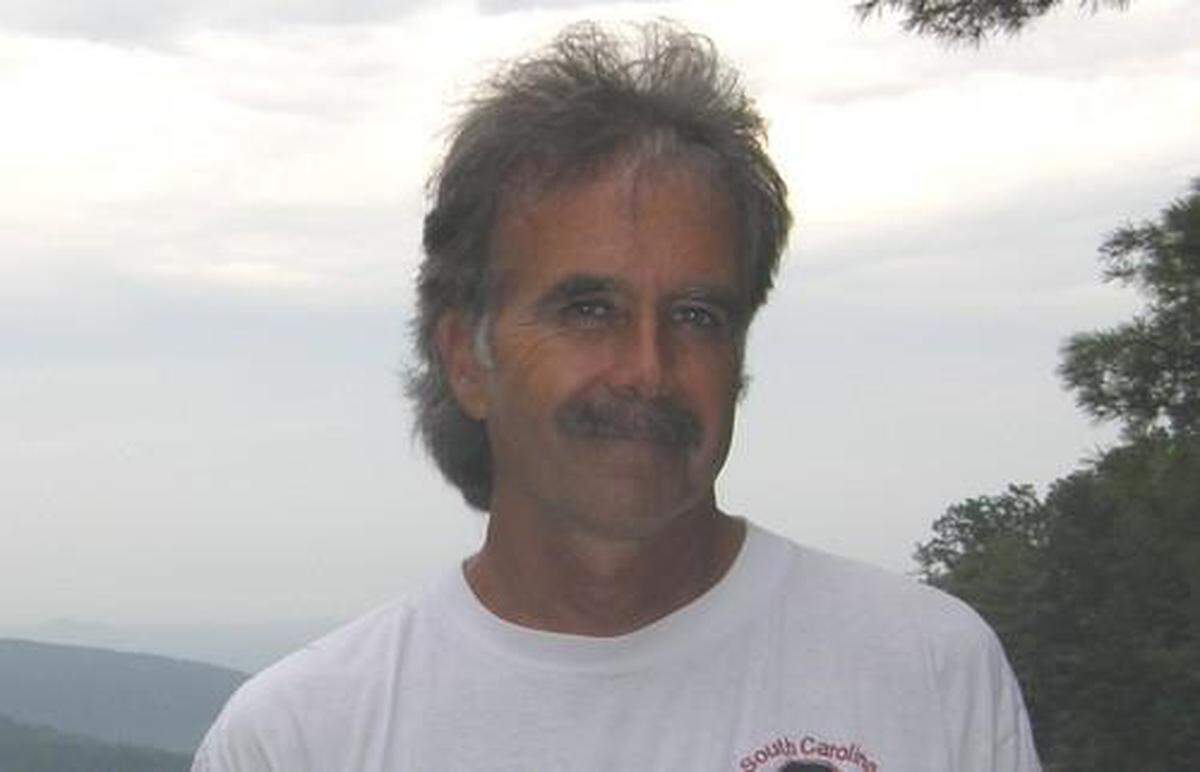
Guantanamo, Iraq and COVID 19. Can military doctor save South Carolina from virus?
In three decades of public service as a Navy doctor, Edward Simmer has counseled sailors and soldiers shell-shocked by the trauma of war.
He’s faced angry military retirees, upset about changes in health care. And he’s testified before Congress about helping military families with special needs children.
Now, Simmer is seeking to take charge of South Carolina’s embattled health department during a disease crisis that is killing thousands of people.
But not everybody is sure why he wants the job. He’s a 56-year-old career military man who was recommended for a job with a high burnout rate at a time when the state Legislature is discussing whether to break up the Department of Health and Environmental Control.
And he’ll be tasked with a challenge no one else has faced in the department’s history: wrestling the COVID 19 pandemic to the ground.
As Simmer’s confirmation hearing looms next week, some state officials are asking whether Simmer will be just another short-timer at a huge agency that many say desperately needs strong and stable leadership. Others want to know whether he’s a take-charge leader who will not sugarcoat problems as agency officials have done in the past.
Sen. Mike Gambrell, a member of the screening committee that will grill Simmer early Tuesday, said DHEC has gone through too many directors in recent years, and he’d like the revolving door to stop. Since 2012, the department has had three executive directors, and has been managed multiple times by two different interim directors.
“They go in there and they stay for a couple of cups of coffee and then they’re gone,’’ said Gambrell, an Anderson County Republican, referring to recent DHEC directors. “I’m curious about his plans. I’m looking for longevity and somebody to provide some leadership.’’
Sen. Kevin Johnson, D-Clarendon, said that DHEC’s last full-time director left after a short-time on the job as the coronavirus crisis enveloped the state. Rick Toomey, who was handed the position in December 2018 after serving on the agency’s board, quit this past May after experiencing non-coronavirus related health problems and expressing a desire to be with his family.
Like Simmer, Toomey had retired from a career in health care before taking the DHEC job, and he had a home in Beaufort County.
“We need to have somebody who is energetic and who is up to the task,’’ said Johnson, a screening committee member. “I think the last nominee (Toomey) just wasn’t, and that was a problem. DHEC does too many important things for the state of South Carolina to not have strong, energetic leadership. This is not a job where somebody is retired and just looking for something to do. This is serious work.’’
Sen. Margie Bright Matthews, D-Colleton, said she met Simmer outside the Senate chamber earlier this month as he made his rounds among lawmakers to seek support for the job. Simmer seemed nice enough, but he’ll get plenty of questions when the hearing begins Tuesday morning, she said.
The biggest issue is how to get coronavirus vaccines to people who need them — quickly, she said. So far, the agency’s response to the pandemic has been unimpressive, she said.
“It’s a train wreck,’’ said Bright Matthews, who said too many elderly patients have had difficulty getting the vaccine because of disarray at the agency and a lack of leadership by Republican Gov. Henry McMaster. “I want to see somebody who is proactive, bold and willing to shake the tree to get what we need.’’
Tuesday’s hearing could last much of the day as senators drill into Simmer’s qualifications, his commitment to staying on the job for the long-term and his vision for how to run the department. Many questions are expected to be about the coronavirus, but queries about environmental issues may also come up. Simmer is not known to have experience in environmental regulation.
While some senators interviewed by The State say there’s no guarantee they’ll vote to confirm Simmer, others said rejecting him is not realistic.
Sen. Sandy Senn, R-Charleston, predicted he will be confirmed because South Carolina needs someone to run DHEC. Short of some major negative revelation, the state doesn’t have much choice because it needs help “to at least get us through the COVID crisis,’’ she said.
“I’m going to vote for him, you think I’m not?’’ Senn said. “Bless his soul, anybody willing to take on that job, when all these others have failed, yes.’’
Simmer declined a request by The State for an interview, saying he would prefer to talk after the Senate votes on his confirmation for the job, which pays $195,000.
“I am honored and humbled to have been nominated by the DHEC board to be the next DHEC director,’’ Simmer said in an email. “That said, as you know, I am not yet the director and therefore do not believe it would be appropriate to comment on DHEC issues at this time.’’
Praise and Barbs
A psychiatrist who grew up in northern Ohio, Simmer applied for the DHEC director’s job as his military health care career was winding down in 2020. The agency’s board chose him Dec. 22 over more than 80 candidates and two other finalists, praising him for his credentials and expertise.
A resume released by DHEC provides an extensive list of military service that sometimes has put Simmer in the spotlight.
His last assignment in the military was a big one. He served as chief medical officer and deputy director of the TRICARE health plan, a type of insurance and health care program for 9.5 million active military personnel, their families and veterans.
During his six years with TRICARE, he led more than 300 staffers worldwide. His resume says Simmer focused on leading by example while emphasizing training and improving morale.
His insight was sought by Congress last year during a hearing on improvements many believe are needed in a military program for families with special needs.
At a February 2020 hearing before a subcommittee of the House Armed Services Committee, military family members told stories of the bureaucracy they had to deal with in getting help for their children, urging changes in the system. Simmer, who was not in charge of the program but was familiar with it in his role at TRICARE, testified that the concerns were valid.
“We know that we still have room for improvement,” Simmer said at the hearing. He went on to say families who spoke about the program “had significant problems accessing the care they need and that is unacceptable. We can and should do better. We are committed to addressing these issues and finding effective solutions.’’
Simmer’s career as a military doctor began in 1991, when he served as a medical officer aboard the Navy aircraft carrier USS Enterprise after his graduation from St. Louis University Medical School. The transcript from his February 2020 testimony before Congress shows that Simmer was a psychiatrist for military personnel in combat areas.
His resume says he provided long-term support to the crew and families of the USS Cole, a Navy ship that was bombed by terrorists in 2000, and he was deployed with an Army combat control stress unit in Iraq, according to his resume.
He helped provide psychiatric care to thousands of soldiers. Additionally, Simmer was a senior medical advisor to the commander of the Guantanamo Bay, Cuba, detention camp, where suspected terrorists have been housed.
He also served as a psychiatrist at military facilities in Portsmouth, Va., and Camp Lejeune, N.C., before rising through the ranks to become a Navy intern leader at the Bureau of Medicine and Surgery in Washington, D.C., according to the resume released by DHEC.
By 2008, Simmer had become senior executive director for psychological health at the Defense Centers of Excellence for Psychological Health and Traumatic Brain Injury in Silver Spring, Md., his resume says.
Many people say his knowledge, expertise and willingness to hear from others has allowed Simmer to climb the ladder in the military, working almost exclusively in health care.
“Dr. Edward Simmer, with his sterling character, broad skill sets and diverse career experience, will do the best job,’’ board member Chuck Joye said minutes after the board chose Simmer Dec. 22.
While Simmer declined comment, his wife said he’ll “bring passion’’ to the DHEC job, as he has elsewhere.
“I will tell you that Ed has always been very good at taking care of active duty military service members, retirees, and the families of both,’’ Peggy Simmer said in a text message to The State. “He is truly an advocate for the people he serves.’’
Despite the praise, Simmer’s life in public service hasn’t come without criticism.
In 2014, while chief executive officer at a Navy hospital at Oak Harbor, Wash., Simmer drew complaints over a change in policy that required many military retirees to see doctors on the base there, instead of continuing to see private doctors in the community outside Seattle.
About 60 retirees ripped the new policy as being unfair and poorly thought out, according to a Feb. 7, 2014, story in the Whidbey News-Times.
“Shame on you,’’ one retiree was quoted as saying during a meeting about the policy change.
During that meeting, Simmer defended the policy, saying it had been “very carefully looked at’’ and was, in part, financially motivated, the newspaper reported.
Dustin Amundson, a retired sailor who attended the meeting, said he wasn’t satisfied with the answers Simmer gave. He told The State this past week that Simmer seemed blindsided by the reaction.
Many retirees had moved to private off-base care years earlier after it became difficult to get service on the military installation, he said. Then, they were told while Simmer was in charge of the Oak Harbor hospital that they must come back to base facilities for medical care.
“He did not handle it well,’’ Amundson said of the 2014 meeting. “I would have expected someone at his command rank to have handled that meeting very easily, but he did not. He came up ready to give the answers he had prepared and was not ready for that hard scrutiny that we gave him.’’
Amundson said he can’t judge whether Simmer would be the right person for the South Carolina job because the health care dustup was only one incident in Simmer’s career as a military health care professional.
Simmer also has been involved in other much-debated issues, including a health care effort to cut reimbursements to some doctors. One of the disputes focused on TRICARE and reimbursement rates for certain treatments for children with autism.
Lowcountry charm
Simmer’s career took a twist in 2010, when he was chosen to lead the Naval hospital at Beaufort. Like other jobs he had in the military, the naval hospital job was an an enticing challenge for him, and an advancement of his career.. But his arrival in Beaufort had another effect on Simmer.
During their two years in Beaufort, the Simmers became enchanted with the quaint waterfront town in the state’s Lowcountry. They bought a home in a historic district and restored it, got involved in the community and made friends.
“When we first came to South Carolina for Ed’s executive officer tour at Naval Hospital Beaufort, we had no intention of this becoming our permanent home,’’ Peggy Simmer said in her text to The State.
“Throughout our Navy life of more than 30 years, we have always chosen to immerse ourselves in the community where we were stationed, and we did that here. We fell in love with the people, the place and the history — so much so that we decided to save a part of the history to call home.’’
Maxine Lutz, a former journalist who lives in the Lowcountry, said the Simmers are good for Beaufort. Peggy Simmer is outgoing and eager to volunteer in the community, while Edward Simmer is humble and easy to talk with, Lutz said.
Simmer “is so unassuming that you would never have known that he testified before Congress,’’ she said. “And if there can be a woman behind the man, she is the woman behind the man. She’s incredible and has won numerous awards from the military for her support of troops. They bring a lot.’’
The Simmers, she said, kept their house in Beaufort even after he moved to the Oak Harbor, Wash., assignment.
“He’s always more interested in other people than talking about himself,’’ Lutz said.
Assuming the Senate confirms Simmer for the DHEC director’s job, he’ll need all of the listening skills and leadership experience he’s gained to run an agency that has been pounded for what many call a tentative response to the coronavirus.
Senate Medical Affairs Committee members, and some other state lawmakers, say DHEC staff members are trying to deal with the coronavirus as best they can, but it’s hard without a visionary leader.
Senn called the agency “rudderless.’’
Sens. Marlon Kimpson, D-Charleston, and Shane Martin, R-Spartanburg, said DHEC needs direction, as its coronavirus efforts show. Like Senn, they are on the Medical Affairs screening committee.
Hard work ahead
Simmer’s biggest and most immediate challenge will be helping to ensure a smoother vaccine rollout and taking a stand on other measures to protect the public from COVID 19, senators said. Many people are complaining that it is too difficult to get vaccines even when they are available.
He’ll also need to address departures by top level staff. The agency has been without a health division director through much of the pandemic.
Since the coronavirus appeared in South Carolina in early March, the agency has been criticized for :
- Setting up mass coronavirus vaccination centers for seniors without telling the public. In mid-January, for instance, DHEC held a drive-through vaccination event at the state fairgrounds for people who had appointments to get the coronavirus shot. But the agency allowed those without appointments to get the vaccine, prompting a rush to the vaccine site as word spread in Columbia.
- Letting the politically appointed, part-time department board decide on priorities for vaccinations, instead of full-time health professionals within the agency. Acting DHEC director Marshall Taylor said agency staff felt uncomfortable making those decisions. The board this past week agreed to distribute weekly vaccines based on population, rather than also including other factors such as age and vulnerability. Both plans were presented to the board.
- Relying heavily on an online system of registering for vaccine shots, even though many seniors are not savvy with the internet and many people in poor, rural areas don’t have access to the internet. The department now says it will make it easier to schedule vaccine appointments by phone.
- Refusing, at one point, to release detailed information about specific communities where the coronavirus had been documented. The agency later relented at the governor’s order, releasing case numbers by zip code, after an uproar in South Carolina.
- Initially refusing to say which nursing homes had coronavirus cases and whether deaths were occurring at nursing homes. The department later backed down from that stance as criticism rose.
- Failing to take an aggressive stand on whether local communities should adopt mask ordinances, even though the department says masks and social distancing are good practices to prevent the spread of COVID 19.
- Failing to challenge Gov. Henry McMaster when it has disagreed with his positions on the coronavirus. Even though McMaster appoints the DHEC board, he does not have direct control over DHEC as a cabinet agency. Epidemiologist Linda Bell last summer said McMaster’s staff was manipulative, and she regretted not speaking more forcefully, saying the agency should stick to science in making decisions.
Martin said he plans to ask Simmer how he would have handled the coronavirus crisis differently.
Martin and others say the coronavirus crisis has exposed a larger problem that has existed at DHEC for years: a lack of direction and forcefulness needed at one of South Carolina’s largest departments. The agency touches virtually every South Carolinian’s life at some point through health and environmental programs.
Simmer would do well to change the agency’s tentative culture, some lawmakers say.
“I’m not looking for someone who will kowtow to the administration to perpetrate a false narrative because of politics,’’ Kimpson said.’
Gambrell, the senator from Anderson County, said he wants “somebody to shoot straight with me. If you’ve got to have something, come tell us why.’’
For too long, top DHEC officials have downplayed major issues in dealing with the public and the Legislature, telling politicians what they wanted to hear — not what they should have heard, critics say. That’s sometimes kept the agency from seeking the funds and changes in law that could benefit the public, critics say.
Up against a wall
The department also often declines to take positions on legislation that could affect public health and the environment, instead saying that’s a job for the legislature. Critics say the department should at least let politicians know what it thinks about proposed laws.
Bill Stangler, the Congaree Riverkeeper, said the agency’s problems aren’t just on the health front. It also has had shortcomings in overseeing environmental protection, DHEC’s other major division, he said.
The department, for instance, was for years hesitant to seek more money from the Legislature to monitor rivers for pollution, meaning the state didn’t know if some waterways were safe for recreation, he said.
“There was significant pushback from the agency,’’ he said. “They didn’t want to ask for the money.’’
Some legislators say Simmer should consider the style of state Transportation Secretary Christy Hall, who isn’t shy about approaching lawmakers about the state’s road needs.
DHEC’s response to the coronavirus this year has revived an age-old argument over whether the department needs to be broken up. Sen. Harvey Peeler, the Senate’s president, thinks it should.
Peeler, R-Cherokee, introduced legislation to separate DHEC’s health and environmental divisions that have made up the agency since the early 1970s.
So Simmer could be taking charge at an agency that won’t exist as it has been known for decades.
Senators say he must want the job to walk into a department with so many challenges.
Bright Matthews, the Colleton County senator, said she hopes Simmer does well.
“He’ll get confirmed, trust me,’’ she said. “Who else do we have?’’
Staff writers Maayan Schechter, Joseph Bustos and Zak Koeske contributed to this story.
This story was originally published January 31, 2021 at 6:00 AM.