Poisoned water creeps toward popular Upstate hiking trail. Are taxpayers on hook?
On a warm day 36 years ago, an Upstate industrial plant ran into trouble with state regulators over what they said was a failure to obey hazardous waste rules.
The company, Carolina Plating Works, had not cleaned up a toxic waste pond, as required, raising concern that a leak from the lagoon would endanger people and wildlife. So the state slapped Carolina Plating with a $10,000 fine and ordered the company to straighten up.
But Carolina Plating’s troubles weren’t isolated. The 1985 fine foreshadowed what would become a bitter, three-decade long war between Carolina Plating and state regulators that today has taxpayers — and their pocketbooks — in the crossfire.
The Carolina Plating site, after years of environmental violations, contains a slug of polluted groundwater that is creeping toward the nearby Reedy River, a key part of downtown Greenville’s revitalization efforts. The metals-contaminated groundwater exceeds the federal safe drinking water limit in many places, state regulators said recently.
The industrial plant also is closed, and a company official says the business doesn’t have money to finish monitoring and cleaning up the contaminated groundwater.
An $82,000 bond the company posted for cleanup expires later this year, but even if it is used, questions are surfacing about whether the bond will be enough to pay for all of the work.
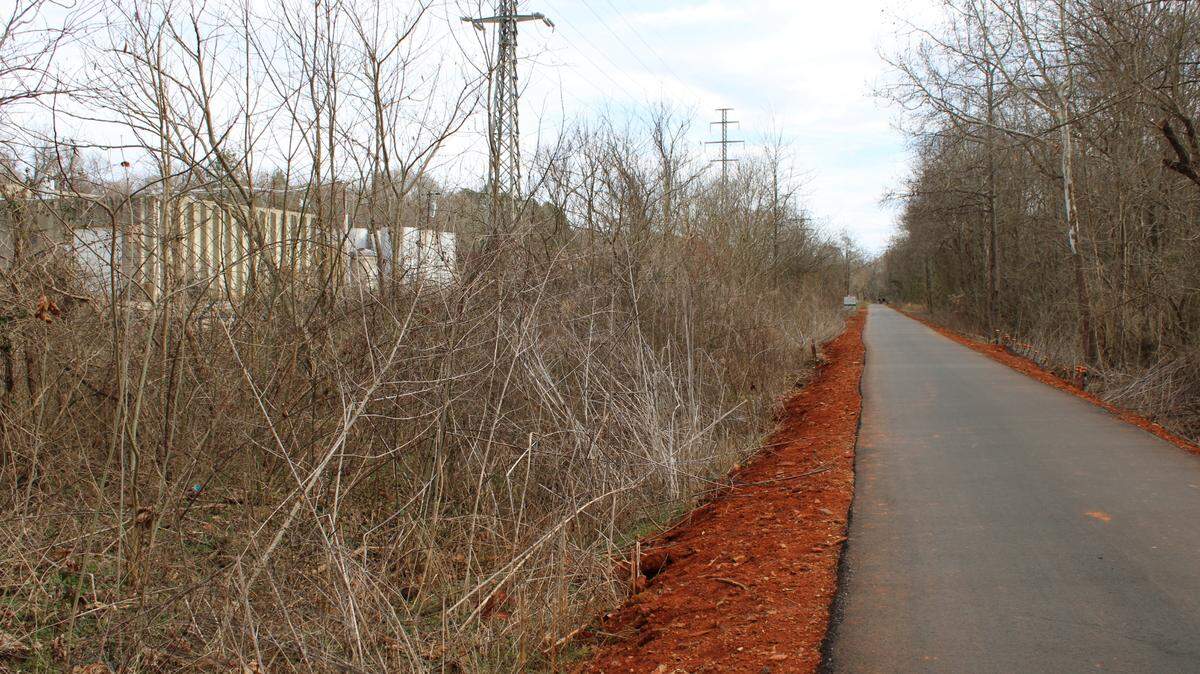
Unless the property is sold to a buyer who would fund a cleanup, taxpayers potentially would be on the hook for cleansing the property so that the polluted groundwater doesn’t seep into the Reedy River, or ooze beneath the popular Swamp Rabbit Trail, which is just next door.
The S.C. Department of Health and Environmental Control and Carolina Plating’s top executive say they don’t know how much money it will take to clean up the property. But estimates range from more than $100,000 to more than $1 million.
Despite Carolina Plating’s contention that it doesn’t have money for a cleanup, DHEC considers the matter serious enough that it recently fined the company $353,486 for what the agency says is a failure to follow hazardous waste laws for the past decade.
The fine is the largest hazardous waste penalty DHEC has issued in five years, and one of the biggest in South Carolina since 1990, department records show.
DHEC’s recent fine is part of at least $750,000 in penalties the agency has levied against the company during the past 30 years for environmental violations.
The agency has made at least nine enforcement cases against the industrial plant on West Blue Ridge Drive since September 1985, when DHEC fined the company $10,000. The agency said at the time that Carolina Plating had not followed a requirement to clean up the hazardous waste pond and close it out.
In the years following the 1985 enforcement action, inspectors found leaking toxic waste tanks, hazardous materials spills, malfunctioning air pollution control equipment, and open containers of noxious materials. Problems intensified in the early 1990s.
Laura Renwick, a spokeswoman for DHEC, said in an email the agency levied the recent $353,486 fine because the company did not properly operate a pollution cleanup system, maintain enough money for monitoring and cleanup, or regularly look for contamination on the site over the past 10 years.
DHEC says Carolina Plating’s failure to follow hazardous waste rules for a decade gave it an “economic benefit,’’ a term often used to describe how companies save or make money by refusing to buy or upgrade pollution control equipment.
The DHEC fine is notable, not only because of its amount, but because the agency says company executive Sammy Huffman refused to cooperate — a point that he sharply disagrees with.
“Mr. Huffman was unwilling to comply with the environmental requirements of the (hazardous waste) permit’’ for monitoring and cleaning up the property, agency spokeswoman Cristi Moore said in an email. “Although DHEC and the company had numerous negotiations, an agreement on the conditions .... that would bring the company in compliance with the permit and regulation could not be reached.’’
Moore said the agency is considering how it could force the company to pay the cleanup bill. She hinted that her agency may take Carolina Plating to court.
“DHEC intends to pursue all legal avenues to have Carolina Plating or a future site owner/permittee fund and complete the required work,’’ she said in an email.
Department officials declined to grant interviews for this story. But they said through spokespeople that it’s unusual for the agency to be involved in environmental disputes with companies for more than 30 years.
Attorneys knowledgeable about hazardous waste cases said taxpayers should brace themselves.
State records show that the company’s monitoring and cleanup liability at one point was more than $500,000. But Gary Poliakoff, an Upstate attorney who has handled multiple hazardous waste pollution cases, said he wouldn’t be surprised if the tab reached several million dollars because proper cleanups are expensive.
Poliakoff and Bob Guild, another environmental lawyer with experience in hazardous waste cases, also said bonds set aside by companies to deal with pollution aren’t always high enough in South Carolina to pay for environmental cleanups.
“I’ve never seen one that I thought was adequate,’’ Poliakoff said.
Guild said Carolina Plating’s long running fight with DHEC indicates that the agency’s efforts to enforce environmental laws didn’t work. If a company isn’t following the laws to DHEC’s satisfaction, the agency has authority to revoke a company’s environmental permits to operate, he said.
“That’s not just slapping them on the wrist and fining them; it’s shutting them down,’’ Guild said.
The Carolina Plating property is nestled in a gritty industrial corridor of Greenville, a former textile town that today is the largest city in South Carolina’s northwest corner. The site, which contains a series of aging industrial buildings and large metal tanks, is adjacent to a working class neighborhood of modest houses, mobile homes, churches and small businesses.
Downhill and on the other side of Carolina Plating lies the Swamp Rabbit Trail, a popular hiking and biking path that connects the Travelers Rest community and Furman University with downtown Greenville.
On a recent winter day, people strolled along the trail past Carolina Plating or whizzed down the path on bicycles. An urban creek gurgled by a corner of the property before connecting with the Reedy River about a quarter mile away.
DHEC says the metals-contaminated groundwater is beneath Carolina Plating, upslope from the Swamp Rabbit. Contaminants in the groundwater are cadmium and chromium, both highly toxic substances associated with the metals plating industry. The cadmium pollution is in a plume of groundwater 340 feet wide, according to a recent report to DHEC.
Exec rips DHEC
Huffman, whose family started the Carolina Plating business decades ago, said he hopes to sell the West Blue Ridge property soon to a buyer who can pay for some of the needed site improvements.
“I’m trying to get the property into somebody’s hands that really wants to redevelop it,’’ Huffman said. He has a contract pending, but the deal has not closed, and DHEC says it has no information about a sale. Anyone who purchases the property faces potential liability for remaining contamination.
Huffman said his business pumped out thousands of gallons of groundwater, successfully lowering pollution levels in the water.
“We’ve done a heck of a job cleaning it up over the years,’’ he said.
Huffman said, however, that he’s a victim of dwindling resources and overzealous enforcement by DHEC.
DHEC often placed severe punishment on Carolina Plating for what he considers relatively minor transgressions, such as whether labels on hazardous waste containers were up to date, he said.
He also noted that DHEC had for years said a bond to monitor and clean up the site was adequate. Then, the agency changed its mind last year, demanding the company put up more money, he said. Many of his most recent troubles center on his failure to provide reports to DHEC that he no longer could afford, Huffman said.
He plans to challenge the more than $353,000 fine DHEC recently issued.
“The fine, in my opinion, is not justified,’’ he said.
Established not long after World War II, the business was composed of two divisions: Carolina Plating and Stamping and, later, Carolina Plating Works. The business recycled metal parts for textile plants across the Southeast, as well as metal components for other industries.
In the 1980s, the two separate divisions of the company began operating from the same location on West Blue Ridge Drive, according to a 1997 story in the trade publication Plating and Surface Finishing.
The companies, under the name of CAPSCO, employed nearly 200 people at one point, generating millions of dollars in sales each year. But the flagging textile industry began to affect the business. Sales dropped from $7 million in 1994-95 to $6 million the next year, the trade publication story said. In 1996, the company began layoffs, the trade story said.
Despite the economic pressure, CAPSCO launched a $250,000 expansion, primarily to produce parts for the automotive industry, the publication said.
The company’s efforts at the time drew attention on another front: In 1996, CAPSCO received a Governor’s Pollution Prevention Award. The award, given while Republican David Beasley was governor, recognized businesses and industries that had exhibited a commitment to protecting the environment by trying to reduce hazardous waste.
Huffman said the company changed some of its industrial processes to stop using “real bad stuff,’’ chemicals like cyanide and chromium. The company also won awards from a local water and sewer authority.
The company’s efforts were noted by a state judge in 2011. That year, its lawyer persuaded administrative law judge Shirley Robinson to cut a $137,610 DHEC fine to $7,500. Robinson said many improvements had been made at the plant, including a reduction in pollution levels in groundwater. Violations found by DHEC were not overly concerning, she wrote.
“There is no evidence that the violations had an adverse impact on human health or the environment,’’ Robinson wrote in a Nov. 21, 2011, court order.
Huffman said the company might never have had difficulties if government environmental standards had not changed through the years.
In the late 1960s or early 1970s, government regulators told the company to start using a lagoon as part of its waste treatment process, he said. Unfortunately, the lagoon leaked and that led to groundwater problems, Huffman said in an interview with The State.
“We didn’t want to put a lagoon in,’’ he said. “But they said, ‘No, that’s part of the treatment process, you got to do that. That was before anybody knew if you put in a lagoon, it would eventually get down into the groundwater.”
DHEC, founded in the early 1970s, said it has no record that it issued a wastewater permit for construction of the lagoon. The pond was built before 1980, the department said in a recent email to The State.
Huffman also said he believes DHEC went out of its way to penalize his company. During the administrative law court trial in which he got the $137,000 fine reduced, an agency staff member said under oath that the department wanted to shut down Carolina Plating, court records show.
The employee, DHEC air regulator Kari Terry, said the department made more than routine efforts to enforce rules against Carolina Plating, according to a transcript of the 2011 court hearing.
“In my opinion, they seemed a little higher than normal,’’ Terry testified when asked about the severity of the penalties.
Huffman said the company drew undue criticism from one neighbor about odors, but he said that criticism was a case of mistaken identity. He learned odors came from a public sewer system that runs through the area, he said. Huffman said he tried to work with the neighbor.
“Our company was the culprit for 50 to 75 phone calls filing complaints against our company,’’ he said.
DHEC, in response to questions from The State, said it had received complaints about odors, but also air pollution from the plant since 1984.
In one 2005 report, a neighbor urged DHEC to crack down on the industrial plant after complaining about noise and acidic fumes, a document released under the state’s open records law shows.
“I can’t open my windows to air the house out; the smell comes in through the air conditioning vents,’’ according to a hand-written note from a neighbor on Old Bleachery Road. DHEC declined to release the person’s identity.
Records released by the agency Monday show that DHEC had cited the company for multiple failures to follow air pollution rules.
In 2006, the agency fined CAPSCO $6,550 for discharging pollution into the air without proper controls and for hazardous waste infractions. In one case, the agency said the industrial plant had been venting pollution from a hydrochloric acid tank into the air without controls.
Owen Roberts, a former environmental compliance manager at the company, said Carolina Plating had made strides in attempting to follow environmental rules. But he also said Carolina Plating did not maintain the momentum in later years of operation.
Polluted groundwater and sick fish
While Huffman and DHEC disagree on whether the agency has been too hard on Carolina Plating, one thing is certain: toxins have fouled the property.
State records show that shallow groundwater remains contaminated with chromium and cadmium at unsafe levels.
Fourteen monitoring wells registered one or both of the pollutants at levels above safe drinking water standards, according to 2016 data, the most recent complete set of results DHEC says it has received.
Testing conducted by consultants since 2016 shows that pollution has dropped on part of the site, but risen in other areas, including one spot at the property’s edge near the Swamp Rabbit Trail.
Cadmium levels in groundwater were measured at about 40 times the safe drinking water standard in 2020, according to data contained in an Oct. 27, 2020 report by the PetraTech Environmental consulting firm of Greenville. In 2016, those levels were about 9 times the standard, statistics in the report show.
At another spot near the center of the property, cadmium levels have soared to the highest they’ve been since the 1990s, data in the report show.
PetraTech’s report said the pollution resulted from Carolina Plating’s failure to continue cleaning up groundwater. DHEC says the company is not currently pumping out polluted groundwater.
“A slight rebound was observed during the current sampling event,’’ the study said. “The upwards trend is likely the result of contaminant rebound due to the temporary cessation of the pump and treat system.’’
Cadmium is a metallic substance that, if ingested by people in large amounts or over time, can cause kidney and bone damage, according to the U.S. Agency for Toxic Substances and Disease Registry. It is considered a probable human carcinogen. Chromium can take on multiple forms, but some of them can cause skin rashes, kidney and liver damage and ulcers in people, the Toxics Use Reduction Institute reports.
The good news is that nobody drinks from wells in the area, DHEC says. But that doesn’t diminish concerns about the contamination at Carolina Plating.
Groundwater beneath the site is flowing toward the Reedy River, which is within a quarter mile of the Carolina Plating property on West Blue Ridge Drive. The river once was a little more than an open sewer for the textile industry, but today is a cornerstone of downtown Greenville’s revitalization.
Overall, cleanup efforts through the years have begun to make a difference in the Reedy River, which creates a waterfall in the popular Falls Park at Main Street. People often wade in the river below the falls on warm summer days.
DHEC says it has no evidence contamination in the river came from the Carolina Plating property, but agency records indicate that cadmium pollution below Carolina Plating has hurt fish, water bugs and other organisms in the Reedy River downtown.
Cadmium can hurt the ability of fish to reproduce by limiting the formation of eggs in species exposed to the metal, according to a 2010 Nature Conservancy report that cited numerous scientific studies. Certain forms of chromium can affect the livers and gills of fish, limit reproduction and, in certain circumstances, kill some species, a 2017 report in the Journal of Entomology and Zoology Studies says.
Metals like those in groundwater at the Carolina Plating site also have been found in the muck of Lake Conestee, a large pond miles down the Reedy River from the property on West Blue Ridge Drive.
Past studies have estimated more than 1 million pounds of chromium lie in the sediments of the lake, mostly from upstream sources, said Dave Hargett, a consultant who has studied the river and lake extensively. Lake Conestee is the centerpiece of a nature preserve that attracts thousands of visitors to its trails and boardwalk.
It’s likely multiple pollution sources contributed to the cadmium and chromium problems in the Reedy River system because parts of the river run past an industrial area of Greenville, including one site undergoing federal Superfund cleanup efforts.
Still, a report Hargett wrote in 2008 noted that environmental issues at Carolina Plating were something to pay attention to as construction crews worked to build the Swamp Rabbit Trail.
“Because of the nature of CAPSCO/Carolina Plating facility operations, its extensive and notorious violations record, and its proximity to the proposed (Swamp Rabbit Trail), this site warrants special precaution in construction of the line,’’ Hargett’s consulting report said, noting that contractors building the trail needed to “minimize disturbance of soils and to avoid nearby industrial facilities.’’
Hargett, who has studied Lake Conestee extensively, told The State recently that the Reedy is a classic example of an urban river tainted by industrial pollution. Hargett said multiple industries once operated near the Reedy.
“It is reasonable to say they are all ‘suspect,’ until science shows them to be either innocent, or a minor contributor,’’ Hargett said. “This is especially true of any industrial actor that has an extensive record of documented pollution impacts to land and water resources, and a record of non-compliance with environmental regulations.’’
Toxic waste spills
Even though DHEC’s recent enforcement action focuses on violations the agency says have occurred over the past decade, the fine of more than $353,000 isn’t the first one like it.
On at least two other occasions, the department levied fines exceeding $100,000, considered a large amount for South Carolina’s environmental regulatory agency.
Following inspections in 1991 and 1992, DHEC fined Carolina Plating $250,000 for environmental violations, mostly involving hazardous waste, according to an extensive 1993 enforcement order obtained by The State.
Among other things, inspectors discovered a red liquid outside the main part of a waste treatment area that contained cadmium at 65 times the legally safe limit. At another spot, sludge found outside of a tank showed cadmium levels 400 times higher than the legal limit. That same sludge had chromium levels eight times higher than legal limits.
Inspectors also found that spills of raw wastewater from an overhead piping system had begun to erode parts of a concrete wall and walkway. Corrosive wastewater was found to have eaten a hole in a waste containment wall, according to the April 1993 enforcement order.
Other problems noted by DHEC included overflowing waste tanks; wastewater spilling on the floor; 23 drums of caustic cleaner and nickel outside a waste treatment plant; a “highly corroded’’ drum of acid, a pile of hazardous waste with cadmium levels eight times above the legal limit, and poorly maintained monitoring wells.
Monitoring wells allow companies to check for pollution in groundwater, but if they are not maintained properly, the wells can provide an opening for contamination to run from the surface into groundwater. Inspectors found evidence that “surface water runoff’’ had gotten into areas with wells.
The company was allowed to pay the $250,000 fine in installments over eight years, records show.
DHEC later returned to see whether the company had cleaned up the problems, but found that in some cases, Carolina Plating still had violations. DHEC smacked the company with another enforcement action in 1996, this time for failing to have enough money available to monitor and clean up the site.
By 2004, the U.S. Environmental Protection Agency had found leaking tanks, one of which was oozing an unidentified green liquid. The other leaking tank contained acid, according to the EPA’s enforcement database.
The EPA fined Carolina Plating Works $1,500 for violating hazardous waste rules, records show. The federal agency also took another enforcement action against Carolina Plating in the 1990s, but no details on that violation were available.
Other skirmishes followed after 2000, and by 2010, DHEC fined Carolina Plating $137,610, citing more violations of toxic waste rules.
At the time, inspectors found the industrial plant had burned unapproved hazardous waste in an oven. They also discovered gaps and openings that could allow air pollution to escape, as well as problems with an air pollution control device.
But the company’s troubles with DHEC over compliance with environmental laws continued.
A letter of credit for monitoring and cleanup was reduced from more than $140,000 to $82,000 without DHEC’s approval, records show. The company also failed to check groundwater for pollution, and it had failed to submit information to DHEC about sampling for pollution, the department said.
After years of troubles at the plant, some neighbors say it’s time to close the book on Carolina Plating.
Folks like Ooula Thomason say the site should be cleaned up and its aging industrial buildings torn down.
“I think they should have been gone,’’ said Thomason, a 14-year resident of the neighborhood adjacent to Carolina Plating. “Where there is contamination, they need to fix it.’’
This story was originally published February 25, 2021 at 10:35 AM.