Secretive defense plant operating in the shadow of atomic fuel factory near Columbia
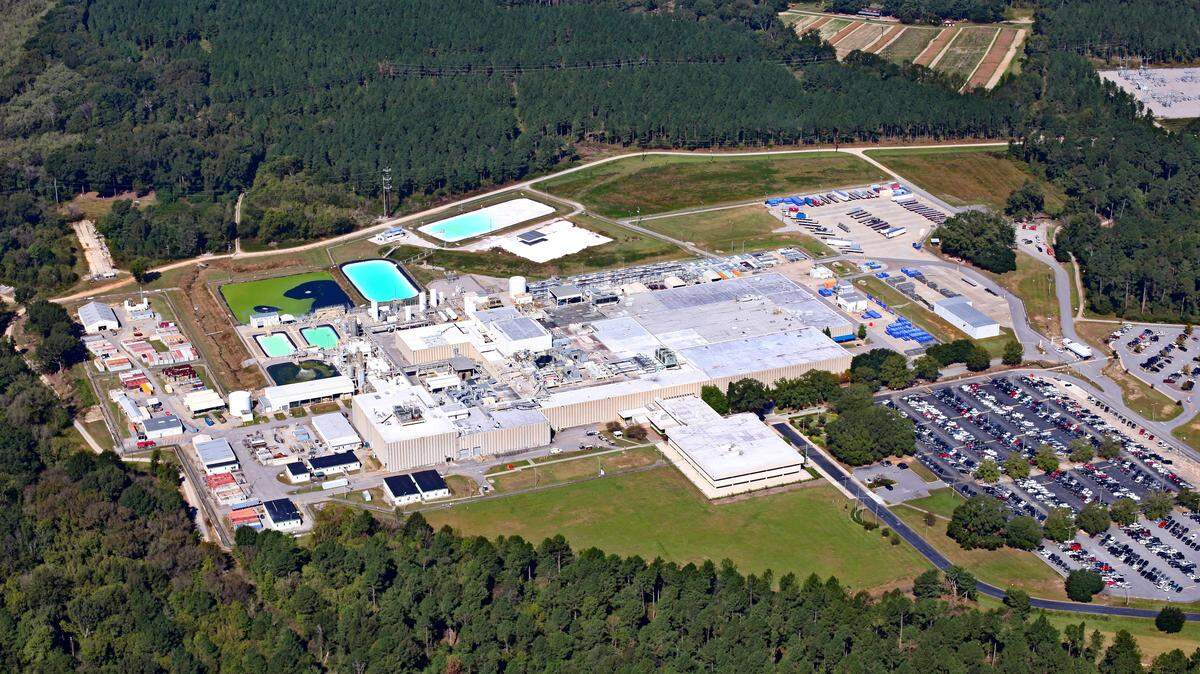
In the swampy woodlands of eastern Richland County, a little known manufacturing operation has for years churned out material the federal government depends on to maintain the nation’s atomic weapons arsenal.
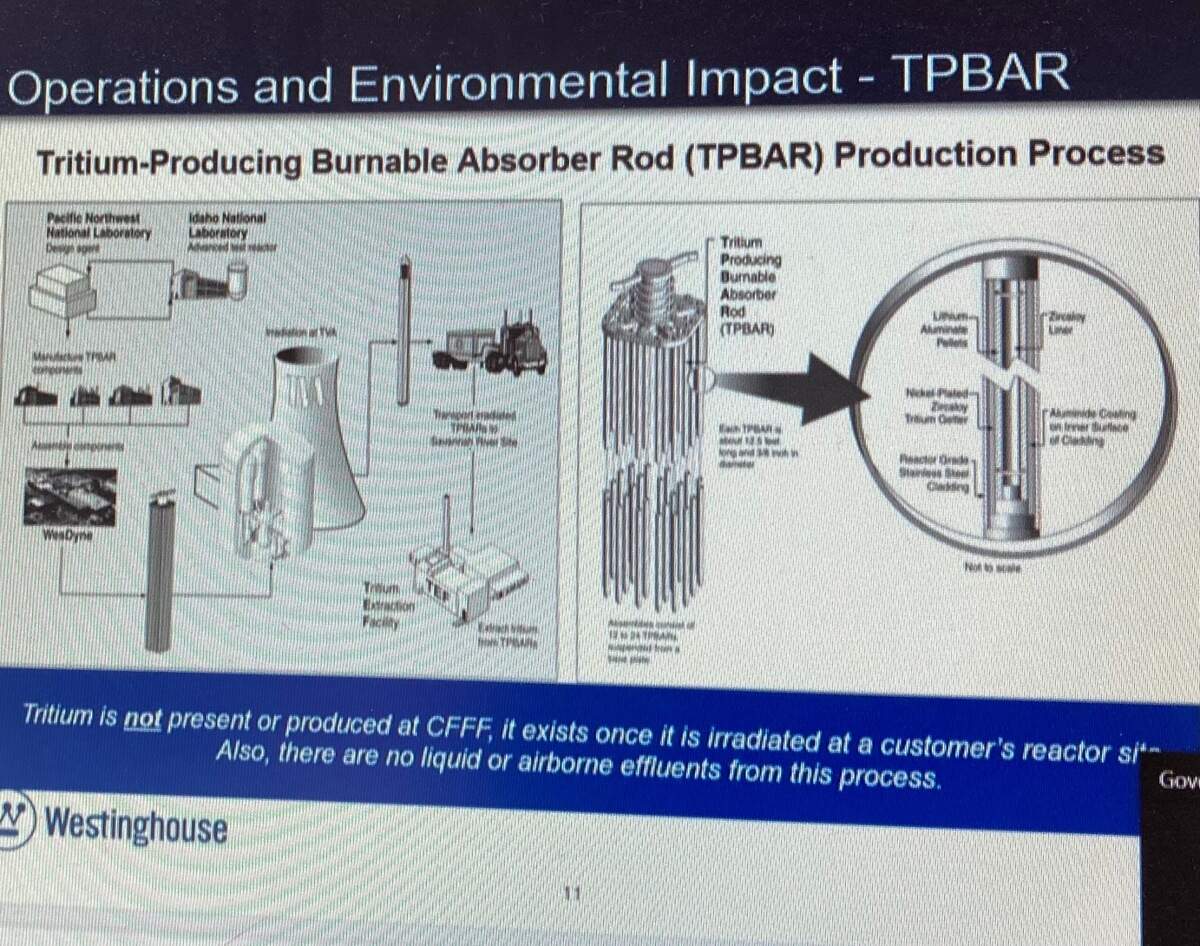
The operation assembles metal bars at the Westinghouse commercial nuclear fuel plant and ships the rods to a reactor in Tennessee, where they’re processed to become radioactive. The radioactive metal bars are then sent back to South Carolina so that tritium — a key ingredient in nuclear bombs — can be removed at the Savannah River Site.
It’s a process that has gained little public attention through the years, but one that lately has sparked questions among a handful of critics following Westinghouse Nuclear’s effort to gain a new 40-year federal operating license for its commercial fuel factory on Bluff Road.
Critics say the U.S. Nuclear Regulatory Commission should have analyzed the metal-bar assembly plant in a recent study of how the Westinghouse Nuclear fuel factory might affect the environment if it gains federal approval for the 40-year license.
They say the metal-bar plant has operated in virtual secrecy through the years at the Westinghouse fuel factory, a 550,000-square-foot facility better known as a place where metal rods are made for commercial atomic power plants — not for military uses.
Using a commercial nuclear fuel factory to produce material that also supports the military weapons effort sets a bad example for countries the United States is trying to discourage from developing atomic weapons, critics say.
The local Sierra Club and Savannah River Site Watch, which released a report on the defense-related part of the Westinghouse plant this past week, are the primary groups that have expressed worries about the operation. Both are seeking more information about the defense-related work at the Westinghouse commercial nuclear fuel factory.
“This is a kind of hidden, obscure facility and I cannot see how it is regulated,’’ said SRS Watch director Tom Clements, who is tracking the Westinghouse Nuclear effort to gain a new license to operate over the next four decades.
“The public should first be concerned about the nuclear weapons implications of a facility right here in our community. The second thing is that nuclear defense-related activities actually produce hazardous waste that we have no assurance is being regulated properly.’’
Pamela Greenlaw, a Sierra Club member, recently brought up concerns about the defense-related section of the fuel factory during a quarterly Governor’s Nuclear Advisory Council meeting in Columbia.
She called that part of the Westinghouse fuel factory a “stowaway company’’ that not enough people know about.
A key question is whether waste generated from the metal bar assembly section of Westinghouse has polluted the land or water near the plant.
While the defense-related part of the Westinghouse fuel plant does not generate radioactive waste, it produces some hazardous waste as it makes metal bars for the national defense effort, according to the company and the National Nuclear Security Administration.
The contaminants include acetone and zirconium, both of which can sicken people who are exposed in sufficient quantities.
“We are not asking for state secrets, we just want to know about pollutants and for them to do the right thing,’’ Greenlaw said in an interview with The State this week. “How it is being handled by Westinghouse Fuel Fabrication Facility administrators is not forthright.’’
Both Westinghouse and the National Nuclear Security Administration downplayed environmental threats from hazardous waste generated at the site, saying the amount of toxic refuse produced at the metal-rod operation is minor.
“The small amount of non-radioactive waste that can be produced, including acetone rags and zirconium alloy metal shavings, is not released to the environment,’’ the NNSA said in a statement this week.
Still, a top Westinghouse executive concedes the company hasn’t said much publicly about the defense-related metal bar factory in the past because it “was classified information.’’ That has changed, and Westinghouse is now trying to let people know more about the defense-related work, said Mike Annacone, a vice president for the commercial fuel plant.
Critical days ahead
Questions about the defense-related business have surfaced at a critical time for Westinghouse. The company’s factory on Bluff Road has produced fuel rods for the commercial atomic power industry since 1969.
But its license will expire this decade, and the company is seeking federal permission to keep operating another four decades. The public had until Friday to comment on the environmental study of operating the plant in the future.
Supporters say the commercial nuclear fuel factory is vital to the Columbia-area economy, employing about 1,100 people, and to the production of atomic energy across the country.
The company says 10 percent of U.S. electricity comes from nuclear fuel manufactured by Westinghouse in Columbia. Without Westinghouse’s fuel rods, it would be harder to run nuclear power plants, supporters say. It is one of only three fuel rod plants of its kind in the country.
Unfortunately for Westinghouse, the company has experienced an array of spills and leaks in recent years that have brought intense scrutiny and criticism for the operation in eastern Richland County. Groundwater is heavily contaminated beneath the site, and nearby property owners and residents worry that it will one day pollute their drinking water wells.
Now, some people are asking about the defense-related mission at the site, and questioning why little has been said about its waste stream.
The Nuclear Regulatory Commission’s environmental impact statement said there would be some moderate effects in Richland County from continued operation of the commercial fuel plant, but critics say the statement did not address the defense-related section of the plant. Federal records indicate that section of the plant began operation about 20 years ago.
In addition to the Sierra Club and SRS Watch, the Congaree Riverkeeper organization says it also would like to know more about the defense-related section of the commercial fuel factory on Bluff Road. The Riverkeeper is interested in how operations on Bluff Road might one day affect the Congaree River and its tributaries.
A company called Westinghouse Government Services, owned by Westinghouse and formerly known as Wesdyne, has a contract with the National Nuclear Security Administration to produce the metal bars, a Westinghouse fact sheet says.
The work is done in a “standalone manufacturing area” with controlled access on Bluff Road, the fact sheet says. The Westinghouse site is in a remote area of eastern Richland County just a few miles from Congaree National Park.
Regulators at the S.C. Department of Health and Environmental Control say the Westinghouse commercial fuel factory actually manufactures the metal bars in Columbia.
Meanwhile, Richland County recently required the defense-related section of the Westinghouse plant to get a separate business license because it appears to be a separate business, said Zach Cavanaugh, the county’s director of business services.
$11,000 metal bars
Regardless of what the facility is called, the National Nuclear Security Administration says the defense-related section of the plant is important to U.S. security.
Westinghouse’s operation produces 1,500 metal rods, known as TPBARs, every year, according to the NNSA. Those rods are valued at about $11,000 apiece, records show. Tritium extracted from the metal bars at SRS is needed to replenish nuclear weapons because tritium decays relatively rapidly.
The operation is considered so important that the country’s nuclear defense system would be jeopardized if it did not continue, as is, at the Columbia site, a federal document obtained by SRS Watch shows.
Losing the Columbia operation “would cause a break in production and significantly impact the tritium readiness program’s ability to be prepared to provide new tritium, thereby jeopardizing the defense mission and placing the nation’s security at severe risk in the event of a national emergency,’’ according to a proposal to continue contracting for the work at the Columbia factory.
Even so, concerns remain.
Clements said having a defense-related section at the Columbia plant is part of a federal effort that mixes production of nuclear fuel for commercial uses with production of nuclear weapons.
That sets a bad example for other countries the U.S. is trying to discourage from developing nuclear weapons materials at commercial power plants, he said. The United States had a policy for more than 50 years of barring commercial reactors from producing ingredients for atomic bombs, but that policy changed in 2003, according to the book “Tritium on Ice.’’
“The decision to produce these rods in a commercial facility for military purposes should be revisited,’’ Clements said.
Westinghouse says it isn’t producing nuclear materials, only the metal bars that go to Tennessee for processing in a nuclear plant.
Annacone, the Westinghouse Nuclear executive, told the governor’s nuclear advisory panel last month that the facility does not have radioactive tritium and some of the waste it produces is handled “through our normal waste disposal processes.’’
Annacone said the metal bar part of the Westinghouse plant produces zirconium scrap, as well as acetone soaked rags. Both are considered hazardous wastes.
Unanswered questions
Westinghouse, the defense-related facility’s parent company, has said little through the years about that section of the commercial fuel rod plant. One story in the Free Times, a Columbia alternative weekly, outlined operations at the plant in 2013.
Even with Annacone’s assertions last month that Westinghouse could talk more about the defense-related part of the factory, the company referred some specific questions from The State to the Nuclear Regulatory Commission and to fact sheets the company put together.
The NRC said it could not comment because it does not regulate the defense facility.
According to one Westinghouse fact sheet, the bar-production facility does not release “liquid or gaseous’’ material and its acetone and zirconium wastes are regulated by the S.C. Department of Health and Environmental Control. It says the amount of hazardous waste generated is minor.
Acetone is a colorless, flammable chemical used to make other chemicals, as well plastic, drugs and fibers, and it is used to dissolve other substances, according to the U.S. Centers for Disease Control and Prevention.
People who breathe even moderate amounts of acetone vapors can become dizzy and experience eye troubles. Very high exposure can cause people to pass out, the CDC says. The agency says it has been found at about 40 percent of the nation’s federal Superfund sites, which are contaminated areas on a priority list for cleanups.
Zirconium is a soft metal, used to coat nuclear fuel rods, that can affect people who breathe in the material. Short term exposure can irritate people’s eyes and skin, according to the New Jersey Department of Health. Zirconium powder, dust or granules are highly flammable and can, in some cases, explode spontaneously.
Westinghouse Nuclear’s fact sheets do not provide much detail about lithium, the material inside the metal bars that are shipped to Tennessee to be made radioactive. The bars are inserted into a nuclear reactor at the Watts Bar plant in Tennessee, where they remain for about 18 months.
During their time at the Tennessee plant, the bars become radioactive and the lithium changes to tritium. Tritium is a key component of nuclear weapons. It is the material that gives bombs their explosive force. The Savannah River Site later extracts the tritium once TPBARs arrive there, a process that provides material for atomic weapons.
“From our beginning, when the first fuel components were produced and shipped …. we have created a legacy of quality performance and products,’’ the company says on its website. “Westinghouse is committed to safety, quality and meeting customer needs and expectations as we strive to be the industry’s most responsive supplier of flawless, value-added fuel products and services.’’
This story was originally published November 18, 2021 at 9:25 AM.