High seas threaten the Carolinas by 2050. New study reveals how bad that will be
Rising seas will become an increasing problem over the next three decades in the Carolinas and along the East Coast as the planet heats up and the swelling ocean hits coastal property.
Those are the findings of a new federal report that says the country will experience as much sea level rise between now and 2050 as it has experienced in the previous century. The study supports and further refines the findings in a 2017 study about the threat of rising seas across the country.
“This new data on sea rise is the latest reconfirmation that our climate crisis — as the president has said — is blinking ‘code red,’” said Gina McCarthy, a former U.S. Environmental Protection Agency administrator who currently serves as national climate adviser, in a statement. “We must redouble our efforts to cut the greenhouse gases that cause climate change while, at the same time, help our coastal communities become more resilient in the face of rising seas.”
The study, released Tuesday by the National Oceanic and Atmospheric Administration, says sea levels are expected to increase up to a foot across the country by 2050.
But the projected rise in sea levels in the next three decades is forecast to be more pronounced on the East and Gulf coasts.
On the East Coast, that increase will be 10 to 14 inches, while on the Gulf, it will be 14 to 18 inches on average, the report said. That’s roughly the same amount of sea level rise that has occurred on parts of the Carolinas and Georgia coast since the 1920s.
The increase in sea levels will be an issue in other parts of the country, but not as significant as in the South and East, according to a NOAA summary of the study.
What will happen in the Carolinas
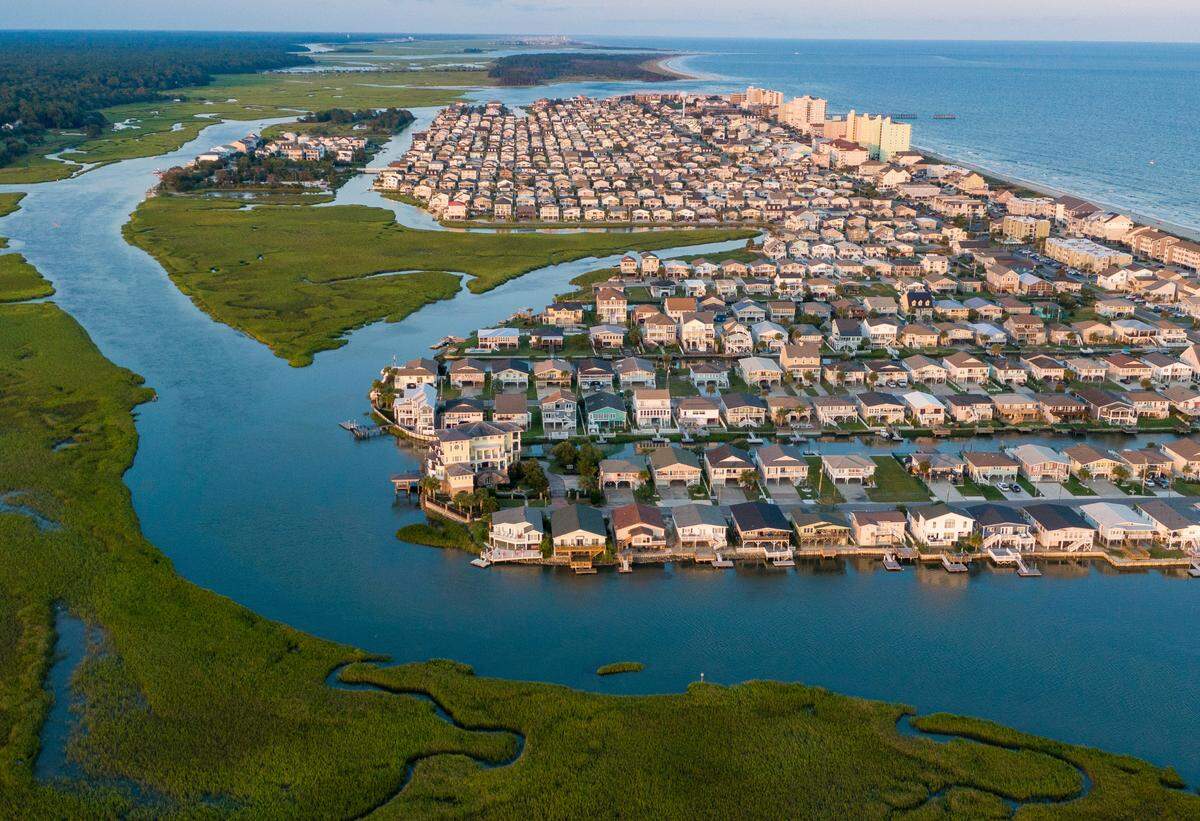
The report is particularly relevant in the Carolinas and Georgia, where billions of dollars in developed property fronts salt marshes, tidal rivers and oceanfront beaches. Nuisance flooding is occurring more often in some spots across the South Atlantic, including tide-driven floods on sunny days.
Rising sea levels are an issue in the Carolinas and Georgia because development continues to occur in some of the most vulnerable areas. Regulators in the three states have issued at least 28,000 permits during the past three decades for construction work in tidelands — a period when sea levels rose at increasing rates, McClatchy reported last year.
In South Carolina, rising seas and flooding are already such a problem that Charleston leaders are seeking ways to protect the historic downtown.
“The water is rising, the clock is ticking, and the future of our city is in the balance,” Charleston Mayor John Tecklenburg said recently.
Homeowners south of Myrtle Beach have installed sandbags and seawalls to protect beach houses that sit precariously close to the ocean, despite state rules against the practice.
And restaurants at Murrells Inlet and near Folly Beach are bracing for the potential loss of salt marshes that provide the seafood they depend on.
Scientists say there is little that can stop sea level rise, but the amount could be slowed with aggressive action to curb greenhouse gases. Critics also say local and state governments should take steps to limit additional development in the most vulnerable areas. But in South Carolina, efforts have been underway in recent years to scale back the state’s long-term strategy of retreat from the sea.
How flooding will shift
In a summary of the study, NOAA said sea-level rise will create a profound shift in coastal flooding during the next 30 years as it causes tides and storm surges to go farther inland. Sea level rise threatens marsh systems and could spread toxic microbes farther up rivers, other research shows.
By 2050, damaging floods are expected to be an increasing problem. Moderate flooding will occur more frequently by then than minor flooding, according to NOAA.
By the end of the century, sea levels are expected to be at least 2 feet higher in the U.S. because of greenhouse gas pollution that already has affected the planet, the study said. But the increase could be 3.5 feet to 7 feet by the end of the century if greenhouse gas emissions are not curbed, according to the study.
“Higher global temperatures increase the chances of higher sea level by the end of the century and beyond,’’ the study said.
Staff Writer Caitlin Byrd contributed to this story.
This story was originally published February 16, 2022 at 6:00 AM.