SC agency targeted for failure to stop slime-killing chemical in drinking water
Upon learning they had been exposed for a decade to an unapproved chemical in their drinking water, many residents of a small South Carolina community were frightened about how that might have affected their health.
The S.C. Department of Health and Environmental Control, which is charged with protecting state drinking water supplies, had not stopped the city of Denmark from using the unauthorized chemical.
That caused federal regulators to step in, and the city was ordered to quit injecting the chemical into a public drinking water well.
Since that time in 2018, lawyers for a non-profit legal service have developed a plan they hope will ensure problems like the one in Denmark never happen again.
This week, the South Carolina Environmental Law Project filed a legal petition with DHEC to ban the use of unapproved insecticides and fungicides in drinking water that aren’t authorized by the U.S. Environmental Protection Agency. That includes HaloSan, the slime-killing chemical used by Denmark for a decade.
The petition forces DHEC to respond, and is a potential legal weapon to sue the department if the agency doesn’t do so. The agency must say within 30 days whether it will begin developing tougher rules, according to the law project. Attorneys say DHEC hasn’t done enough to protect drinking water in small communities.
“If this petition is granted, the department will be taking steps to ensure that South Carolinians’ drinking water is not treated with harmful and unapproved chemicals,’’ the request to DHEC says.
This week’s petition is part of a sweeping effort by the law project to protect drinking water in rural and underserved communities by enacting tougher state standards. The petition also includes a request for DHEC to:
- Tighten lead contamination rules to mirror changes in federal regulation. The law project found that 48 small water systems in South Carolina have exceeded a federal safe drinking water limit for lead since 2015. Those findings are in line with statistics revealed by The State newspaper in its “Tainted Water” series in 2019. Lead is a powerful toxin that is especially dangerous to young children who ingest it in water or food.
- Establish rules to prevent industrial sludge that contains certain toxins from being spread on agricultural fields atop groundwater that supplies private wells. This has caused problems in some communities in eastern South Carolina, where industrial sludge contaminated with a class of chemicals known as PFAS was put on farm fields. In Darlington County, more than four dozen wells near sludge disposal sites are polluted, The State reported in November. PFAS have been tied to cancer and other ailments.
- Improve inspection and cleaning requirements for tanks that hold drinking water. South Carolina needs rules that require regular looks at the interior of tanks to make sure they are free of grit, sediment and dead insects, the petition says. A tank in the town of Summerton had not been cleaned in years, according to the petition and the Charleston newspaper, The Post and Courier.
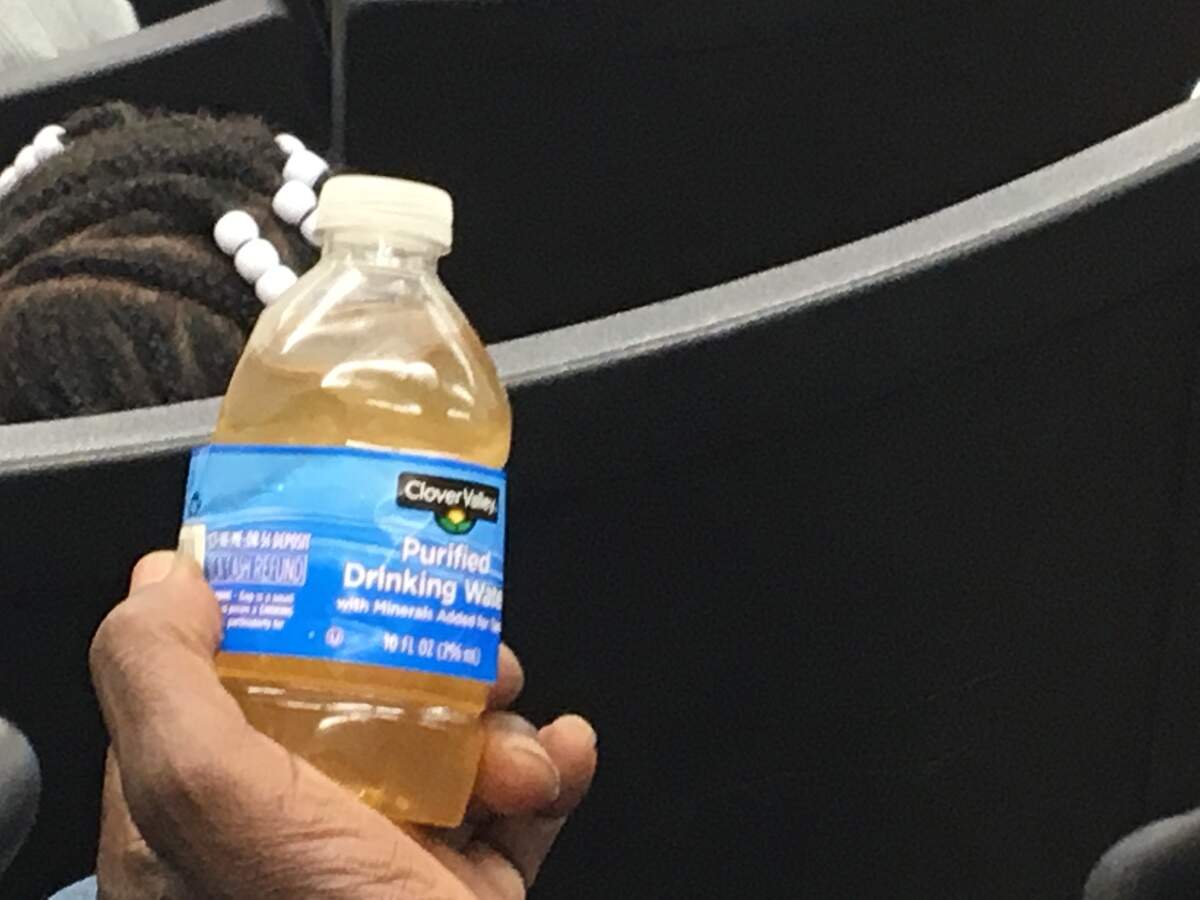
In Denmark, the issue centers around the city’s efforts to eliminate slime that forms inside public drinking water wells. DHEC signed off on the use of HaloSan after the chemical received good marks from the National Sanitation Foundation, an independent group that offers certifications. But EPA authorization was never obtained.
So far, it’s unknown if HaloSan — once manufactured in the Midlands — has affected anyone’s health in Denmark or in a handful of other communities known to have used the chemical in South Carolina drinking water.
But the law project’s legal filing notes that North Carolina regulators banned the use of Halosan in private wells. There are concerns that the chemical can lead to the buildup of pollutants that could make people sick.
Some of these pollutants, known as disinfection byproducts, have been linked to illnesses over the long-term, including certain types of cancer. HaloSan also has been linked to skin rashes and eye irritation. The Halosan system relies on a chemical used as a disinfectant to treat pools and spas, as opposed to drinking water, The State has previously reported.
Officials with DHEC said Tuesday night there already are regulations governing the sale or use of chemicals not approved under the federal insecticide, fungicide and rodenticide law. The agency also now requires those applying for the use of such chemicals for disinfection to certify the chemicals are registered under the federal law.
Agency spokeswoman Laura Renwick said HaloSan is no longer available in South Carolina.
But Letitia Dowling, who founded the local citizens group Denmark Cares, said more needs to be done. While DHEC has taken steps internally to address the use of chemicals such as HaloSan, the agency needs clearer rules. Internal policies don’t have the same force as a law or regulation, she said.
“This rule is important so that it becomes an official policy and accountability measure,’’ Dowling said.
Deanna Miller Berry, an outspoken advocate for better drinking water in Denmark, said the community’s water problems aren’t resolved and more attention is needed. Denmark is a city of about 3,000 residents about an hour south of Columbia.
“I’m 100 percent supportive of this petition,’’ she said.
While DHEC and the town of Denmark have insisted that the water is safe to drink, Berry said she remains hesitant. She said she’s also concerned about other communities that used HaloSan in drinking water.
The agency has previously said a handful of community water systems, in addition to Denmark, used HaloSan. It is unknown how widespread the use of HaloSan has been in private wells.
“They’re just as vulnerable as Denmark,’’ she said.

Denmark’s struggles, which drew national attention and resulted in lawsuits, typify many of the problem suffered in small, out-of-the way water systems across South Carolina. Many small systems are aging, have limited budgets and few experienced water treatment personnel. But they’re still charged with providing clean water.
A parade of Democratic candidates referenced Denmark and small town drinking water woes during the 2020 presidential campaign. Many called for improvements to the nation’s drinking water infrastructure. Hundreds of millions of dollars have since been allocated for drinking water improvements under President Joe Biden, who also noted South Carolina’s plight.
Unlike many big systems, these smaller systems have difficulty meeting basic standards, The State reported in its 2019 “Tainted Water” series. Among other things, the series found that more than 200 small water systems serving 90,000 people failed annual inspections.
With an influx of federal money coming to South Carolina to fix water problems, the law project says the state is in better position to pay for tougher rules and improvements to small water systems.
“The petitioners hope that DHEC will seize this opportunity to improve drinking water in rural areas and throughout the State,’’ environmental law project attorney Ben Cunningham said. “South Carolinians should be provided with drinking water that is consistently clean no matter where they live and granting this petition will move us closer to that goal.’’
This story was originally published March 22, 2022 at 3:18 PM.