Effort to break up DHEC fails as SC legislative session ends. Here’s why.
Efforts to break up South Carolina’s health and environmental agency fell apart this week, leaving the 49-year-old department intact as one of the few government agencies of its kind in the country.
In the final week of the Legislative session, the House of Representatives failed to pass a bill that would have split the sprawling Department of Health and Environmental Control into separate free-standing agencies as part of an effort to revamp how services that touch virtually every South Carolinian are provided.
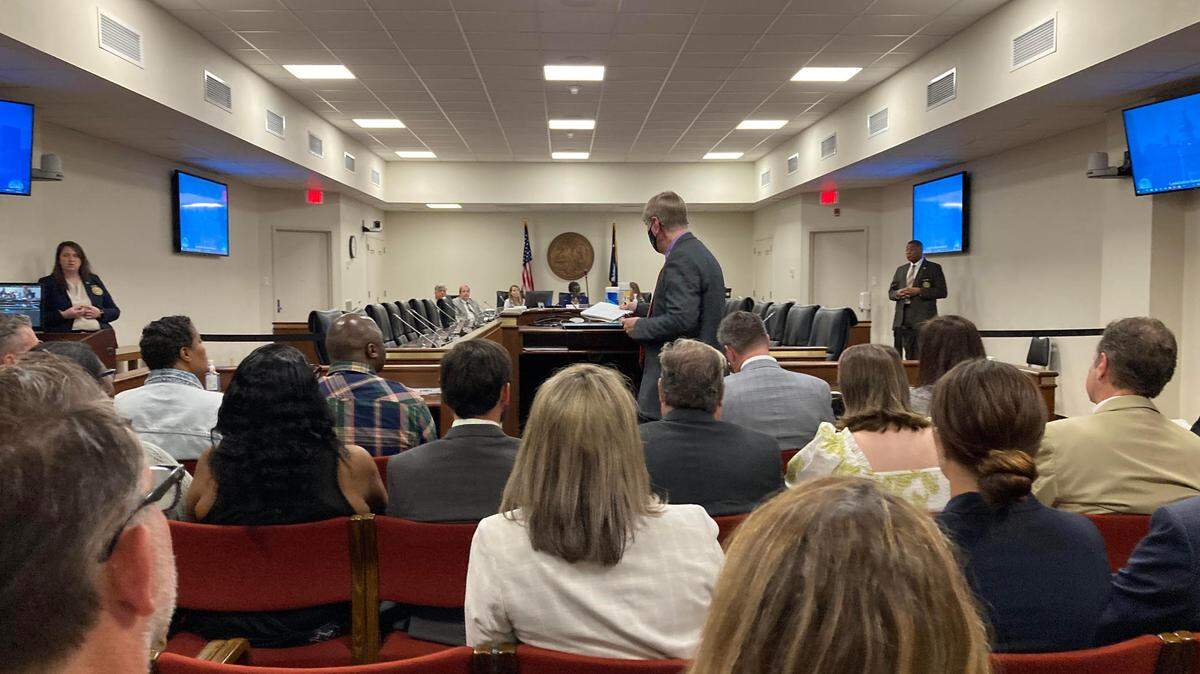
Proposed 11th-hour changes to the bill kept the House from voting on the measure to disband DHEC, said Rep. Gilda Cobb-Hunter, an Orangeburg Democrat involved in negotiations. That kept the bill from being returned to the Senate for final action. The Senate previously had approved the measure.
“That was just not acceptable to try and amend an already complicated bill, with another complex issue, neither of which had been studied enough for us to make an informed decision,’’ Cobb-Hunter said. “We didn’t vote on it because objections were raised.’’
Cobb-Hunter, who had worked on a compromise that would have required more study during the next two years, said the late amendments focused on whether to change the state’s certificate of need requirement for hospitals.
Sen. Harvey Peeler, the bill’s chief proponent, said he was disappointed but still favors breaking up DHEC. Peeler, R-Cherokee, said he plans to discuss the next step with incoming House Speaker Murrell Smith, R-Sumter. He said DHEC’s environmental division sometimes suffers in such a big agency..
Dissolving DHEC and creating separate environmental and health agencies has been a point of discussion for years because many say the department is stretched too thin.
The agency has through the years failed to act aggressively at times on a range of health and environmental issues, as documented by The State and other media. Splitting DHEC could make the two new agencies more focused and result in improved services, supporters of the breakup say.
But the effort to dissolve DHEC ran into trouble two weeks ago after mental health advocates packed a House hearing to complain that the measure was ill-conceived and moving too fast. Conservationists also raised concerns about whether a separate environment agency would provide the same level of protection for the environment. The cost of the breakup, estimated to be initially $18 million, also raised concerns.
The bill to split DHEC had sailed through the Senate this year without hearings that allowed the general public to speak.
The new free-standing health department to be created by the Peeler bill would not only have included DHEC’s health division but it would have absorbed the state Department of Mental Health, another agency, into a new so-called “mega’’ health department. A new environmental agency, created from DHEC’s environment division, would have also included some water research duties of the S.C. Department of Natural Resources, sparking concerns about a lack of checks and balances.
Peeler said criticism by mental health advocates, as well as what he characterized as a “turf battle’’ between the S.C. Farm Bureau and the Department of Natural Resources, hurt the bill. The Farm Bureau, which represents big agricultural interests that need permits from DHEC, favored folding some of the DNR’s water research functions into the proposed environmental agency. The influential farm organization has said disputes between the DNR and DHEC were a concern.
Cobb-Hunter and Sen. Brad Hutto, also an Orangeburg Democrat, said they favor studying the breakup between now and the next Legislative session that begins in January 2023. Hutto said he thought the Senate had robust discussions of the bill, but understands the complaints about the lack of public comments.
“I think we will go back and retool this thing,’’ Hutto said, noting that “we should take into account’’ recent criticism of the bill.
DHEC, founded in 1973, is one of South Carolina’s largest agencies with more than 3,000 workers. It affects most state residents because of DHEC’s broad range of responsibilities.
Among other things, the agency is in charge of public health, including leading efforts against disease outbreaks such as COVIID 19, issuing birth certificates and regulating hospital expansions. But it also monitors rivers and ocean beaches for contamination, issues pollution discharge permits for industries, checks air quality, oversees coastal development, permits industrial-scale farms and regulates landfills.
In addition to South Carolina, only a handful of states have combined environmental and health departments, including Colorado and Kansas.
While the charge to break up DHEC was not a new one, the measure made it farther this year than some efforts in past years. Had the bill passed, it would have marked the biggest government restructuring in South Carolina since the early 1990s.
Peeler, the powerful lawmaker from Cherokee County, had championed the bill as a way to improve government services and provide stability. DHEC has been through multiple directors in recent years, which is a concern. he said. Peeler, a dairyman whose family is widely known in South Carolina, said separate agencies would provide more focus to environmental and health issues,
This story has been updated with additional comments from Sen. Harvey Peeler.
This story was originally published May 12, 2022 at 5:13 PM.