Homeowners’ lawyers helped draft research pitch that left sandbags on affluent SC beach
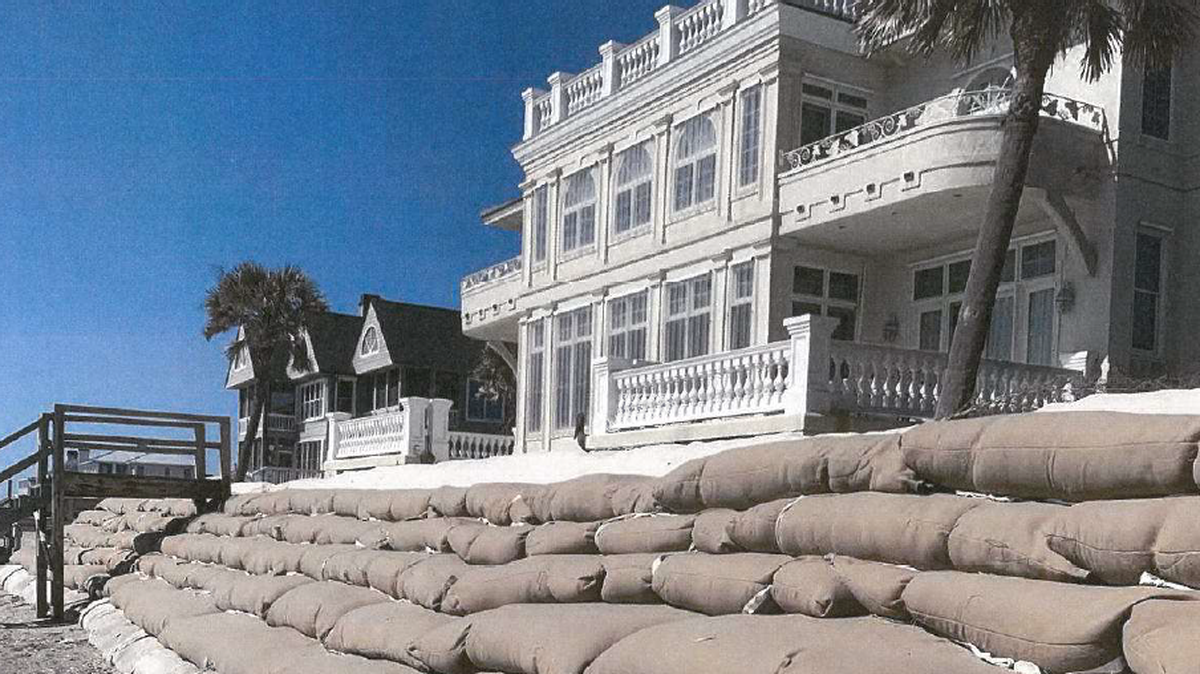
Earlier this year, attorneys for some oceanfront homeowners south of Myrtle Beach convinced a state board to let their clients keep a wall of sandbags the property owners had been accused of installing illegally to protect their houses from the sea.
The attorneys touted a Coastal Carolina University professor’s proposed scientific research as a key reason for keeping the sandbags, even though sandbags can worsen beach erosion. Had the state Department of Health and Environmental Control board refused to go along, the Debordieu homeowners could have been fined and forced to remove the wall of sandbags.
But while lawyers pitched the research plan as a way for well-regarded scientist Paul Gayes to learn about beach protection efforts, emails obtained recently by The State show that the attorneys helped Gayes draft the proposal that got their clients out of trouble.
A string of emails shows that attorneys for landowners facing state enforcement action edited parts of the scientific research plan Gayes wrote for DHEC’s consideration. During a 22-day period in September 2021, property owners’ lawyer Joe Owens suggested edits at least three separate times, the emails show.
One Sept. 24, 2021, email from Owens said he was providing “red-lined comments’’ to the latest draft of the research plan.
Another email, written by Owens on Sept. 8, suggested emphasizing the positives of sandbags the property owners had installed, as compared to traditional sandbags. And Owens said in a Sept. 2, 2021, email that Gayes should show the differences between the two types of sandbags in the study proposal to DHEC.
“Once we are satisfied with the language, I believe this would be formatted as a draft study proposal and submitted to the agency as a proposed study,’’ Owens said in his Sept. 2 email to Gayes.
In addition to the editing help from lawyers, an owners’ representative initiated a discussion with Gayes in July 2021 about conducting the new study, according to emails The State obtained.
In an interview with The State, Gayes said he was glad to have the editing help and was happy to work on the study because it was a chance to learn. He wasn’t paid for the work and has no particular interest in the sandbags, except that they presented a research opportunity, he said. He is conducting a wider study of coastal erosion issues and the Debordieu work fits into that, he said.
“It’s a very good case study for a lot of things,’’ Gayes said in an interview with The State.
Still, critics say the scientific argument that the sandbags should remain doesn’t wash. They say studying how a wall of sandbags works will do little to advance science because so much is known about sandbags on the beach. The proposed study’s primary effect was to get property owners off the hook, critics say.
“This is nothing more than a loophole to evade enforcement,’’ said Emily Cedzo, who is following the issue for the S.C. Coastal Conservation League.
The Debordieu case is significant statewide because it indicates how DHEC intends to oversee coastal development at a time of rising sea levels. Environmentalists say the board’s January verdict in favor of the Debordieu property owners could lead to similar decisions favoring private development over protection of the public beach..
A key issue in the dispute is the future of South Carolina’s beaches. Some fear that if more sandbags, seawalls and similar efforts are allowed, the state’s beaches will erode faster, eventually limiting the public’s access.
Sandbags, like concrete and wooden seawalls, protect oceanfront property from waves and flooding. But the state has limitations on the use of sandbags because they can worsen beach erosion when hit by waves. State coastal management rules say sandbags must be removed from the beach after an immediate storm threat subsides.
Sandbags and seawalls have been an issue through the years at Debordieu, an affluent gated community south of Myrtle Beach, because of the high erosion on its lower end. One section of the beach has a sagging seawall. Efforts to change state law to allow reconstruction of the seawall have failed.
The latest dispute at Debordieu over the sandbags was discussed in an administrative law court Monday in Columbia. Lawyers representing the property owners are seeking to kill a legal challenge from environmentalists who want the sandbags removed. The judge, Robert Reibold, did not rule Monday.
(Reibold disclosed during the hearing that he had written a book with one of the attorneys for the property owners, Randy Lowell, for the S.C. Bar Association. Reibold said he did not believe he had a conflict of interest, but asked if there were any concerns. Attorneys for conservation groups fighting the sandbags did not raise objections.)
Sought after scientist
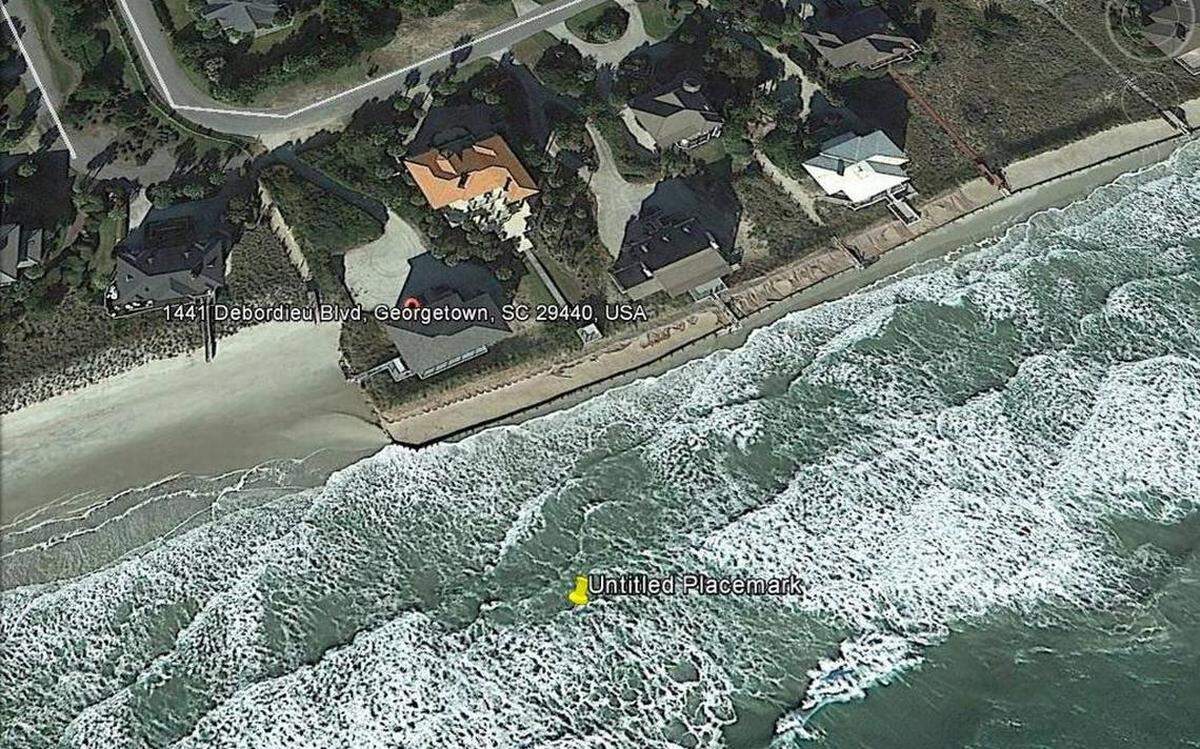
In the recent Debordieu case, a handful of people who own four homes on the Georgetown County island’s battered southern end installed sandbag walls in 2020 without state permission. The sandbag walls, large structures made from a geotextile fabric, were said to be more effective than traditional sandbags at protecting property from the sea.
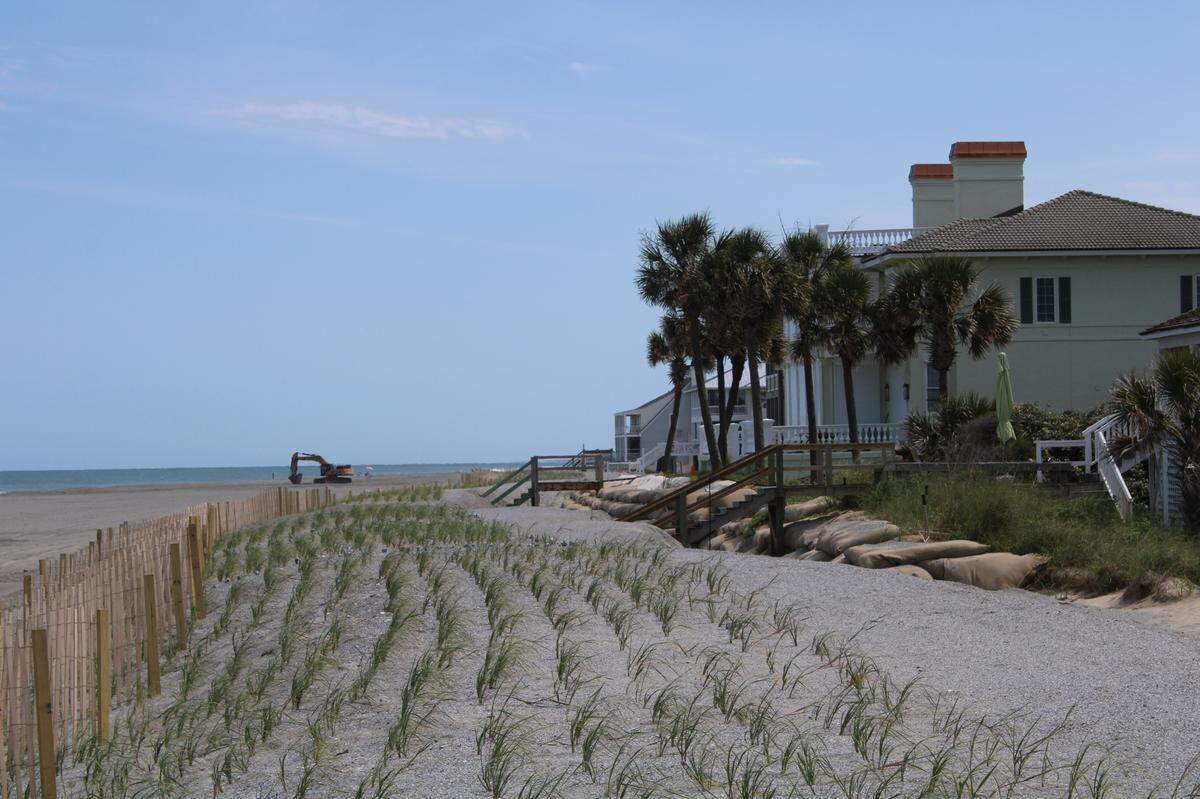
The property owners, who separately purchased the four Debordieu homes in the past decade, have said they want to keep the sandbag walls and study how effective the sandbags are over time. Their plan is to bury them in sand as part of a beach renourishment project that recently widened the seashore at Debordieu. The hard sandbag walls would effectively create a row of dunes to protect the homes..
When the beach erodes again, the idea is to see how sandbags hold up — a study proposal panned by some coastal regulators, environmentalists and geologists as doing little to advance scientific knowledge.
In a legal challenge to the DHEC board’s decision earlier this year, the S.C. Environmental Law Project said the scientific argument “is an attempt by the private property owners to resolve enforcement issues by enlisting the assistance of a public university to pursue a research exception to keep the sandbags in place.’’
.png "installed bags 3 photo (2).png")
Records show significant interest from the oceanfront property owners in involving Gayes, whose participation in studying the sandbags could give credence to their claim that DHEC should let them keep the walls in the name of science.
Homeowners, who already had hired an engineer, were hopeful that Coastal Carolina University “would be interested in evaluating/studying the project, and potentially submitting a report and/or general findings to DHEC and the property owners,’’ a July 21, 2021, email to Gayes said.
Gayes liked the idea, saying in an Aug 3, 2021, email that he planned “to flesh out a draft proposal tomorrow, largely on the lines we chatted about earlier this week.’’
Property owners’ lawyer Owens declined comment when asked about the participation of lawyers or property owners in the Gayes research proposal. But during Monday’s hearing in Columbia, Owens downplayed the issue.
“To be honest, I don’t think it matters one bit whether they provided comments to the research proposal or not,’’ Owens said. “Very limited comments I might add.’’
In addition to helping with the research proposal, Gayes had asked to have property owners meet with him and a class he was teaching at Debordieu Beach. A property owners’ representative invited him to meet with one of the property owners, Price Sloan, at Sloan’s beach house behind the sagging seawall, according to the email chain obtained by The State.
Sloan bought the towering beach house on Debordieu’s erosion-scarred south end for about $2 million in 2014. Records show the sandbag wall was established in front of his home two years ago.
Gayes told The State he doesn’t remember much about any meeting with Sloan.
“A house on the very south end is where we first met with everybody,’’ Gayes said. “I actually brought a class down for that. For students it was an opportunity.. If that’s the name of the gentleman, that could be. I don’t know.’’
Unpaid research
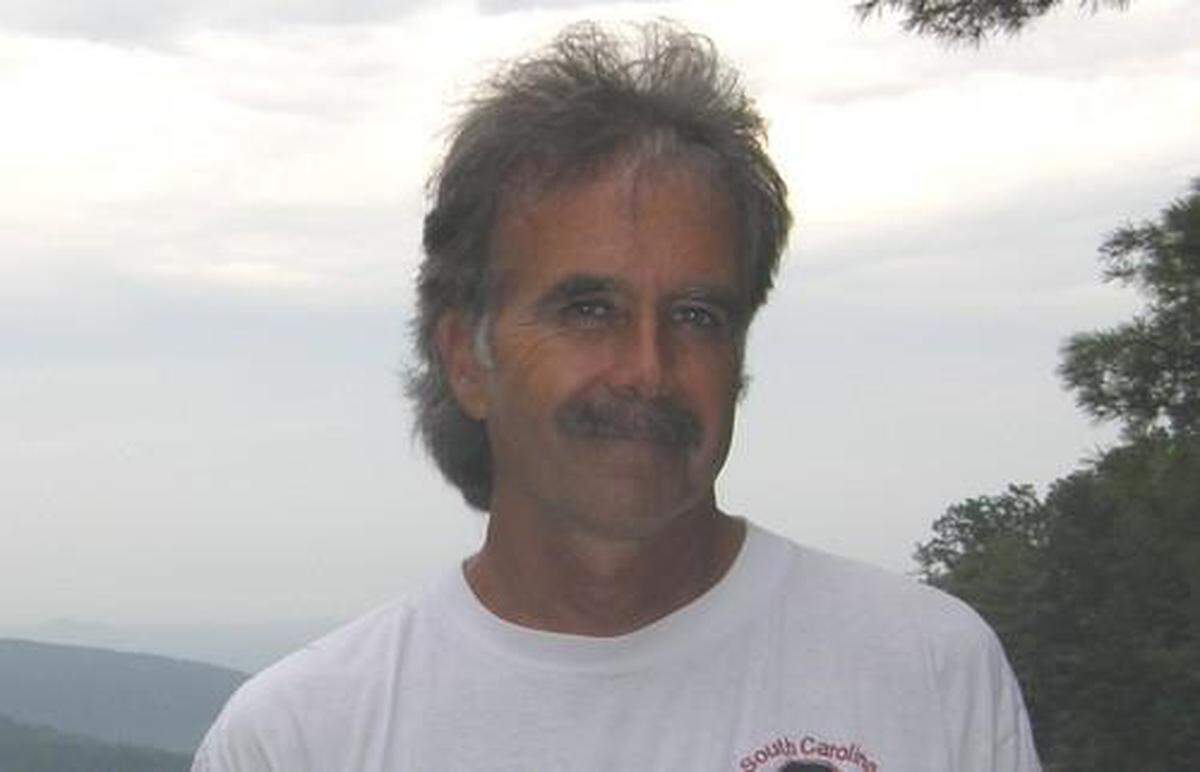
Gayes, a mild-mannered researcher who has served on multiple state science panels, has developed a solid reputation through the years for his work on marine issues on South Carolina’s northern coast.
A researcher at Coastal Carolina University for more than three decades, he is director of the university’s Burroughs and Chapin Center for Marine and Wetland Studies. He has studied coastal responses to sea level rise, offshore wind energy and beach renourishment, as well as ecological issues at Waties Island, an undeveloped land formation north of North Myrtle Beach.
Gayes, who has garnered some $6 million in research grants from a variety of government agencies, told The State there was nothing unusual about the research proposal. He said he appreciated the editing help.
Gayes also said he was not paid to develop the study at Debordieu. Instead, he viewed the effort as an opportunity to learn.
“We have to work within the world we live in, and so this was the experimental opportunity that was presented,’’ he told The State.
Gayes said his interest was on how the sandbags would perform as part of a larger look at coastal erosion issues that is underway in South Carolina. The work also includes looks at places like North Myrtle Beach and Garden City.
Studying the sandbags at Debordieu is important because the sea level is rising and the state is increasingly looking at ways to deal with the ocean under new coastal management policies put in place by the Legislature, he said. Lawmakers changed state coastal law several years ago from emphasizing a gradual “retreat’’ of development from the beach to one of preserving the beach.
“You can equate these problems at Debordieu to the entire state: the entire state is facing this problem’’ of erosion, he said. “This is a lens on a particularly, further-along-in-the process (issue) that everyone is facing.”
Gayes said the research at Debordieu and other beaches is legitimate and worthwhile, as he told the DHEC board last winter.
“I take my research rather seriously, and I’ve thought about these things for a long time,’’ Gayes said at the January DHEC board meeting. “I don’t do things out of the blue.’’
Criticism of his work studying the sandbag wall “is not warranted.,’’ he told The State last week.
Scientific plan sways board
Still, the emails obtained by The State provide the clearest indication to date that Gayes’ research proposal was done with help from Debordieu property owners’ lawyers..
Gayes’ proposal, finalized last fall, was key evidence in convincing the Department of Health and Environmental Control board to approve leaving the sandbags in place, even though staff members advised against it.
After hearing arguments Jan. 13 from Debordieu lawyers in favor of keeping the sandbag walls in place for a scientific study, DHEC’s politically appointed board voted 3-2 to overrule staff. The department’s professional staff members had said the scientific research plan was unconvincing, and leaving the sandbags on the beach at Debordieu was not allowed under state law.
Among the lawyers arguing for the walls to stay in place were Owens and state Sen. Stephen Goldfinch, a Republican who represents coastal areas south of Myrtle Beach.
Most agency board members have shied away from discussing their January decision. But DHEC board member Rick Lee, who voted to let the sandbag walls remain, said he didn’t see “any negative’’ in keeping the walls in place.
“It is a part of the law that allows a study to be done,’’ Lee said. “There’s nothing illegal or out-of-order for them to apply to do that study. And who knows? They may come up with some new innovative way to protect the shoreline. We certainly can all hope for that. It’s a worthwhile endeavor.’’
South Carolina law allows for the use of pilot projects to deal with erosion on the beach. The law says the beach projects are allowed if it’s reasonable to expect they will be successful in addressing erosion. That section of the law does not specifically mention sandbags.
Despite arguments in favor of granting a research exemption, leaving the sandbags is not innovative or new technology, Western Carolina University coastal geologist Rob Young told The State last year. Gayes disputed that, saying how the sandbags react to the ocean’s waves could help the state with future coastal policy decisions.
The S.C. Environmental Law Project’s Leslie Lenhardt, an attorney who is challenging the DHEC board’s approval of the sandbag walls, said she’s convinced the lawyers and their property owner clients at Debordieu relied heavily on Gayes’ reputation. But the lawyers and property owners weren’t as interested in science as in keeping the protective sandbags in place, she said.
“They were driving the train,’’ Lenhardt told The State. “It’s very clear that is what was happening.’’
Lenhardt, who represents the S.C. Coastal Conservation League, said everyone in South Carolina should pay attention to the case because it involves threats to the public beach from sandbags that protect private property. The more hard walls and sandbags there are, the more erosion occurs and the less dry sandy beach there is to walk on, she said.
“If people are going to be able to use these loopholes to do whatever they want to do on the beach to protect houses, we’re going to end up with an armored beach,’’ she said. “What you are going to have is a wall and the ocean in front of private homes, but there isn’t going to be any beach for the public to enjoy.’’
This story has been updated with disclosure remarks from the administrative law judge.
This story was originally published July 25, 2022 at 2:15 PM.