New artificial reefs may be the answer to keeping your favorite SC beach from disappearing
As rising sea levels encroach on South Carolina’s coastal cities and towns, researchers are putting stock in artificial reefs that they hope will slow the erosion that’s chewing away at many South Carolina beaches.
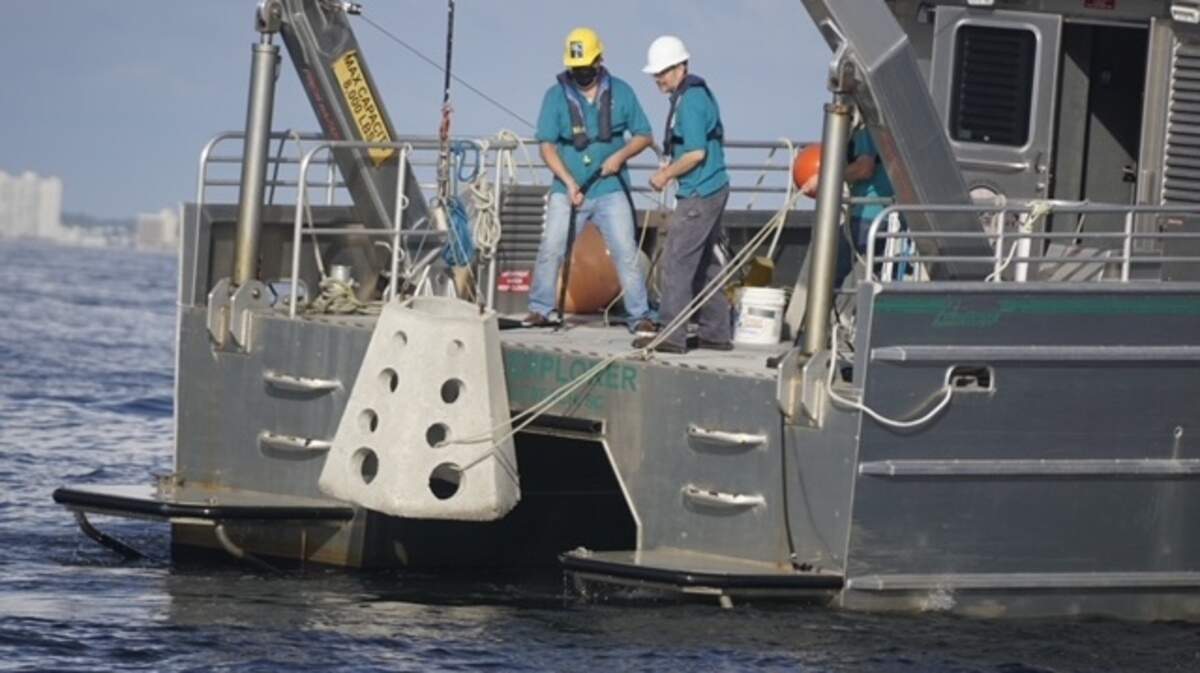
A team from Coastal Carolina University has developed and is deploying artificial reefs at four locations — Charleston, Murrells Inlet, Georgetown and North Myrtle Beach — after receiving approval from the S.C. Department of Natural Resources.
Scared about your home or favorite beach sinking? The SmartReef may be able to combat that.
These reefs are supposed to better protect beaches from erosion by blocking currents that chew away at beaches. In addition to helping curb beach erosion, the reefs contain sensors that will provide continuous data about how the ocean influences weather and flooding, researchers at Coastal Carolina say.
While some scientists have questioned the efficacy of installing artificial reefs, project leader Tom Mullikin says the effort is worth a try.
Other artificial reefs have been sunk off the coast in the past to attract fish, but Mullikin’s reefs are different because they will bolster the coast and provide data. It’s the first time anything like this has been done in South Carolina, he said.
Mullikin, a Camden resident, heads the South Carolina Floodwater Commission, an organization established by Gov. Henry McMaster to address flooding as storms intensify and sea levels rise due to climate change. Mullikin is also a coastal science research professor at Coastal Carolina University.
One of the commission’s key recommendations was to develop several artificial reefs in areas experiencing shoreline erosion. If the reefs prove successful, they could be developed along other parts of the coast, according to the S.C. Floodwater Commission’s 2020 floodwater report said.
The SmartReef project will be ongoing, building on the current sites and filing permits for additional locations. Mullikin also plans to add to the reefs by planting indigenous grasses.
“(This will be) an ongoing project that we’ll do year after year until we have a living reef from North Carolina to Georgia,” Mullikin said. “The governor is very serious about creating as much natural resiliency as we can to address the manifestations of amplified, global climate changes.”
How it works
The team of researchers and scientists have taken in a lot of sonar imagery to create “very high-resolution representations of the geometry and the morphology of our reefs,” according to Paul Gayes, a professor of marine science at Coastal Carolina.
With this data, engineers use a three-dimensional SONET printer to print out blocks of concrete that imitate natural reefs. The concrete blocks weigh about 80 pounds and act as anchors for the SOFAR Spotter Buoys.
A smart mooring line connects pressure sensors attached to the artificial reefs to spotter buoys floating in the waves. The smart mooring line provides an outlet to expand sensing capabilities.
The buoys measure wave motions and position tracking and can detect hypoxia events, which create dead zones in the ocean, killing marine life. The buoys may be able to deflect these events from occurring.
The spotter buoys relay data instantly to a data portal, a game changer in marine science.
As SmartReef systems multiply along the coast, researchers can access previously unavailable data about turbidity of waves and oxygen levels in the water because of how often pressures change.
This data, as it accumulates, will help scientists decipher if human behavior is the main cause of pollution or natural causes.
Gayes hopes that the SmartReef program will be able to deploy smaller, cheaper sensors soon. Right now, having to take a ship out to sea and hire divers to place the reef materials is limiting.
Force Blue, an nonprofit organization, is in charge of leading divers for the excursion. In addition to retired Navy Seals from Force Blue, several recreational divers and citizen scientists will aid in the SmartReef placement.
Jim Ritterhoff, the executive director of Force Blue, became involved with an organization that promotes environmental conservation, South Carolina 7, after Mullikin joined its board of directors.
“Just the mission of getting South Carolinians to appreciate the natural beauty of the state and want to work to preserve it, I think that’s very much in line with what we’re all about at Force Blue,” Ritterhoff said.
Force Blue will have teams of veteran divers at each of the four locations when the SmartReefs are deployed. According to Ritterhoff, the divers will tether smart buoys to the reefs.
The reefs’ projected impacts
Mullikin is excited about the SmartReefs and hopes South Carolina’s ocean ecosystems will be positively impacted.
“We will put ourselves in a position to be able to have better predictions for floods, extreme weather hitting the coast,” Mullikin said.
The SmartReefs may also provide information on reefs’ role in the natural environment and growth of marine life.
Natural reefs reduce the amount of energy in waves by an average of 97%, according to a 2014 study published in the journal “Nature Communications.” SmartReefs are expected to produce the same results, resulting in weaker waves that don’t erode beaches as aggressively.
Gayes is excited about the project and encourages the public to get involved with combating climate change.
“We’ve got to come up together and figure out how to optimize and wisely manage our resources for our economic well being, our environmental and public health well being, and our way of life,” Gayes said.
This story was originally published August 4, 2022 at 5:00 AM.
CORRECTION: This story has been updated to reflect that the S.C. Department of Natural resources gave approval for the artificial reefs. An earlier version of the story was incorrect.