SC woman who endured years of bad drinking water seeks to help ailing Mississippi city
A yearslong ordeal for Karen Irick and her neighbors ended in 2005, when clean drinking water splashed through their pipes and into the kitchen sinks and showers of Franklin Park southeast of Columbia.
Franklin Park had suffered from spotty service and lead-contaminated drinking water for parts of two decades before the state finally fixed the problem.
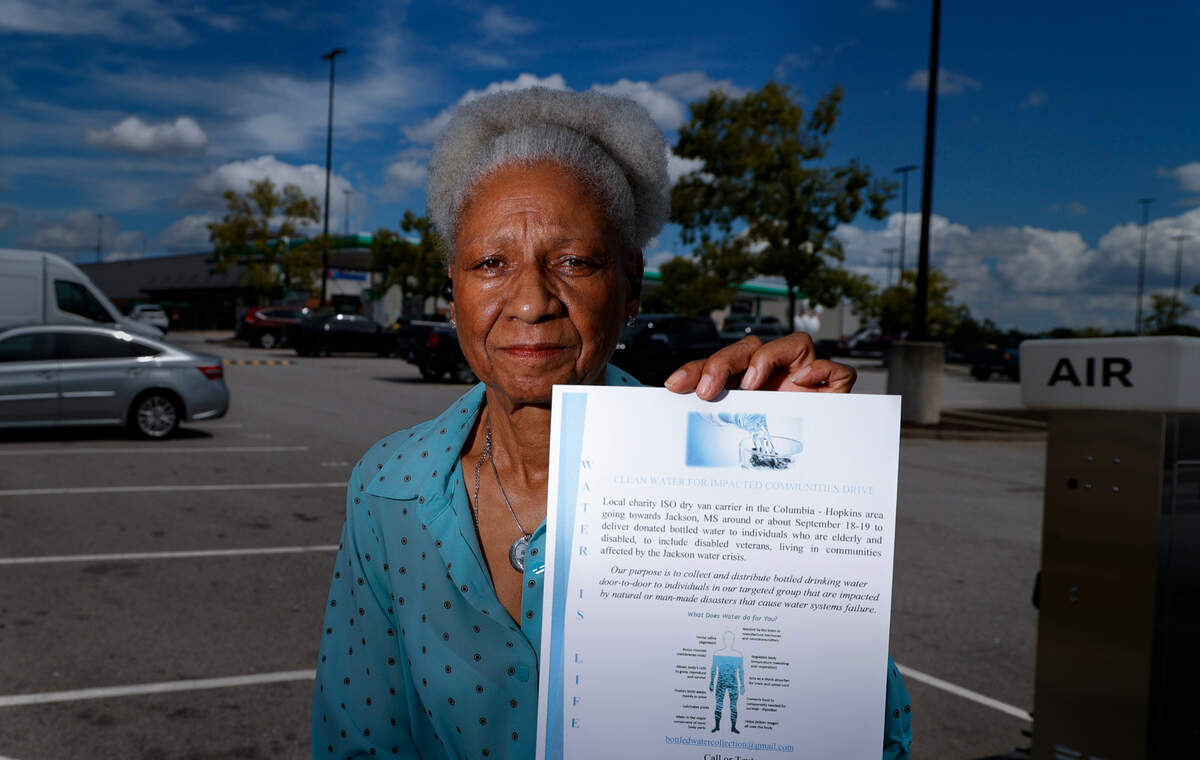
So when Irick, 69, heard about troubles with the Jackson, Miss., water system, she knew first-hand how people felt — and she wanted to help.
Irick formed a charity last week and is trying to collect bottled water from South Carolina residents and Franklin Park neighbors who, like her, suffered from substandard drinking water for years.
Her goal is to gather 4,000 bottles of water and truck them from South Carolina’s capital to the Mississippi capital to distribute directly to elderly and disabled people who can’t get out of their homes.
Irick is talking with officials at local truck stops, retail stores and schools to assist with the effort. In coming weeks, she hopes to ship the water to Mississippi from a central distribution point in the Columbia area.
Irick is glad to help, but sorry she has to.
“It really made me cry when I saw the first news reports about Jackson,’’ Irick said. “It dawned on me that we went through that situation.’’
Jackson, a city comparable in size to Columbia, has been a hot spot lately for drinking water difficulties.
Recent problems at an aging city treatment plant were among the reasons that more than 150,000 residents were without safe water, The New York Times reported.
But problems also occurred at other times. More than 70% of Jackson’s residents were without safe drinking water after a winter storm broke pipes across the city in February 2021, according to the Times.
Dingy water and toxic lead
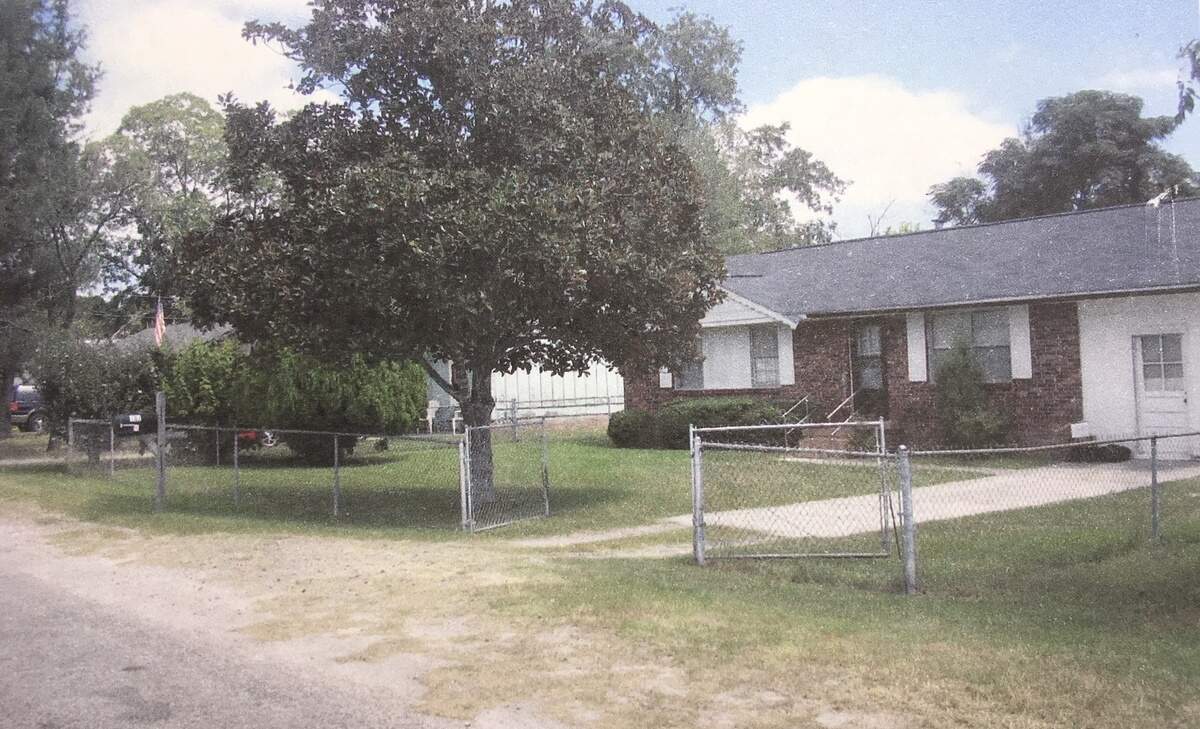
Franklin Park is a small subdivision on the edge of Columbia, composed of ranch-style houses and a smattering of frame homes, many built more than 50 years ago.
When Franklin Park was being developed, it made sense to establish a small water system for the community, rather than rely on wells that were threatened by malfunctioning septic tanks in the spongy, water-logged soil of eastern Richland County.
But within years of the small water system’s installation, it began to sputter. Sometimes, the water was so discolored that laundry came out of the washing machine looking dingy. Other times, the water left blue-green rings on bathtubs.
And that was when the water system actually was working.
More than a few times, neighbors complained that little or nothing flowed from their taps.
On one occasion, residents were left without water over a July Fourth holiday. When a Franklin Park homeowner called the private water company that ran the system, he was treated rudely and told to buy water at a local gas station, the resident told The State in 2005.
But the most serious problem at Franklin Park was lead.
The toxic metal showed up periodically in the drinking water for two decades, exposing unsuspecting residents to a pollutant that can cause learning disabilities in children and high blood pressure and kidney problems in adults.
The State described the lead problems in an investigative series that revealed how South Carolina regulators did little about the threat as the pipes serving Franklin Park began to grow old. Lead inside corroding pipes was flaking into the water and exposing unsuspecting people to the hazardous metal. Some of the Franklin Park residents had higher-than-average levels of lead in their blood, including several children.
Despite that, the problems at Franklin Park had gone unresolved since at least 1985. State regulators failed to convince the neighborhood’s private water company to make repairs, despite knowing that lead was showing up in tap water.
The more Irick learned — after digging through public records and making phone calls to state regulators — the more she became concerned about the threat to her community.
So Irick, a Columbia native and C.A. Johnson High School graduate, launched efforts to get clean drinking water for Franklin Park, the working-class neighborhood where her parents had built a house decades ago.
She organized meetings for neighbors in her yard. She called state regulators to complain. She enlisted the help of politicians, including Joe Neal, a state House member who represented the Franklin Park area at the time.
Then in October 2005, as The State was preparing to publish an in-depth story about Franklin Park’s troubles, the S.C. Department of Health and Environmental Control and Richland County announced plans to treat the water to stop the lead threat.
Within a year, the lead problems had largely cleared up and water outages diminished.
Now, Irick said she feels a calling to assist the people of Jackson, Mississippi.
“The Franklin Park experience is what these folks are going through on a much larger scale,’’ Irick said. “I’m compelled to help them. It’s an assignment for me. It’s a humanitarian effort.’’
Brown water in Mississippi
While Jackson’s problems affect far more people than those in a single community like Franklin Park, both places have suffered from crumbling infrastructure that for years made the drinking water a routine source of concern.
It’s an issue across the country, where many water systems are struggling as infrastructure ages. Small, underfunded and understaffed systems are particularly vulnerable in places like South Carolina. But even cities suffer from broken pipes that sometimes cause boil water advisories.
Linda Carter, an official with the West Jackson Community Development Corp., in Mississippi, said communities from across the South and the nation have shipped bottled water to Jackson to help out.
But every bit is important, and assistance from Irick is welcomed, Carter said. A key concern is that big retailers in Mississippi can’t provide enough bottled water. Some of them are limiting sales of water to any one person or organization, she said.
The people of Jackson “need more’’ bottled water, Carter said. “We didn’t reach everybody we needed to reach. I was so appreciative when she called.’’
Officials in Mississippi announced this week that water pressure had been restored in Jackson, with the anticipation that safe drinking water would soon be available. But that won’t resolve the problems in Mississippi’s capital, officials there say. Jackson’s mayor told ABC News the city’s water supply remains a concern.
Carter said the system often breaks down, causing discoloration and advisories against drinking the water unless it is boiled.
“The color of the water is brown,’’ Carter said. “At my office in Jackson, there’s low pressure.’’
Irick’s efforts, which she took on initially by herself, involved forming a charity through the S.C. Secretary of State’s office and visiting truck stops and convenience stores, asking if she could post fliers in the windows seeking truckers to help haul the water.
Her charity is called the Clean Water for Impacted Communities Drive, according to state and federal records.
She also has spoken with school officials and retail store managers and is awaiting word on whether they will allow parking lots to be used as water drop-of sites. The plan is to bring all the water available to one place, then send it via truck to Jackson later the same day. Irick said she’s still working to find that spot.
The bottled water shipped to Mississippi likely would be distributed to the elderly and the disabled by students from Jackson State University, Carter said.
Irick, a long-time advocate for the disabled who works at the University of South Carolina, said it’s hard to believe small communities like Franklin Park and cities like Jackson, Miss., have struggled for years with the common problem of unsafe drinking water.
But in some ways, it’s no surprise, she said. The government has not historically put enough emphasis — or spent enough money — on the threats of failing drinking water systems, both large and small, she said.
While President Joe Biden has committed billions of dollars to help out, Irick said the government’s priorities still cause her to scratch her head. The United States, for instance, is preparing to launch moon missions, parts of which will include looking for water.
“We spend billions of dollars trying to get to water up there,’’ she said. “We need that for water here.’’
For those interested in helping out, call or text Irick at 803-949-6482 or contact her by email at bottledwatercollection@gmail.com
This story was originally published September 8, 2022 at 9:55 AM.