Two-thirds of waterways tested in SC exceed federal safe drinking water limit
About two-thirds of the rivers, creeks and lakes tested recently in South Carolina are tainted by chemicals at levels that exceed a proposed new federal safe drinking water limit, according to data compiled by state regulators.
The data show that 58 of 88 waterways tested in South Carolina contain levels of “forever chemicals’’ above the U.S. Environmental Protection Agency limit of four parts per trillion for the two most widely known chemicals.
Forever chemicals, which researchers say are widespread in the environment, have been tied to an increased risk of kidney cancer, immune system deficiencies and developmental disabilities in people exposed over time.
Developed in the 1940s, forever chemicals have been used as ingredients in nonstick frying pans, fire-fighting foams, clothing and carpeting because of their durability. Their toxic effects have only in recent years become known widely in the public.
The effect of forever chemicals on rivers, lakes and streams is of concern because many waterways provide drinking water to cities and habitat for fish that people eat. Forever chemicals are formally known as per and polyfluoroalkyl substances, or PFAS. They do not break down easily in the environment.
Last year, the S.C. Department of Health and Environmental Control released initial test data that found some level of forever chemicals in virtually every river, lake and creek it tested. The agency has since conducted more testing.
But DHEC’s test results were released before the EPA drinking water limit was announced in March of this year. A comparison of the river data to the proposed four parts per trillion standard shows that 65% of the waterways exceeded the limit, The State found.
So far, some of the highest readings for either or both of the two major forever chemicals were discovered in small rivers, lakes and streams, including Big Generostee Creek west of Anderson, in the Savannah River basin; Warrior Creek between Columbia and Greenville in the Broad River basin; Lake Conestee , in the Saluda River basin south of Greenville; and Black Creek, in the Pee Dee River basin near Florence.
Levels of PFOA, one of the most widely researched forever chemicals, were 65 times higher than the proposed federal standard at one spot on Big Generostee Creek. That was the highest PFOA level recorded in the state, records show.
But larger rivers also had levels of forever chemicals exceeding the proposed federal standard, including sections of the Waccamaw near Myrtle Beach, the Reedy near Greenville and the Ashley near Charleston.
The Broad and Congaree rivers, which both run through Columbia, collectively had levels about twice the proposed drinking water limit for PFOS, the other major forever chemical that has been studied extensively.
Forever chemicals are an increasing concern nationally. They’ve been found in drinking water systems and rivers across the country, in some cases at levels substantially higher than in South Carolina.
Even so, forever chemicals at any level are of a concern, as was evidenced by the EPA’s proposed strict standard of 4 parts per trillion that would take effect later this year.
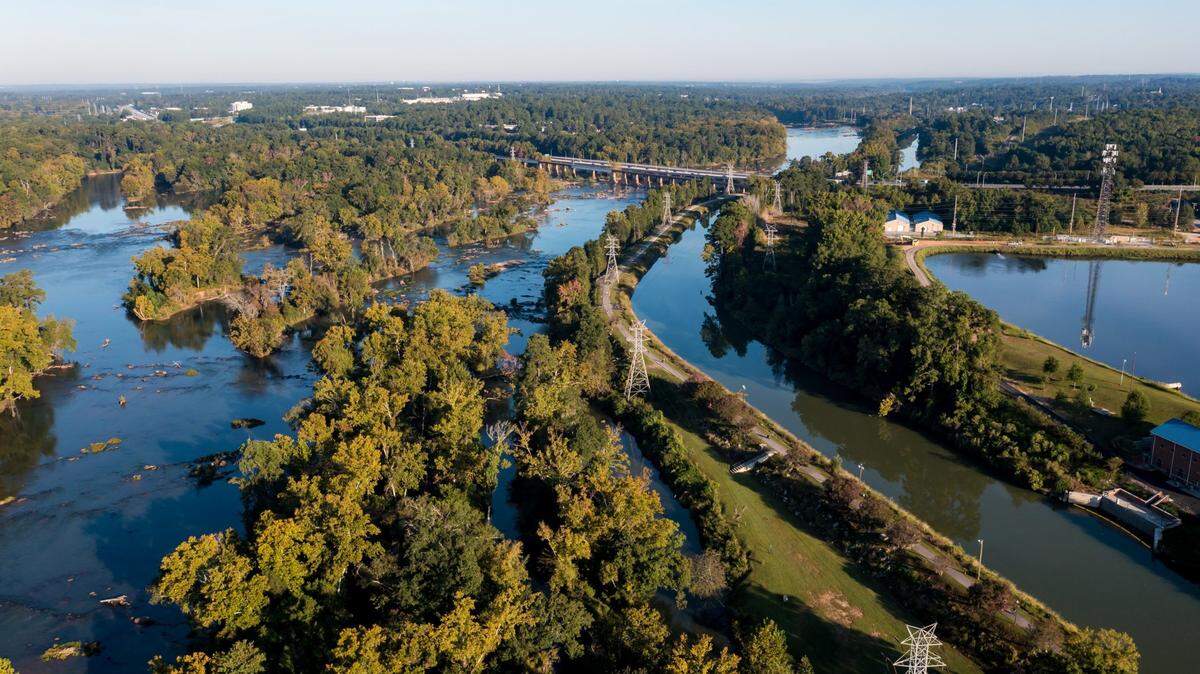
The presence of the chemicals in the Broad River is of note because the city of Columbia relies on the river for drinking water.
Columbia’s canal treatment plant on the Broad River previously has shown levels of forever chemicals slightly above the four parts per trillion standard. A DHEC sampling station in the Broad River adjacent to the canal showed levels of both PFOA and PFOS of more than seven parts per trillion.
Unless pollution sources can be stopped, the city faces a cost of $150 million to $200 million to upgrade its treatment plant to filter out forever chemicals in one of the state’s largest water systems.
“There’s a lot of interest in the data we’re seeing in our ambient surface water project, because some drinking water sources come from our lakes, streams and reservoirs,’’ DHEC water bureau chief Jennifer Hughes said during a media briefing this week.
While the federal standard, if finalized, will apply specifically to drinking water plants, instead of rivers, it’s fair to compare the proposed standard to rivers because it gives insight into how much PFAS pollution is headed toward those plants, said Bill Stangler, the riverkeeper for the Saluda, Broad and Congaree.
He said elevated PFAS levels in rivers are “going to be an issue’’ for drinking water systems, requiring specialized treatment.
The forever chemicals found in state waterways could help regulators figure out where the pollution is coming from and whether rivers can be cleaned up so that the chemicals don’t flow into public drinking water plants.
Many water treatment plant operators are hoping some of the forever chemical contamination can be stopped, although it will be difficult to rid rivers of all of the chemicals because they don’t break down easily in the environment.
Myra Reece, who heads DHEC’s environmental division, said specific rivers and streams that have high levels can give the agency clues about whether “there is something going on there that is very localized. And that’s when we really drill down to what are some potential sources.’’
Possible sources for forever chemical pollution are old industrial plants, wastewater discharges and areas where waste material used as fertilizer has been applied to the land.
In addition to water testing, DHEC has checked public drinking water systems across the state, as well as collected fish, crab and oyster tissue for the presence of PFAS.
The tissue data has not been released yet, but the department previously has reported that more than 60 water systems — including those in Columbia, Cayce and West Columbia — have shown forever chemical pollution above the proposed federal limit.
This story was originally published April 21, 2023 at 5:30 AM.