Lawsuit accuses state agency of failing to protect rivers as drought grips SC
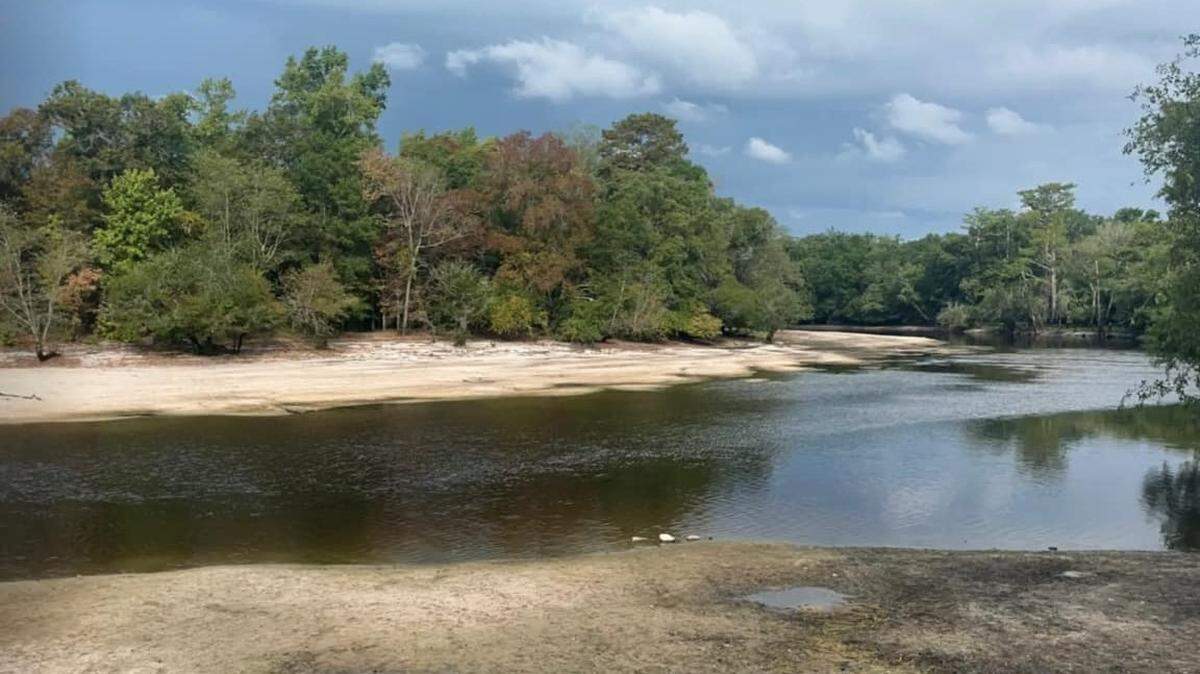
As dry weather lowers river levels across the state, environmentalists are accusing South Carolina of failing to prevent what could become a catastrophic scenario: rivers being completely drained by industrial scale farms.
The Southern Environmental Law Center filed a lawsuit Monday on behalf of three conservation groups, alleging that the South Carolina agency charged with protecting rivers from overuse is failing to do so.
The agency, formerly known as the Department of Health and Environmental Control, misinterpreted a 2010 river law and is not controlling major agricultural withdrawals, the center says.
That failure could cause low-flowing rivers to be depleted if so-called “megafarms” siphon up unlimited amounts of water, environmentalists contend.
The DES’s failure to enact effective river protection rules is particularly concerning when droughts occur, like the one South Carolina is experiencing this summer, said Carl Brzorad, an attorney with the law center. The state suit asks that a court strike down the rules.
“In periods of drought, these kinds of rules can be catastrophic, ‘’ he said.
Environmentalists say that if megafarms use too much river water for irrigation, others that rely on rivers will suffer, including fishermen, boaters, utilities and small farms. Some of South Carolina’s biggest drinking water systems are fed by rivers.
“We are overdue for sensible, sustainable rules that balance everyone’s right to use our rivers while conserving our river ecosystems,’’ Edisto Rivekeeper Hugo Krispyn said in a statement.
The suit names the S.C. Department of Environmental Services, formerly DHEC’s environmental division. The DES replaced the DHEC division July 1. The suit is the first filed against the DES since its formation, a spokeswoman said.
In addition to the Edisto Riverkeeper group, the S.C. Wildlife Federation and American Rivers are among the groups suing the DES.
The Department of Environmental Services, which is currently reviewing the suit, declined to discuss the legal action. But the department “remains committed to protecting South Carolina’s water resources and works to do so for the benefit of all South Carolinians,’’ spokeswoman Laura Renwick said.
DHEC said earlier this year it believed rules that oversee river withdrawals are sound.
At issue is the 2010 water withdrawal law that was written after years of discussion over the need to oversee how much water is pulled from rivers. Before the law passed, South Carolina did not regulate withdrawals, meaning any entity could take as much water as it wanted. The law established a permitting system for those wanting to take more than three million gallons per month from rivers.
But unlike industries, large farms are not required to get permits. They must only register how much water they plan to take. That means they go through a less stringent review.
Since the law was approved by the Legislature, it has come under criticism from the DNR and the U.S. Environmental Protection Agency for going too easy on agricultural withdrawals.
Despite criticism that the law is weak, the law center says regulations DHEC drafted to complement the law are even less restrictive. If those rules mirrored the law, as they were supposed to, rivers would be better protected. But the law also needs improvement, as well, the center says.
The state regulations do not prevent major farms from taking all the water they want, even though the state law says there is a limit, environmentalists say. Protection for rivers is known as “safe yield,’’ essentially the amount of water a river can safely lose and still be viable. In this case, the safe yield formula in state regulations doesn’t provide protection, conservationists say.
The lawsuit asks that a state court strike down the safe yield rules because they violate the surface water law, according to the law center.
Monday’s lawsuit comes as the state is undergoing what could be its driest conditions in years.
Many parts of South Carolina have received less than 2.5 inches of rain since early June, which is about 25 percent of the normal amount of precipitation, according to the S.C. Department of Natural Resources.
Rivers such as the Little Pee Dee and the Black in eastern South Carolina already are “approaching critically low levels,’’ the DNR said in a news release last week. Low levels also have been reported on the Waccamaw.
At the same time, temperatures have often topped 100 degrees, including a 106 degree reading at the University of South Carolina on June 25, the DNR says.
In addition to concerns about existing use of river water for irrigation, environmentalists say the state’s weak oversight of farm withdrawals could attract out-of-state agribusinesses that would take up even more river water for use in irrigation.
“DES’s lax water protections draw interstate agriculture operations to South Carolina, where they can drain our rivers for free to the detriment of people, wildlife, and the shape and functioning of our rivers” according to a statement from Sara Green, executive director of the South Carolina Wildlife Federation. “The harms will only get worse as population growth and drier, hotter summers further strain our water resources in the coming years.”
So far, no major rivers are known to have been dried up completely by farm withdrawals, but some smaller ones have suffered. And the threat to major rivers remains, critics say.
Aside from the Little Pee Dee, the Waccamaw and the Black, conservation groups say rivers vulnerable to the state’s lack of oversight are the Edisto and two of its major tributaries west of Columbia; the Reedy and Tyger rivers in the Upstate; and Stevens Creek near Modoc in western South Carolina.
The Edisto River basin is of particular concern because so much farming is done in that area.
Megafarms, massive agricultural operations with farm fields that stretch to the horizon, have been a worry near the Edisto River since a Michigan agribusiness moved into the area more than 10 years ago and began withdrawing billions of gallons of water from the river’s South Fork.
The State newspaper reported on the impact of mega farms in South Carolina in a 2017 investigative series. The newspaper found that thousands of acres of forests had been cleared and groundwater supplies were dwindling because of heavy use by industrial scale farms. Some rivers also were beginning to be affected by the farm withdrawals, The State found.
This story has been updated with comments from the Department of Environmental Services.
This story was originally published July 15, 2024 at 1:11 PM.