Irate beach house owner accuses state of ‘gestapo’ tactics after he’s hit with huge fine
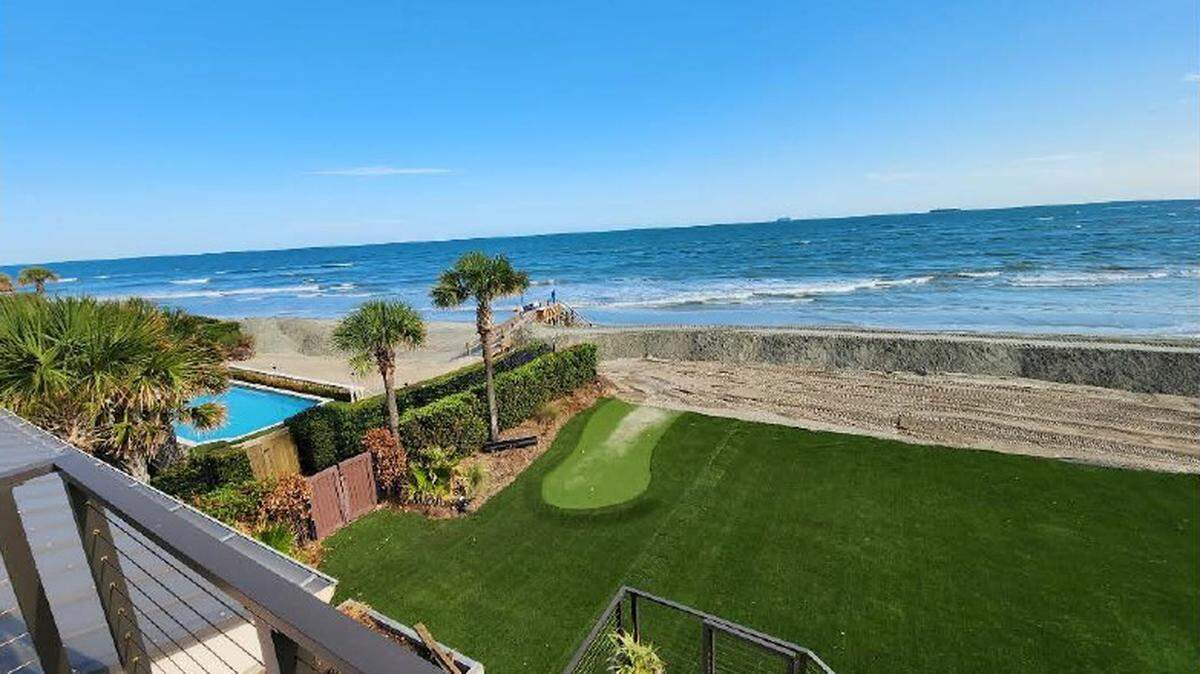
South Carolina’s coastal agency has fined a Charleston County couple $289,000 for what officials say is the illegal construction of a seawall and other work on the beach at the Isle of Palms, where storms and rising ocean levels are threatening homes.
But the fine, one of the largest levied by South Carolina’s coastal department in its nearly 50-year history, isn’t sitting well with Rom and Renee Reddy, who bought their house on the island 10 years ago.
Rom Reddy says the state is targeting them, likening its efforts to those of the gestapo, the brutal Nazi police force of the 1940s. He says the coastal department has failed to maintain the beach and the agency has tried to keep him from conducting work to shield his property from the ocean
The key point of dispute between Reddy and the state is a wall he built last year to fend off the ocean’s waves. Seawalls are illegal in South Carolina because they can block public access to the beach. When hit by waves, they can worsen beach erosion, even as the walls defend private property from the water.
Reddy said South Carolina regulators are being hard on the couple because he has challenged their enforcement efforts.
“This is straight out of the gestapo,’’ he told The State newspaper.
Reddy, who said he has done nothing illegal, sued the state environmental department in circuit court earlier this year, saying it was taking his land for public use without paying him. He also has appealed the state enforcement action to the S.C. Administrative Law Court and he has sued a former Isle of Palms official for defamation over statements made about the issue.
Reddy said he hopes to help other seaside landowners. He said he’s trying to protect property rights.
“My home could fall in the ocean. It’s not really going to change my lifestyle,’’ said Reddy, a weekly newspaper owner with a background in finance. “But this is for everyone else that can’t afford to stand up to these goons.’’
If regulators prevail in their enforcement effort, “we can tear up the Constitution because property rights no longer exist,’’ he said. In addition to the fine, the state coastal agency has told him to remove “nonbeach compatible’’ materials in front of the Reddy home and restore the seashore.
At issue are state rules established to limit development in areas vulnerable to erosion. The state long ago put in place a series of building restriction lines intended to keep most oceanfront development behind them. Those lines sometimes run through private property. Other times they are on the public beach.
To develop homes, establish decks or work on yards in these areas, property owners must obtain state approval. But the state also retains jurisdiction over any part of the sandy beach, even if it falls outside the building restriction lines, government officials and environmentalists say. The Reddy dispute includes an area that environmental regulators say is jurisdictional, but outside the lines.
Unlike some types of development, new seawalls are forbidden in any area of state jurisdiction because they can block public access to the beach and worsen beach erosion when hit by waves.
The S.C. Bureau of Coastal Management declined to respond to Reddy’s accusations that it has been heavy handed. But the agency says the $289,000 fine and its enforcement efforts involving Reddy are legal.
The fine is larger than most ever levied for violations of the state coastal law, department spokeswoman Laura Renwick said. The highest the agency was able to verify having levied was a more than $700,000 penalty involving an illegal seawall in the Wild Dunes area of the Isle of Palms about 10 years ago, the coastal department reported.
While the coastal agency would not comment on Reddy’s allegations, the size of the fine may relate to Reddy’s failure to follow state orders. Regulators issued the fine after repeatedly telling Reddy to stop construction in South Carolina’s jurisdiction along the beach, records show.
Reddy’s case is being closely watched by environmentalists, oceanfront property owners and politicians because its ultimate resolution could set a course on how the state will oversee future beach construction — particularly the building of new seawalls.
Some legislators want South Carolina to go easier on oceanfront landowners trying to protect houses worth millions of dollars. They say it’s foolish to let homes that generate tax revenue be damaged. In Reddy’s case, property records show he bought the home for just under $3 million.
Key lawmakers also say the Bureau of Coastal Management is beginning to regulate land it has never paid attention to before, including areas of sandy beach that fall outside building restriction lines.
Environmentalists say the coastal bureau is merely protecting land that has eroded and become part of the beach. Oceanfront property owners should have known the hazards of having homes close to the ocean and South Carolina should enforce rules intended to limit beach development, including new seawalls, environmentalists say.
The state “has a duty to protect the beaches for the benefit of all South Carolinians,’’ said Lauren Megill Melton, an attorney with the non-profit S.C. Environmental Law Project. “We support their efforts to hold violators accountable and their work here to protect the beach. ‘’
Regulators say Reddy not only built a seawall illegally to shield his house from the ocean, but he claimed part of the beach and landscaped it.
When environmental regulators told Reddy they had not approved the work in front of his home, Reddy and his contractors disregarded orders to stop the construction, the coastal bureau says. Reddy disregarded at least three cease and desist orders to stop work, officials say.
Reddy, who lives on the beach near the inlet between Isle of Palms and Sullivan’s Island, insists regulators are trying to oversee development outside their jurisdiction. He ran into trouble with environmental regulators after several tropical weather systems bashed the area of Charleston County with big waves and high tides.
Officials say they learned of construction in front of Reddy’s home in October 2023 and two months later, they documented a new seawall had been built there. The 92-foot long wall was inside state jurisdiction, the coastal bureau says.
Work done in the area also included the installation of artificial turf grass, metal fencing, concrete, metal screw piles, steel plates and bolts, and plywood panels inside state jurisdiction, the state’s enforcement order against Reddy says. The beach had also been dug up without permission, records show.
Reddy’s case has caused such a stir that a team of state officials, including two politically appointed environmental department board members, visited his property last winter.
This story was originally published October 24, 2024 at 6:00 AM.