People accused of illegally building on SC beach to get state help if senator has his way
A senator’s effort to protect wealthy beachfront property owners from what he considers unnecessary state enforcement cases received overwhelming support from fellow lawmakers Tuesday.
The Senate agriculture committee voted 13-2-1 for a bill that critics say would make it harder to enforce coastal laws while costing taxpayers potentially millions of dollars.
Pushed by Sen. Stephen Goldfinch, R-Georgetown, the bill was approved without any public testimony. It now goes to the full Senate for consideration.
“Goldfinch wants to get something done quickly and he doesn’t want to have any public debate,’’ coastal lawyer Amy Armstrong said after the Senate meeting in Columbia.
The legislation, S. 526, would require the S.C. Department of Environmental Services to pay the attorneys fees of people accused of breaking coastal laws, if they win appeals of state decisions in court. Goldfinch says that’s a reasonable change in state law, but critics say it could intimidate state regulators and prompt them not to enforce laws protecting the coast.
In addition, the legislation would prevent the state from taking further enforcement action on a case while it is on appeal, a measure that could allow structures to be built in jurisdictional areas along the beach as the case makes its way through the court system.
Goldfinch, who has represented oceanfront landowners as a private attorney, was blunt in his comments about why the bill should be approved. He said aggressive government enforcement of coastal laws is effectively taking away the use of private property, a point Armstrong disputed.
“If you are deprived of your property rights by the state for any period of time, I believe that to be a taking,’’ Goldfinch said, although he did not mention any specific disputes that had concerned him.
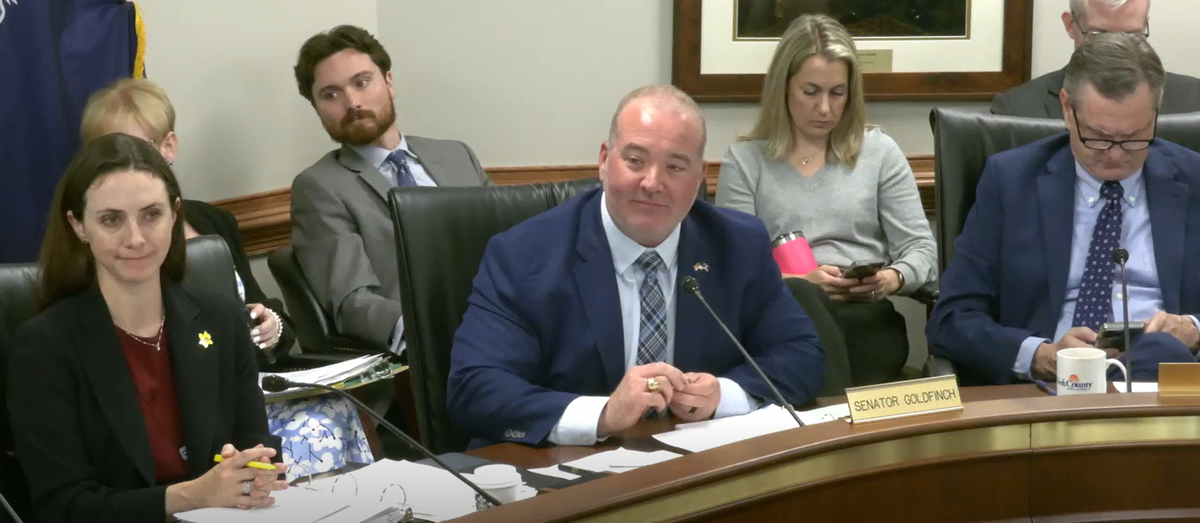
Goldfinch said there was no need for a public hearing on the bill because lawmakers “beat it to death’’ last year during a series of legislative meetings. Last year’s proposed changes were efforts to update state regulations and through budget provisos, both of which often are done with little public scrutiny.
The budget provisos were vetoed by Republican Gov. Henry McMaster. In killing Goldfinch’s plan last year, the governor said it was rushed, could hurt environmental enforcement and cost taxpayers money.
Asked at Tuesday’s meeting by Sen. Ed Sutton, if he had communicated with McMaster, Goldfinch said he had not.
“No communication with the governor’s office,’’ he said. “My thought is: It’s the right thing to do and we should do it. If the governor wants to veto it, he can veto it.’’
Sutton, D-Charleston, and Sen. Jeffrey Graham, D-Kershaw, voted against the measure. Sen. Russell Ott, D-Calhoun, abstained from voting because he said he didn’t know enough about the bill. He said it needs more discussion and some public review.
“I’d certainly like hearing the perspectives of other people,’’ he said. During the meeting, Ott also asked if state enforcement cases were regularly being overturned on appeal, which if true, would bolster Goldfinch’s position.
But no one could provide answers and, after the meeting, Armstrong said it is not common. It was estimated last year that the state had made about 100 cases against property owners over a six-year period for building illegal seawalls and other violations.
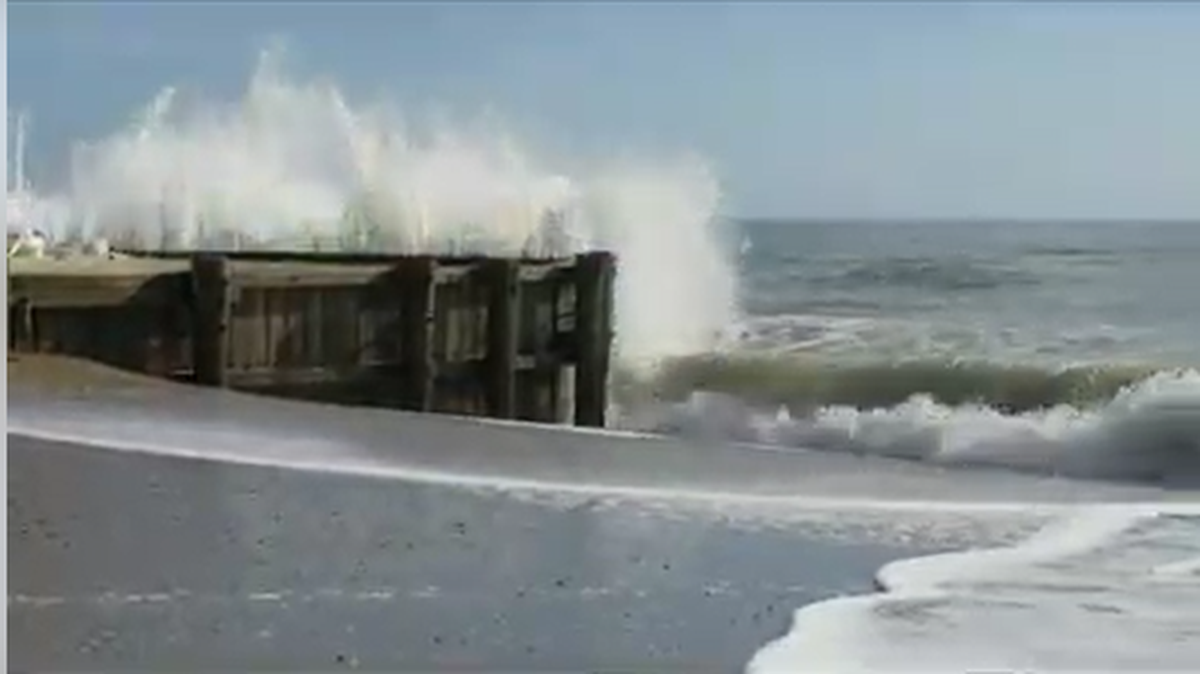
Tuesday’s hearing centers around a growing dispute over where the state’s jurisdiction to enforce beach laws ends as rising seas eat away at the coast, a multibillion driver of South Carolina’s tourist economy.
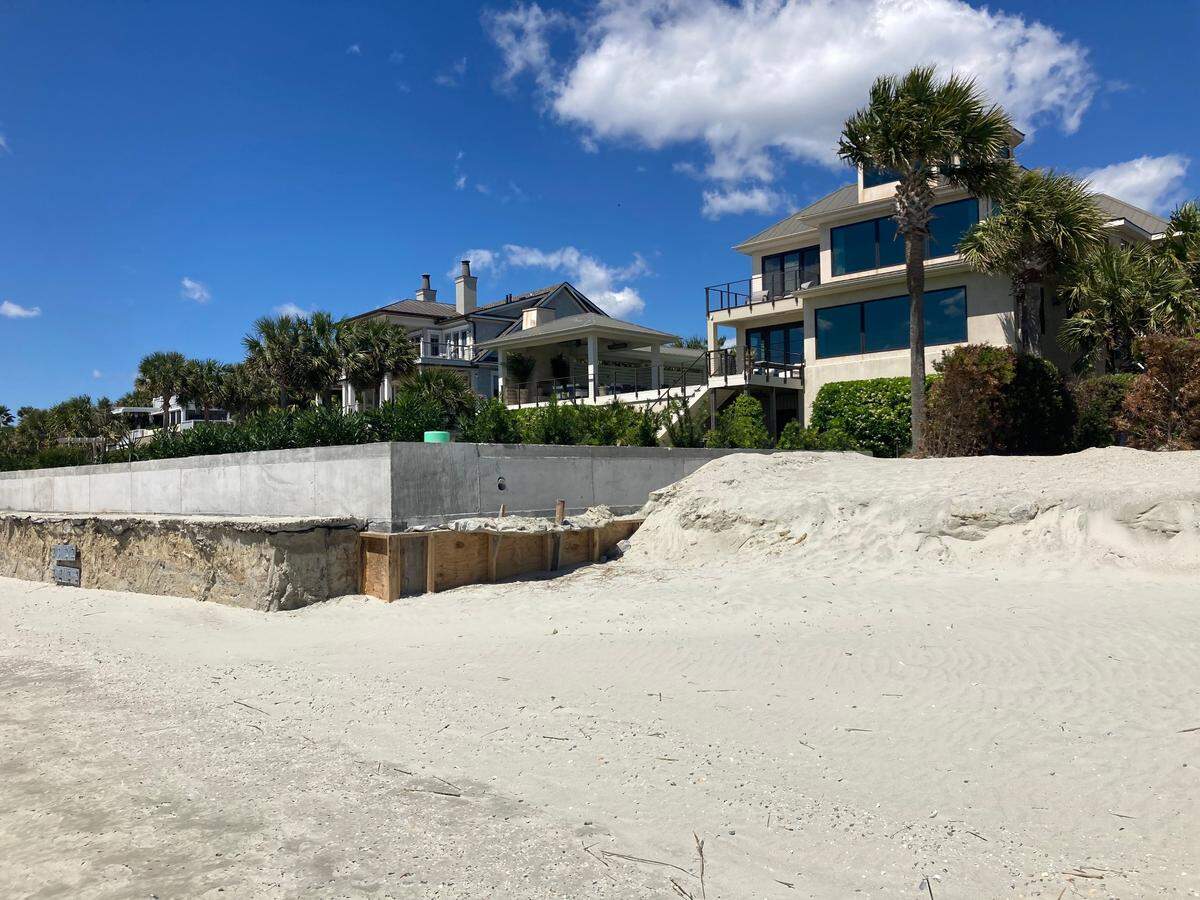
In one high profile case, an Isle of Palms property owner accused of building a seawall on an eroding beach has challenged the state in court after accusing the Department of Environmental Services of using “gestapo’’ tactics in an enforcement case against him.
Development on South Carolina beaches has for decades been restricted by oceanfront building lines that were drawn to prevent construction from going too far out on the beach, which can worsen erosion.
But in recent years, some areas of sandy beach have emerged outside areas traditionally governed by the building restriction lines, sparking skirmishes between private landowners and state regulators. State regulators say they are charged with protecting the beach, as it erodes inland. But others say state law doesn’t allow for regulation beyond oceanfront building lines.
South Carolina bans new seawalls in jurisdictional areas of the seashore and limits construction of buildings inside those areas. The state’s 1988 beach management law passed the Legislature amid worries by lawmakers about rising sea levels and beach erosion that threatened the oceanfront.
Goldfinch, from a respected and established Myrtle Beach area family, has been one of the biggest champions for oceanfront landowners and their battles with state regulators on enforcement issues. He has said state enforcement efforts are often too harsh.
In 2024, The State newspaper reported that Goldfinch has led multiple efforts to loosen restrictions on coastal landowners after he was elected in 2016.
The newspaper’s reporting also showed that Goldfinch had received campaign contributions from an array of oceanfront landowners in his district south of Myrtle Beach. In some cases, he represented the property owners as a private lawyer in court, and in at least one case, before the state’s environmental regulatory board.
Goldfinch didn’t comment for the newspaper’s articles, but he had plenty to say during Tuesday’s legislative meeting in Columbia.
He has no problem, for instance, in the state paying private property owners’ attorneys fees if the property owners win legal appeals. No one at the meeting knew how much South Carolina might be liable for, but a figure in excess of $2 million was the estimate when legislation was introduced last year.
“If it is expensive for the state, that’s because the state is doing something they should not be doing,’’ Goldfinch said, noting that having to pay legal fees is a “pretty good reason for us to say ‘Maybe we should be a little more careful in reviewing the deprivation of somebody’s property values.’ ’’
Armstrong said the state isn’t taking anyone’s land, only exercising its authority under the law to protect sandy beaches for the public. She said beaches are unstable and tend to move, meaning that anyone who builds near them should know the risks.
Goldfinch’s push to help oceanfront landowners comes as Isle of Palms resident Rom Reddy fights a $289,000 state fine he received over seawall construction on the beach at his home. Reddy has launched a campaign to cut down on state regulations.
He also has asked the Senate not to approve the environmental services department’s interim director Myra Reece as permanent director because of what he says are overzealous coastal enforcement efforts. He has called her a bureaucrat, but McMaster, who nominated Reece, says she is a professional.
Goldfinch refused Tuesday to discuss Reece’s nomination after telling fellow senators he would abstain from voting on whether to recommend her. He did not elaborate, but walked out of the meeting before it ended.
Most other senators at the meeting said Reece had done a good job and they supported her. Another session is scheduled for next week, after which McMaster’s choice of Reece would be sent to the Senate for confirmation.
During a brief session with reporters Monday, McMaster said he’s sticking by Reece.
“She is being unfairly criticized, I think,’’ McMaster said. “She is a consummate professional and she is respected by people all over the place.’’
Staff writer Joseph Bustos contributed to this story.
This story was originally published April 9, 2025 at 6:00 AM.