McMaster urges Congress to help revive failed nuclear construction project in SC
South Carolina Gov. Henry McMaster is urging the federal government to extend tax credit and loan programs for developing nuclear power, saying without action, chances of reviving the failed V.C. Summer project “are dead.’’
In a letter Friday to the state’s congressional delegation, McMaster said federal tax credits for nuclear power, as well as Department of Energy loan programs for developing atomic energy, help attract interest in nuclear construction projects.
It’s hard to get financing for such projects, otherwise, he wrote.
“South Carolina is about to lose an historic opportunity we’ve been seeking for years and working towards for months: ushering in a nuclear renaissance in South Carolina and across the country,’’ the governor wrote. “We need your immediate help.’’
McMaster’s letter said the V.C. Summer project has a sad history, but the state now has the opportunity to complete the work and provide much-needed energy for the growing state. McMaster said he is signing legislation, recently passed by the S.C. General Assembly, that supports state efforts to complete the two-reactor construction project north of Columbia.
“We just need to finish them, but that takes money,’’ the governor’s letter said. “Fortunately, the money is available; unfortunately, it is about to disappear.’’
As Congress considers what to do about the tax credits and loans for nuclear projects, Santee Cooper, the state-owned utility, has been seeking interest among companies that might want to finish V.C. Summer.
The utility has received more than 60 expressions of interest, some from business consortiums, said state Sen. Tom Davis, R-Beaufort. A deadline to show interest was Monday, but Davis said he understands the period to respond was extended a few more days.
“Santee Cooper has received a robust response to its initial request for expressions of interest related to the two partially constructed generating units at V.C. Summer Nuclear Station,’’ the power company said in a news release this past week. “Entities submitting proposals represent leading construction, financial, utility and technology firms from around the world.’’
According to plans, Santee Cooper would not own or operate the units, but would instead choose others to do so.
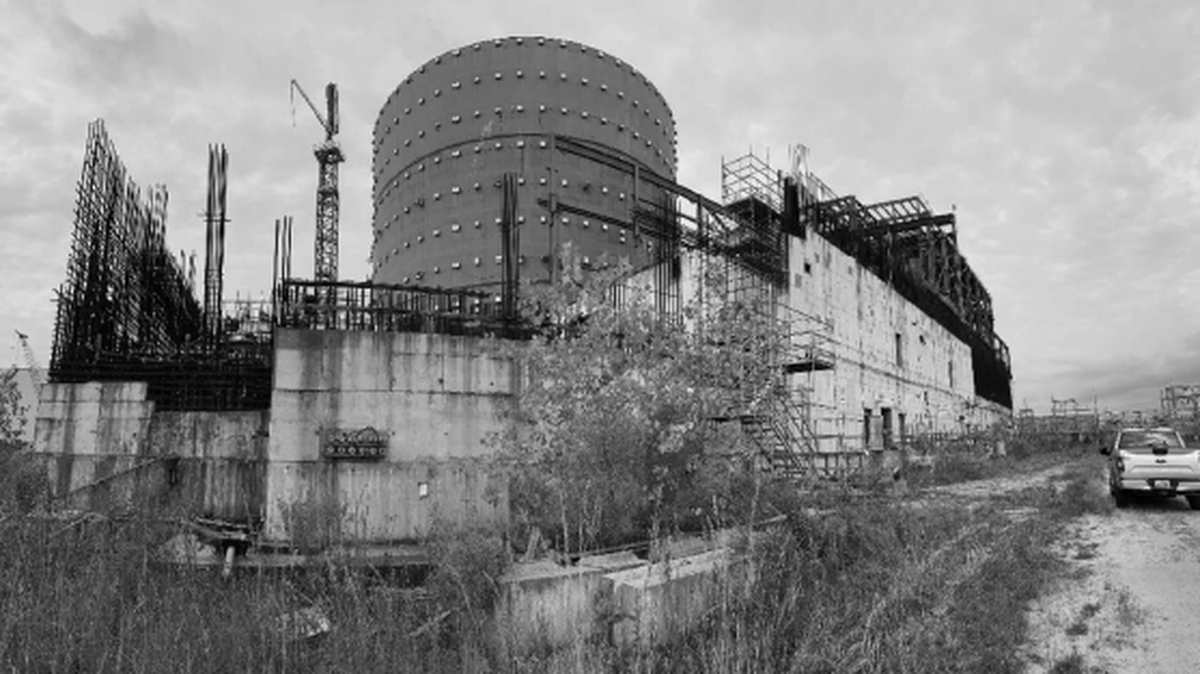
Santee Cooper and Dominion Energy’s predecessor, SCE&G, abandoned construction of the V.C. Summer project in 2017, citing high costs and delays among its reasons. The two nuclear reactors were being built to complement an existing reactor that went on line in the 1980s. All told, a large amount of energy – some 2,000 megawatts – would have been produced
About $9 billion had been spent when the companies walked away from the project, leaving ratepayers on the hook for an asset that was not finished. The companies’ decision sparked an outcry from politicians and ratepayers, who had been charged upfront for the cost of the project with higher utility bills. Many are still paying for the failed project.
But because of what utilities and many state leaders say is a significant need to boost energy capacity, politicians in recent months began talking about trying to finish V.C. Summer.
One of the two nuclear units under construction was about 48 percent complete when the project shut down. A report from the Governor’s Nuclear Advisory Council, produced after several members visited the site, said it was worth exploring completion.
Not everyone agrees a restart of V.C. Summer is a good idea, expressing concern that ratepayers could again end up on the hook. The failed project was one of the biggest construction fiascos in state history.
Davis, who recently led efforts to pass a major energy bill in South Carolina, said the state doesn’t want ratepayers exposed to the cost of finishing the atomic reactors. Santee Cooper’s request for proposals on the feasibility of completing the project focused on private companies paying, including those with energy-demanding data centers.
McMaster’s letter to the state’s congressional delegation comes as Congress is examining whether to extend the nuclear tax credits and loan program as part of a larger discussion about an array of programs for energy, including solar.
“Many of the energy credits and incentives and guarantees are on the chopping block,’’ Davis said. “Various credits relate to solar, or wind, or biomass, or nuclear or natural gas. There’s a whole list.
“The question is ‘Are they going to be eliminated and if so, which ones are going to be eliminated?’ ‘’.
The State was unable to reach congressional delegation members for comment Friday afternoon, but a letter the newspaper obtained indicates that four South Carolina representatives are favorable to the idea.
Republican Reps. Joe Wilson, Russell Fry, William Timmons and Sherri Biggs signed a letter with 14 Republican representatives from other states, including Georgia, Tennessee and North Carolina, that says nuclear faces “significant barriers to using traditional tax equity structures.’’
The May 1 letter to Rep. Jason Smith, a Missouri Republican who chairs the House budget committee, called for maintaining federal investment in existing nuclear facilities while speeding up “the next generation of nuclear power technologies.’’
“As the upcoming (budget) reconciliation legislation is developed, various aspects of the tax code must be addressed to get our fiscal house in order,’’ the letter said. “We strongly support maintaining crucial federal investments in existing and new nuclear reactors, which are vital to unleashing American energy dominance and lowering costs for families and businesses alike.’’
Rep. Ralph Norman’s office said Friday afternoon he is evaluating McMaster’s letter.
This story was originally published May 9, 2025 at 5:17 PM.